Dial & Lume

Best Watch Winders for Citizen Automatics

Five picks for the Tsuyosa, the Promaster and the rest of Citizen's mechanical line - plus the answer to the question half the people searching this actually have: an Eco-Drive does not need a winder at all.

By Stephen V.Last updated How we pick

The short answer

Start with the Versa Single Watch Winder Elite. Citizen publishes a great deal about its mechanical calibers — the 8204’s −20/+40 seconds a day, about 42 hours wound, 21,600 beats an hour — but it publishes no turns-per-day figure anywhere, and the Versa is the cheapest winder we track with a published ladder (650 / 950 / 1,250 / 1,850 TPD) so you can start low and step up. For a Tsuyosa and a Promaster, take the Rothwell double, which sets each position separately from 650 TPD. For the 44mm Promaster “Fugu” specifically, the WOLF Heritage single is the only winder here whose maker publishes a case-size rating (a cuff rated to 52mm). And if the Citizen you were shopping for is an Eco-Drive, stop: it runs on light, not a mainspring, and a winder does nothing for it.

Citizen is an unusual brand to buy a winder for, because “a Citizen” could mean three completely different machines. It could mean a mechanical automatic — a Tsuyosa on caliber 8210, a Promaster diver on the 8204 — in which case a winder is a real option. It could mean an Eco-Drive, which converts light into energy stored in a power cell and which Citizen states will run up to six months in darkness with no battery replacement. Or it could mean a plain quartz. Only the first of those three has a rotor for a winder to act on.

That is not a pedantic distinction. Eco-Drive is the line Citizen is most famous for, it has been in production since 1976, and from the outside it looks exactly like any other Citizen. Putting one on a winder is not harmful — it is simply a motor spinning a watch that does not care. If you are not sure which you own, our guide to telling whether a watch is automatic settles it in about ten seconds, and do winders work on manual watches covers the other lookalikes.

For the automatics, the useful thing to know is what Citizen does and does not publish. It publishes the caliber, the beat rate, the reserve, the winding and hacking functions, and for the 8203/8204 an accuracy band. It publishes no recommended turns-per-day figure in any manual we cite — and unlike Seiko, no recommended direction either. So the right winder for a Citizen is not one set to a Citizen number; there is no Citizen number. It is one whose own ladder starts low enough that you can work upward until the watch holds time.

We have not handled any of these units. Every winder specification below was read from the maker or the retail listing on the date in its spec table, and every Citizen figure comes from Citizen’s own manuals and product pages, cited at the foot of the page.

How this is funded: we earn a commission if you buy through our links, at no extra cost to you. As an Amazon Associate we earn from qualifying purchases. It never changes which watch or winder we recommend, and we’ll tell you plainly when to skip one. Full disclosure.

Quick picks

Ranked on movement, specs and buyer fit. Select a row to jump to the full write-up. We have not tested these — here is exactly what we do instead.

#ProductBest forPriceTurns per dayRotation settingsPower
1
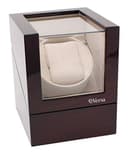
Versa Single Watch Winder Elite

Versa Single Watch Winder Elite

The value sweet spot. A quiet Japanese motor and twelve rotation programs — enough TPD and direction combinations to suit almost any automatic — at roughly a fifth of a premium single's price. The one to buy when you want real control without the badge premium.

Best overall for Citizen
$89.99 · View on Amazon

Price as of October 11, 2026. #ad How we’re funded

Not published12 rotation programsAC adapter + battery
2
Rothwell Double Watch Winder

Rothwell Double Watch Winder

The widest settings range on this list, in the nicest case. Rothwell publishes five TPD speeds up to 1,950 and three directions, gives each watch its own setting, and runs two separate quiet Japanese motors instead of driving both positions off one. It also takes AA batteries, which is the difference between a winder that has to sit by an outlet and one that can go in a safe.

Best for two Citizen automatics
$209.95 · View on Amazon

Price as of October 11, 2026. #ad How we’re funded

650-1,950 TPD5 TPD speeds x 3 directions, set per watchAC adapter or AA batteries
3
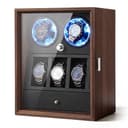
Liliaafar 2-Watch Winder with 3 Holders & Jewelry Storage

Liliaafar 2-Watch Winder with 3 Holders & Jewelry Storage

The small end of the winder-plus-storage format: two powered positions and three static holders. This is the honest shape for most collections — two watches in rotation, a few more kept properly, and no cabinet to find room for.

Best if you also own Eco-Drives
$99.99 · View on Amazon

Price as of October 11, 2026. #ad How we’re funded

Not publishedMultiple rotation modesNot published
4
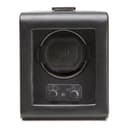
WOLF Heritage Single Winder with Glass Cover

WOLF Heritage Single Winder with Glass Cover

The WOLF to buy if you own one automatic you genuinely care about — and the obvious one if that watch is large. WOLF publishes a single fixed program here: 900 turns a day, doubling to 1,800 if you run it bi-directional, and a patented cuff it rates for cases up to 52mm. The money goes on the cuff, the materials and a five-year warranty, not a longer settings menu.

Best for the 44mm Promaster
$579.00 · View on Amazon

Price as of October 11, 2026. #ad How we’re funded

900 TPD (1,800 bi-directional)Pre-set intermittent program (pause and sleep phases)AC adapter (included) or D-cell / lithium batteries
5
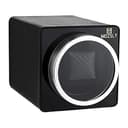
MOZSLY Single Watch Winder

MOZSLY Single Watch Winder

A quiet single winder with a full twelve rotation modes for under a hundred dollars. It does the same core job as winders costing far more — hold the watch, turn it the right number of times in the right direction — and gets out of the way.

Best on a budget
$83.99 · View on Amazon

Price as of October 11, 2026. #ad How we’re funded

Not published12 rotation modesAC adapter + battery

Specs read from each maker’s published data and retail listing on July 21, July 23, August 11 and October 4, 2026. Prices checked live — as of October 11, 2026. “Not published” means the maker does not state that figure; we don’t fill the gap with a guess.

The picks in full

#1Best overall for Citizen

Versa Single Watch Winder Elite

The value sweet spot. A quiet Japanese motor and twelve rotation programs — enough TPD and direction combinations to suit almost any automatic — at roughly a fifth of a premium single's price. The one to buy when you want real control without the badge premium.

Strengths

  • Twelve rotation programs cover the TPD/direction range most watches need
  • Quiet Japanese motor
  • AC or battery power for placement flexibility

Trade-offs

  • Cabinet finish is fine, not luxurious
  • No app or memory beyond the on-unit settings
Watches held1
Rotation settings12 rotation programs
DirectionCW, CCW, both
PowerAC adapter + battery
Quiet motorYes
Includes storageNo

Why this one. Twelve programs is the number that matters here: it's enough to cover the common TPD bands (roughly 650-1950) and both directions, which is the whole job of a winder.

Specs read from the product listing and the maker’s published data, on July 21, 2026. “Not published” means the maker does not state that figure.

#2Best for two Citizen automatics

Rothwell Double Watch Winder

The widest settings range on this list, in the nicest case. Rothwell publishes five TPD speeds up to 1,950 and three directions, gives each watch its own setting, and runs two separate quiet Japanese motors instead of driving both positions off one. It also takes AA batteries, which is the difference between a winder that has to sit by an outlet and one that can go in a safe.

Strengths

  • Five published TPD speeds (650/750/850/1000/1950) with per-watch settings
  • Two separate quiet Japanese motors rather than one shared drive
  • Runs on AA batteries or mains — Rothwell states roughly 3-4 weeks per set

Trade-offs

  • The most expensive pick here by a wide margin
  • Large at roughly 11.75 x 6.25 x 7.25 inches — it needs real dresser space
Watches held2
Rotation settings5 TPD speeds x 3 directions, set per watch
DirectionCW, CCW, both
PowerAC adapter or AA batteries
Quiet motorYes
Includes storageNo

Why this one. The 1,950 TPD top step matters for the small number of movements that genuinely want a high turn count; most automatics sit far below it. Battery operation is the quieter selling point — it's what lets the winder live somewhere without a socket.

Specs read from the product listing and the maker’s published data, on July 23, 2026. “Not published” means the maker does not state that figure.

#3Best if you also own Eco-Drives

Liliaafar 2-Watch Winder with 3 Holders & Jewelry Storage

The small end of the winder-plus-storage format: two powered positions and three static holders. This is the honest shape for most collections — two watches in rotation, a few more kept properly, and no cabinet to find room for.

Strengths

  • Two winding positions plus three storage holders
  • Much smaller footprint than a 6+6 cabinet
  • Jewelry storage included

Trade-offs

  • Only two powered positions
  • No published turns-per-day figure
Watches held2
Rotation settingsMultiple rotation modes
DirectionNot published
PowerNot published
Quiet motorYes
Includes storageYes

Why this one. Most collections are smaller than their owners plan for. Two powered positions plus storage covers more real households than any six-position box does.

Specs read from the product listing and the maker’s published data, on August 11, 2026. “Not published” means the maker does not state that figure.

#4Best for the 44mm Promaster

WOLF Heritage Single Winder with Glass Cover

The WOLF to buy if you own one automatic you genuinely care about — and the obvious one if that watch is large. WOLF publishes a single fixed program here: 900 turns a day, doubling to 1,800 if you run it bi-directional, and a patented cuff it rates for cases up to 52mm. The money goes on the cuff, the materials and a five-year warranty, not a longer settings menu.

Strengths

  • Patented lock-in cuff rated for cases up to 52mm — grips without stretching the bracelet
  • WOLF publishes the figures: 900 TPD, 1,800 bi-directional, with a direction choice
  • Runs from the included AC adapter or D-cell / lithium cells, with a five-year warranty

Trade-offs

  • Costs several times what a competent budget winder does
  • One fixed turns-per-day figure — you can change the direction, not the number
  • WOLF publishes no noise figure or quiet-motor claim for it
Watches held1
Rotation settingsPre-set intermittent program (pause and sleep phases)
DirectionClockwise, counter-clockwise or bi-directional
PowerAC adapter (included) or D-cell / lithium batteries
Quiet motorNot published
Includes storageNo

Why this one. WOLF is one of the few winder brands watch owners actually name, and the Heritage is the cheapest single it currently sells on Amazon in this format. The program runs intermittently with pause and sleep phases pre-programmed, on a ten-second start delay, with an optional twelve-hour delay.

Specs read from the product listing and the maker’s published data, on October 4, 2026. “Not published” means the maker does not state that figure.

#5Best on a budget

MOZSLY Single Watch Winder

A quiet single winder with a full twelve rotation modes for under a hundred dollars. It does the same core job as winders costing far more — hold the watch, turn it the right number of times in the right direction — and gets out of the way.

Strengths

  • Twelve TPD/direction modes at a budget price
  • Quiet motor suitable for a bedroom or office
  • Simple controls, no fuss

Trade-offs

  • Build is plastic-and-leatherette, not heirloom-grade
  • Single position only — no room to grow
Watches held1
Rotation settings12 rotation modes
DirectionCW, CCW, both
PowerAC adapter + battery
Quiet motorYes
Includes storageNo

Why this one. The honest truth about winders: past a competent quiet motor and adjustable TPD, you're paying for materials and brand. This covers the function for under $100.

Specs read from the product listing and the maker’s published data, on July 21, 2026. “Not published” means the maker does not state that figure.

What Citizen actually publishes about its automatics

This is the part that decides how you set the winder, so it is worth laying out plainly. Every figure here is from Citizen’s own documents.

  • Caliber 8210 (the Tsuyosa, 40mm and 37mm alike): automatic winding, 21,600 oscillations an hour, a quick-set date, and Citizen lists a 42-hour power reserve and a hack feature for the reference. No accuracy figure.
  • Caliber 8200: the same 21,600 an hour, and the one in the pair that carries a day-of-week wheel. Citizen’s manual for both calibers recommends winding the crown by hand five to ten times to start the watch, and states no daily accuracy figure.
  • Caliber 8204 (the NY0-series Promaster divers): an average daily difference of −20 to +40 seconds, about 42 hours fully wound, 21,600 beats an hour, manual winding and a second-hand stop. Citizen adds the caveat that this is static accuracy at normal temperature and that it varies with how far the mainspring is wound, with position and with environment.

Two things follow. First, a Citizen automatic has roughly a day and a half of reserve — so it stops on the second day off your wrist, not the fifth, which is what makes a winder worth considering in the first place. Second, that last caveat about mainspring wind is the strongest argument for a winder that anyone in the industry has published: Citizen is telling you in its own manual that the watch keeps its stated time best when it is kept wound.

How to set a winder for a Citizen, with no Citizen figure to go on

Since there is no published Citizen TPD, work it out empirically — which takes about a week and is the only honest method.

  1. Wind the crown by hand first. Citizen’s own manual says five to ten turns to start the watch; our hand-winding guide covers doing that without stressing the movement.
  2. Set the winder to its lowest program — 650 TPD on a Versa or Rothwell. More turns is not better; the only thing extra rotation buys is running hours.
  3. Set the watch to a reference time, leave it on the winder for a week without wearing it, and check it. If it has stopped or lost badly, step up one setting. If it holds inside Citizen’s published band, you are done.
  4. Pick bi-directional if your winder offers it. Citizen publishes no direction preference, so alternating covers both possibilities without you having to guess which way its rotor winds.

Our TPD settings guide has the same procedure with the figures other makers do publish, and how to use a watch winder covers the two steps people reverse.

The 44mm problem

Citizen’s most serious automatic diver, the Promaster “Fugu”, is a 44mm case on a steel bracelet, and that combination is where cheap winder cuffs struggle — either the pillow will not expand enough, or it expands so far that it stretches the bracelet while it turns. Almost no winder maker publishes a case-size rating at all. WOLF does: it states a patented lock-in cuff rated for cases up to 52mm on the Heritage single, which is why that winder is on this page despite costing several times what the others do. If your Citizen is a 40mm Tsuyosa or a 41mm Promaster, this is not your problem and you can ignore it.

What to do about the Eco-Drives

Most Citizen collections are mixed, and that shapes the right purchase more than any winding setting. If you own one or two automatics and several Eco-Drives, the honest format is a winder with storage: powered positions for the mechanical watches, static slots for the light-powered ones — which is exactly the shape of the Liliaafar pick above. An Eco-Drive in a drawer will run down over months, but Citizen states a fully powered watch runs up to six months in darkness (up to seven years on select Power Save models), and a few hours in daylight brings it back. It needs light, not rotation. Our winders with storage page is the full list, and how to store watches covers the resting half of a collection.

Should you buy one at all?

For a Tsuyosa you wear four days a week, no — it keeps itself running, and setting the time and quick-set date takes fifteen seconds. The case gets stronger with a Promaster you wear fortnightly, and stronger again if it is one of the day-date references, where resetting the day wheel is a genuine irritation. Our do automatics need a winder guide is the honest version of that conversation, and our Citizen automatic roundup is the page to read if you are still choosing the watch.
Frequently asked questions

Does a Citizen Eco-Drive need a watch winder?

No. Eco-Drive converts light into energy stored in a power cell rather than winding a mainspring, and Citizen states that a fully powered watch runs for up to six months in darkness - up to seven years on select Power Save models - with no battery replacement. A winder spins it to no effect. What an Eco-Drive wants is occasional light and a storage slot, not a motor.

What turns-per-day setting does a Citizen automatic need?

Citizen does not publish one, in any manual we cite - no TPD figure and no recommended direction. The method that works is to start at your winder's lowest setting (650 TPD on a Versa or Rothwell), run the watch for a week without wearing it, and step up one setting only if it loses time or stops. Pick bi-directional if offered, since there is no published direction to match.

Will a watch winder work on a Citizen Tsuyosa?

Yes. The Tsuyosa runs Citizen's 8210 automatic caliber, which Citizen lists with a 42-hour power reserve and a hack feature, so it is a genuine mechanical automatic with a rotor for a winder to drive. The one practical note is the integrated bracelet - check the winder's cuff expands enough to hold it without pulling on the links.

How long does a Citizen automatic run off the wrist?

About 42 hours when fully wound, which is the figure Citizen publishes for both the 8204 and the Tsuyosa's 8210. In practice that means a watch taken off on Friday evening has usually stopped by Sunday. It is also why Citizen's own manual tells you to wind the crown five to ten times to start the watch rather than just shaking it.

Is a winder needed to keep a Citizen accurate?

It can genuinely help, and this is the one case where a maker says so in print. Citizen states that its published accuracy for the 8203/8204 is static accuracy at normal temperature, and that it varies with how far the mainspring is wound, with position and with environment. A watch kept wound sits in the part of that range Citizen measured; one that runs down does not.

Which winder suits the 44mm Citizen Promaster Fugu?

The WOLF Heritage single is the only pick here whose maker publishes a case-size rating - a patented lock-in cuff stated for cases up to 52mm. Most winder makers publish nothing about case size at all, which is why large steel-bracelet divers are the watches people most often find do not sit properly on a budget cuff.

Sources

  • Citizen - Caliber 8203/8204 instruction manual (NY0 series, PDF) — Citizen's own manual for the NY0 series: the 8204 has an average daily difference of -20 to +40 seconds (the 8203 -10 to +20), about 42 hours when fully wound, 21,600 beats per hour, a manual winding function and a second-hand stop function (8204 only). Citizen notes the stated accuracy is static accuracy at normal temperature and varies with mainspring wind, position and environment (accessed September 22, 2026)
  • Citizen - Calibers 8200 / 8210 instruction manual (PDF) — Citizen's own manual for calibers 8200 and 8210: 21,600 oscillations per hour, automatic winding, a quick-set date, and a day of week on the 8200 only. Citizen recommends winding the crown manually 5 to 10 times to start the watch. The manual states no daily accuracy figure (accessed September 22, 2026)
  • Citizen - Tsuyosa NJ0150-56A product specification — Citizen's own listing for the Tsuyosa NJ0150-56A: caliber 8210 automatic, a 40mm case width, a sapphire crystal, WR50 ('Still Water Swimming'), and '42 Hour Power Reserve' and 'Hack Feature' in its movement-functions list. Citizen publishes no accuracy figure, case thickness or lug-to-lug distance for this reference (accessed September 22, 2026)
  • Citizen - Eco-Drive technology — Citizen's own account of Eco-Drive: introduced in 1976, it converts any light into energy stored in a power cell, so a fully powered watch runs for up to six months in darkness (up to seven years on select Power Save models) with no battery replacement - Citizen's answer to the battery-powered quartz watch, not a mechanical movement (accessed September 22, 2026)
  • Citizen - Promaster Dive Automatic NY0154-51L product specification — Citizen's own listing for the reimagined 1989 Promaster Fugu: caliber 8204 automatic with day-date, a 3-piece 44mm case, 20mm lugs, an anti-reflective sapphire crystal, luminous hands and markers, a serrated rotating bezel, and 'ISO compliant with a screw-down crown and water resistant to 200 meters' (accessed September 22, 2026)
  • Versa Watch Winders — Elite Double Watch Winder specification — Versa's own spec for the Elite Double: four turns-per-day settings (650/950/1250/1850), clockwise, counter-clockwise and bi-directional operation, and 'set each winder independently' (accessed July 23, 2026)
  • Rothwell — Double Watch Winder (Black/Grey) specification — Rothwell's own spec for its double winder: five TPD speeds (650/750/850/1000/1950), three rotation modes, two quiet Japanese motors, AC or AA-battery power, and per-watch settings (accessed July 23, 2026)
  • WOLF — Heritage Single Winder specification — WOLF's own spec for the Heritage single: 900 TPD (bi-directional doubles it), clockwise / counter-clockwise / bi-directional, a pre-programmed intermittent rotation with pause and sleep phases on a 10-second start delay, AC adapter or D-cell / lithium power, a cuff rated for cases up to 52mm, and a 5-year warranty — with no noise figure or quiet-motor claim anywhere on the page (accessed October 4, 2026)
  • Barrington Watch Winders — How to set optimal winding parameters — A winder maker's guidance on turns per day (TPD) and rotation direction, and why the wrong direction winds nothing — there is no ISO standard for TPD, so maker guidance is the authority (accessed July 21, 2026)

Keep reading