The four things that actually separate them
1. The crystal, which the Citizen wins outright
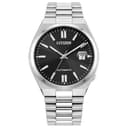
The Tsuyosa has sapphire. The Seiko 5 Sports has Hardlex, Seiko’s own hardened mineral glass. Sapphire sits at 9 on the Mohs scale, mineral glass at about 5.5, and the quartz grit in ordinary dust is roughly 7 — hard enough to mark one and not the other. Over five years of door frames and desk edges that is a visible, permanent difference, and it is the single strongest argument for the Citizen.
The counterweight: Hardlex is more tolerant of a sharp impact, which is part of why Seiko still fits it to watches meant to be knocked about. Our crystal comparison covers both directions properly.
2. Water resistance, which the Seiko wins outright
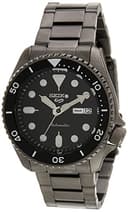
Ten bar against fifty meters. Fifty covers hand-washing, rain and an unplanned shower; one hundred covers swimming and water sports. If the plan is one watch worn everywhere, that gap matters more than most spec-sheet arguments — 50m watches are the ones that die of a pool and an aged gasket. Neither carries the regulated ISO 6425 diver’s marking, so neither is a dive watch whatever the bezel suggests. Our water resistance guide has the full table of what each marking permits.
3. Size, and the bracelet you cannot change
The published diameters are 42.5mm for the SRPD65 and 40mm for the Tsuyosa — but the real difference is structural. An integrated bracelet is part of the case design: it flows out of the case with no conventional lugs, which is exactly the look people want, and it means you cannot fit a leather strap, a NATO or anything else. The watch you buy is the watch you own.
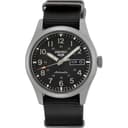
The Seiko goes the other way: conventional 22mm lugs on the SRPD65 and 20mm on the smaller field references, so the entire strap aftermarket is open to you. Resizing the bracelet is a ten-minute job, and swapping to nylon for the summer costs less than lunch. If you enjoy changing straps, the Tsuyosa is the wrong watch for you no matter how good it looks.
One more number worth knowing: Seiko publishes 46.0mm lug-to-lug for the 42.5mm SRPD65, which is short for its diameter and part of why it wears smaller than the figure suggests. Citizen publishes no lug-to-lug for the Tsuyosa at all, so you are buying its fit on faith. The size guide explains why that measurement is the one that matters, and the 40mm roundup covers the Tsuyosa’s size class in full.
4. The movement, and how much each maker documents
Seiko’s 4R36 is automatic with manual winding, 24 jewels, 21,600 vibrations per hour, approximately 41 hours of reserve and a published +45 to -35 seconds a day at normal temperatures. It hacks and it hand-winds. Seiko even publishes a magnetic-resistance figure of 4,800 A/m on these references — the ISO 764 threshold.
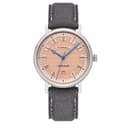
Citizen’s 8210 comes from the movement division that became Miyota — Citizen built a movement factory in the town of Miyota, in Nagano, in 1959, and launched the MIYOTA brand in 1980 — so the pedigree is real. Citizen lists a 42-hour reserve and a hack feature for this reference, but publishes no accuracy window for it. That is a documentation gap rather than a quality verdict, and it is why one of the picks below is a watch running a Miyota 9015, for which Miyota publishes -10 to +30 seconds a day, 24 jewels, 28,800 vibrations per hour and about 42 hours of running time. If the published numbers are what you care about, that is the cheapest way to get them. Our movements guide covers what a caliber name does and does not promise.
So which should you buy?
Buy the Tsuyosa if you want the integrated-bracelet look and a sapphire crystal, and you accept a 50m rating and a bracelet you will never change. It is the better-looking object and the better crystal, and nothing else at this price delivers that silhouette honestly. If you want Citizen’s sapphire and movement without the integrated bracelet, our best Citizen automatic watches roundup includes the Sport Automatic, which Citizen rates to 100m with conventional 22mm lugs.
Buy the Seiko 5 Sports if this is the one watch you own. It is cheaper, it is rated for swimming, it comes with a full published sheet, it takes any 22mm strap, and Seiko will service it in almost any country. It is also the better first automatic by some margin — our entry-level roundup explains why, and best Seiko automatic watches puts it in the context of the whole range.
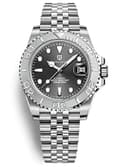
Buy neither if what you want is the integrated look on a budget: the Pagani Design yacht-style reference is a fraction of the Citizen’s price with a sapphire crystal and a Seiko NH35 inside, and our Pagani Design assessment is honest about what you give up to get there. If the priority is instead one watch for the whole week, the everyday-wear roundup filters on 100m and up. Every head-to-head on this site is listed on the comparisons hub.