The four properties that actually matter
1. Hardness — sapphire wins outright
Covered above and not really arguable. Sapphire at Mohs 9 is immune to everything you will meet short of a diamond or a deliberate attack with a file. Mineral glass at 5.5 is softer than the quartz in ordinary grit and will mark. Acrylic at 2 to 2.5 marks if you look at it firmly.
Hardened mineral glasses like Seiko’s Hardlex and Citizen’s equivalents sit above ordinary glass but well below sapphire. Neither maker publishes a Mohs figure for its own material, so this page does not print one — what can be said is that they scratch where sapphire does not.
2. Toughness — the ranking reverses
This is the property everyone forgets. Hardness resists scratching; toughness resists cracking, and they are not the same thing. Sapphire is the hardest of the three and the most brittle: a sharp impact on a corner can chip or shatter it. Mineral glass absorbs more impact before it fails. Acrylic barely fails at all — it dents and deforms rather than breaking, which is why it was fitted to watches sent into space and down mineshafts.
So the practical ranking depends entirely on what your watch is going to meet. Desk work and door frames: sapphire. Workshops, ladders and hard knocks: mineral or acrylic is genuinely the more sensible answer, and it is the opposite of what most buying advice says.
3. Repairability — acrylic wins, decisively
A scratched acrylic crystal is fixed with a cloth and a mild polishing compound, at home, in ten minutes, for the cost of a tube of polish. A scratched mineral crystal can sometimes be lightly polished but usually is not worth it. A scratched sapphire crystal cannot be polished by any normal means — the abrasives that would cut it are exotic — so the repair is replacement.
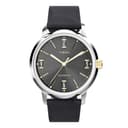
This is why vintage-style watches so often fit acrylic on purpose rather than to save money, and why the Timex Marlin is on this list. Our vintage-style roundup covers that design logic in full.
4. Optics — a real difference, usually ignored
Sapphire has a higher refractive index than glass, which means it reflects more light. An uncoated sapphire crystal in bright sun can be noticeably harder to read than mineral glass, which is why anti-reflective coating matters more on sapphire than on anything else. When a listing states “sapphire with AR coating” it is describing a genuine functional improvement, not a marketing flourish.
Acrylic, being softer and easily domed, distorts the dial at the edges in a way many people find attractive. That distortion is a large part of why a vintage watch looks like a vintage watch.
The price inversion, explained
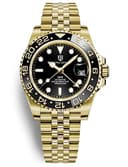
The thing that confuses buyers most: a $150 Pagani Design has sapphire and a $400 Seiko does not.
The reason is not that the cheaper watch is better engineered. Sapphire has become inexpensive to source, and for a brand with no name recognition it is the single most effective line item on a spec sheet — a checkable feature that costs little and impresses a great deal. Established makers spend the same money on movement development, case finishing, warranty and a service network, none of which appears in a bullet list.
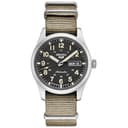
Seiko has an additional, defensible reason: Hardlex is cheap to replace and less brittle, which suits a tool watch that is expected to take knocks. You can disagree with the choice — plenty of Seiko owners do — but it is a choice rather than an oversight. Our sapphire crystal roundup lists the automatics that do fit it under $500.
Watch out for “sapphire coated”
One phrase worth learning to spot. Sapphire-coated glass is mineral glass with a thin hardened layer applied to the outside. It is harder than bare glass when new, the layer wears through with use, and you are then back to a mineral crystal — often one that now looks patchy.
“Sapphire crystal” means solid sapphire all the way through. “Sapphire coated,” “sapphire glass coating” and “hardened crystal glass” do not. If a listing uses the second kind of wording, price it as mineral, because that is what you will have in three years.
So which should you buy?
Sapphire for a watch worn daily in ordinary life, especially a dress watch or anything where appearance is the point. This is the right default for most buyers most of the time, and if it is available at your price you should take it.
Mineral if the watch will take genuine physical abuse, or if you are buying a Seiko you otherwise want — Hardlex is not a reason to reject a watch, it is a reason to expect hairlines and not mind them.
Acrylic if you are buying vintage style deliberately, and you like the idea that any damage is fixable at home with a cloth. It is the only crystal you can restore yourself, and that counts for more than the hardness number suggests.