How we ranked them
Four criteria, applied in this order. They are deliberately boring, because with this brand the interesting-sounding criteria are the ones that mislead.
1. Does the listing name the caliber?
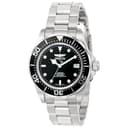
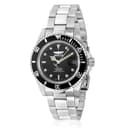
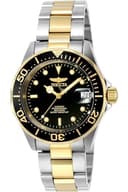
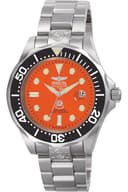
This is the single most useful test, and it splits the range cleanly. The 8927, the 10641 and the 47mm 35725state “NH35A Japanese Automatic movement, 24 jewel” on the listing. The 29179 and the Grand Diver 4186 say only that the movement is automatic. Invicta’s own catalog label for the Pro Diver caliber has historically been “IM-A-005”, a designation you cannot look up anywhere, and our full 8926OB review was written against that label. Worth recording precisely: when we re-read the 8926 listing on October 19, 2026 for this page, that listing did name an NH35A with 24 jewels. Both statements are Invicta’s. A named caliber is not a better watch, but it is a watch you can research, service and price honestly.
2. Does it publish a case size you can trust?
Every pick here publishes a diameter, which already puts Invicta ahead of some of the sterile-dial sellers. None of them publishes a lug-to-lug figure, and on a 47mm or 48mm case that is the measurement that decides whether the watch is wearable at all. Our watch size guide has the measuring method; take it seriously before you buy anything on this page over 42mm.
3. Is the water-resistance claim a rating or a certification?
A rating. All of them. Invicta states 200m on the Pro Divers and 300m on the Grand Diver and the 10641, and restates those numbers in language about scuba diving and professional marine activity. That is the pressure rating, not the ISO 6425 diver’s standard, which adds requirements for the bezel, the legibility, the shock and magnetic resistance and the strap attachment. The watches on this page are built like divers; they are not certified as divers. What a water-resistance figure actually permits is the longer version, and it is worth five minutes.
4. Price against the next rung up
Every pick is ranked on what it costs today relative to the alternative from a maker with a service network, which is usually Seiko or Orient at roughly twice the money. Prices on this page come from Amazon’s API with a timestamp under the table, never from our memory, because the whole point of the Invicta argument is the price.
The two things no Invicta automatic will give you
Sapphire
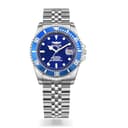
Not one automatic in Invicta’s range uses it. Every pick above is mineral, and the 8927 is mineral with a magnifier over the date. That matters more than it sounds: on the Mohs hardness scale corundum (sapphire) sits at 9 and quartz at 7, and ordinary environmental grit is largely quartz — which is exactly why mineral glass accumulates fine scratches from nothing in particular and sapphire does not. Budget homage brands like Steeldive and ADDIESDIVE fit sapphire at these prices; Invicta does not. If a scratch-free crystal is your deciding factor, read the sapphire versus mineral comparison and then go to the sapphire-crystal roundup instead. You will pay about the same money.
A quiet dial
Invicta prints its name in a size the rest of the industry gave up on, usually alongside the collection name and the water-resistance figure. If that bothers you now, it will bother you more in a year. The Coin-Edge is the least derivative-looking pick here, but it is still unmistakably an Invicta. The homage roundup covers the brands that take the opposite approach, including the sterile dials with no logo at all.
Which Invicta, by what you actually want
If you have never owned an automatic
The 8926OB, and spend the saving on learning whether you like mechanical watches at all. It winds itself from wrist movement, it has a see-through caseback so you can watch the rotor do it, and if you decide the hobby is not for you the loss is trivial. Our best automatics under $100 page is the wider shortlist at that budget, and how automatic watches work explains what you are looking at through that caseback.
If you are cross-shopping against a Seiko 5
Then the honest answer is that the Seiko is the better watch and the Invicta is the better deal, and which of those matters is a question about you. Seiko publishes a caliber, an accuracy range, a power reserve and a service network; Invicta publishes a case size. We wrote the whole argument out in Seiko 5 vs Invicta Pro Diver. The same comparison against Citizen’s mechanical diver is in Invicta Pro Diver vs Citizen Promaster, and against Orient’s sapphire-crystal Kamasu in Orient Kamasu vs Invicta Pro Diver.
If you are cross-shopping against Pagani Design
This is the comparison most people in the budget-homage corner of the market are actually making, and it comes down to sapphire against a service telephone number. We built a dedicated head-to-head for it: Pagani Design vs Invicta.
If your wrist is over 7.5 inches
The Grand Diver 4186 at a published 48mm, or the 47mm 35725. Invicta is one of the very few makers still building mechanical watches at that size, because the established brands abandoned it. The large-wrist roundup puts both in context against the 42mm-and-up options from makers who publish more.
If you want a green or a colored dial
Invicta is unusually good at this, and the 47mm 10641 is the cheapest green automatic we have found anywhere. It is in our green-dial roundup alongside the Seiko, Orient and sapphire-fronted budget alternatives at the same money.
What to expect from one in practice
Set expectations at the caliber, not at the brand. The NH35-class movement in these watches is specified to run within a window of tens of seconds a day rather than the few seconds a quartz watch manages — mechanical accuracy is a different scale of measurement, not a worse version of the same one, and how accurate an automatic watch should be sets out the numbers the makers actually publish. The 24-jewel count on the listings is not a quality score either; jewels are synthetic sapphire bearings at the pivots, and what the jewel count means explains why the number stopped being a selling point decades ago.
The components most likely to annoy you are the bracelet and the clasp. Both are stamped, both rattle, and both are the usual first upgrade — a $25 strap transforms how an 8926OB feels, and the Pro Diver case takes a standard 20mm. The caseback is an exhibition type on three of the five picks, which is unusual at this money and genuinely enjoyable.
Lastly, keep it wound or let it stop; neither hurts it. If you end up with more than a couple of automatics, that is when a watch winder starts to earn its place — and whether one is worth it is an honest look at when the answer is no.