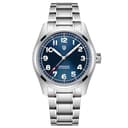
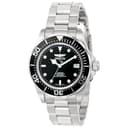
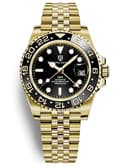
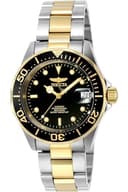
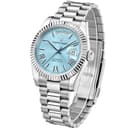
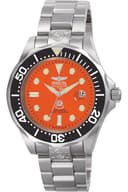
Crystal: the one spec that is not close
Every Pagani Design automatic in our registry publishes a sapphire crystal, and the DD36 publishes sapphire with an anti-reflective treatment. Every Invicta automatic publishes mineral. That is not a marketing difference, it is a materials one: on the Mohs hardness scale corundum — sapphire — sits at 9 and quartz at 7, and the grit in ordinary dust and sand is largely quartz. It is why a mineral crystal collects fine hairline scratches from nothing you can remember doing, and a sapphire one does not.
If you wear one watch every day for years, this is the difference you will actually see, long after the specification argument has stopped mattering. The full sapphire versus mineral comparison has the hardness figures and the honest caveat — sapphire is harder but more brittle, and a sharp impact can crack it where mineral would chip.
Movement: the same caliber, named differently
Both brands build around Seiko’s NH35-family automatic, and both are inconsistent about saying so. Pagani names a Seiko NH35Aon the pilot and on the PD-1651, and describes the GMT references only as “automatic mechanical”. The DD36 uses a Chinese ST16 instead, which is a different movement family entirely. On the Invicta side, the 8927, the 10641 and the 47mm 35725 name an “NH35A Japanese Automatic movement, 24 jewel”; the 29179 and the Grand Diver name nothing beyond “automatic”. Invicta’s own long-standing catalog label for the Pro Diver caliber is “IM-A-005”, which cannot be looked up anywhere.
Practical consequence: on the references where a caliber is named, the watch is serviceable by any competent independent watchmaker and the parts are commodities. On the references where it is not, you are buying a sealed box. If that matters to you, our NH35 page explains what the movement is specified to do, and NH35 vs Miyota 9015 covers the other caliber this whole market runs on.
Water resistance: Invicta states more, and neither is certified
Invicta states 200m on the Pro Divers and 300m on the Grand Diver and the 10641. Pagani states 200m on the pilot and 100m on the GMTs, the DD36 and the PD-1651. On paper Invicta wins the dive-watch argument, and the Pro Diver case does back it up with a screw-down crown and a unidirectional bezel.
What neither brand has is ISO 6425 diver’s certification, the standard that adds requirements for legibility in the dark, shock and magnetic resistance, the bezel and the strap attachment on top of the pressure rating. Both brands use dive language freely. Read what a water-resistance rating actually permits before you take either one into the sea, and whether you can swim with an automatic for the practical version. If you want a certified diver at a real price, that is a Seiko Prospex conversation, not this one.
Size: the two ranges barely overlap
This decides more buying decisions than the crystal does. Pagani Design builds small to medium — our registry has 36mm, 38mm, 40mm and 42mm references. Invicta builds medium to enormous — 40mm, 42mm, 47mm and a published 48mm. If your wrist is under about 6.5 inches, the 36mm DD36 is the only watch in this comparison that will sit properly on it. If your wrist is over 7.5 inches, Pagani has nothing for you and the Grand Diver is the obvious answer.
Both brands publish diameters and neither publishes a lug-to-lug figure, which is the measurement that actually decides overhang. On a 48mm case that omission is serious. Measure first — the method is in our watch size guide.
Warranty and service: the one place Invicta is clearly ahead
Invicta’s listings state a three-year limited manufacturer warranty and print a US customer-service telephone number for links, bracelet adjustment and warranty questions. For a watch at this price that is unusual, and it is the single strongest argument for the brand. Pagani Design sells through marketplace listings with no equivalent structure; if something goes wrong after the return window, you are relying on the retailer.
Keep it in proportion, though. A full mechanical service costs more than either of these watches, so neither is realistically a repair proposition — what an automatic service costs sets out the numbers. What a warranty buys at this end of the market is cover for a dead-on-arrival movement, not a decade of maintenance.
Branding: opposite problems
Invicta prints its name large, next to the collection name and the depth rating. Pagani Design prints a logo most people will not recognize, on a case that is often a close interpretation of something from Switzerland. Which of those bothers you is temperament, but it is worth deciding before you buy rather than after: this is the most common reason a cheap homage ends up in a drawer.
If neither appeals, the third option is a sterile dial with no logo at all — the ADDIESDIVE and Steeldive route, covered in our homage roundup and head to head in Steeldive vs ADDIESDIVE.
Who should buy which
Buy Pagani Design if
You want the best specification your money can buy and you accept that there is nobody to call. Sapphire, a named Japanese caliber on the pilot, 200m, and a case in a size that normal wrists want. The full Pagani Design brand review goes model by model, including the arguments against.
Buy Invicta if
You want the cheapest possible entry into a mechanical watch, or you want a large case, or the warranty genuinely matters to you. The Invicta automatic roundup covers the five references worth considering, and the 8926OB review is the deep dive on the one most people end up with.
Buy neither if
You are going to care about resale, service history or the badge in five years. Both brands are consumables. Roughly double either price and you are in Seiko 5 Sports and Orient territory, where the caliber is published with a rate, the service network is real, and the design is the maker’s own — which is the comparison we run in Pagani Design vs Seiko and Seiko 5 vs Invicta Pro Diver.