Dial & Lume

Best Automatic Watches for Big Wrists

42mm to 47mm automatics for a wrist the industry quietly stopped designing for — and the published measurement that decides whether a big watch actually works, which is not the diameter every listing leads with.

By Stephen V.Last updated How we pick

The pendulum that swung watches down to 36mm over the last decade solved a real problem and created a quieter one. Buyers with a genuinely large wrist now spend their time reading roundups that top out at 40mm, being told that anything bigger is a hangover from 2008. It is not. A 38mm watch on a broad wrist looks like a coin someone lost, and no amount of fashion consensus changes that.

The problem is that “big” gets sold to you as a single number, and it is the wrong one. Case diameter describes the circle. Lug-to-lug describes the span the watch actually occupies down your wrist, and the two do not track together. This page has the proof in its own spec tables: Seiko publishes a 49.4mm lug-to-lug for the 42.4mm SRPG57, and Steeldive publishes 46.8mm for the wider 43.8mm SD1970. The narrower watch is the one that runs further down the wrist, by 2.6mm.

Seven picks below, from about $110 to $550, every one with a case diameter of 42mm or more published by the maker or stated in the listing— no diameters estimated from photographs. We have not handled any of them. Where a maker declines to publish a dimension the spec table reads “Not published”, which on a large watch is itself a finding. Prices come from a live daily check rather than from anything typed into this page.

How this is funded: we earn a commission if you buy through our links, at no extra cost to you. As an Amazon Associate we earn from qualifying purchases. It never changes which watch or winder we recommend, and we’ll tell you plainly when to skip one. Full disclosure.

Quick picks

Ranked on movement, specs and buyer fit. Select a row to jump to the full write-up. We have not tested these — here is exactly what we do instead.

#ProductBest forPrice
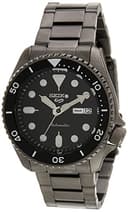
1
Seiko 5 Sports SRPD65

Seiko 5 Sports SRPD65

The default first automatic, and it earns it. Seiko's own 4R36 movement with day-date, hacking and hand-winding, a 100m case and a genuine in-house pedigree — for a price that makes it the reference point every other budget automatic is measured against.

Best overall
$316.00 · View on Amazon

Price as of September 8, 2026. #ad How we’re funded

2
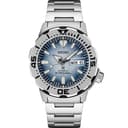
Seiko Prospex SRPG57

Seiko Prospex SRPG57

The cheapest watch Seiko will sell you with a diver's marking on the dial, and the single most useful watch in this comparison. It runs the same 4R36 as the Seiko 5 Sports, in a case the same thickness and a tenth of a millimeter narrower - what the extra money actually buys is a screw-down crown, a 200m diver's rating and LumiBrite on the bezel as well as the hands.

Best true diver
$550.00 · View on Amazon

Price as of September 8, 2026. #ad How we’re funded

3
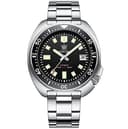
Steeldive SD1970 200m Diver

Steeldive SD1970 200m Diver

The one watch on this list whose maker publishes the measurement that actually decides fit. Steeldive states 43.8mm across, 13.5mm thick and 46.8mm lug-to-lug - a shorter lug span than Seiko publishes for its own 42.4mm diver - so this is a wide watch that does not run long down the wrist. Sapphire with AR coating and a 120-click ceramic bezel at this money is the specification story.

Best specification for the money
$219.90 · View on Amazon

Price as of September 8, 2026. #ad How we’re funded

4
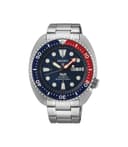
Seiko Prospex SRPE99

Seiko Prospex SRPE99

The big one. Same 4R36 and the same 13.4mm thickness as everything else here, but a 45.0mm case, and that is the whole decision - it is either the Seiko that finally looks like a proper tool watch on your wrist or the one that overhangs it. Seiko publishes the diver's rating, the screw-down crown and LumiBrite on the bezel; the retail listing adds the PADI Special Edition designation.

Best at 45mm
$488.00 · View on Amazon

$550.0011% off

Price as of September 8, 2026. #ad How we’re funded

5
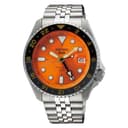
Seiko 5 Sports SKX GMT SSK036

Seiko 5 Sports SKX GMT SSK036

The SKX-cased GMT: the shape most people picture when they picture a Seiko, with a 24-hour bezel on top of it. Same 4R34 mechanics as the rest of the family, in the plain black execution that stays available when the special-edition bezels sell out.

Best GMT
$475.00 · View on Amazon

Price as of September 8, 2026. #ad How we’re funded

6
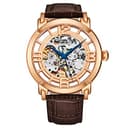
Stuhrling Original Winchester 44 Elite Skeleton Automatic

Stuhrling Original Winchester 44 Elite Skeleton Automatic

The full-skeleton look done properly — front and back cut away so the movement is the dial rather than a window in it. Stuhrling's marketing is loud, but the watch delivers exactly the thing people buy a skeleton for.

Best dress option
$129.99 · View on Amazon

Price as of September 8, 2026. #ad How we’re funded

7
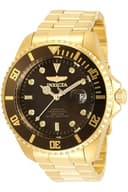
Invicta Pro Diver 47mm (27611)

Invicta Pro Diver 47mm (27611)

The largest published case diameter on this page and the cheapest watch on it, which is not a coincidence - 47mm is a size the established makers have abandoned and the value brands have not. If your wrist genuinely needs 47mm this is the accessible mechanical option; if it does not, this is exactly the watch that taught a generation that big watches overhang.

Biggest case here
$110.00 · View on Amazon

Price as of September 8, 2026. #ad How we’re funded

The picks in full

#1Best overall

Seiko 5 Sports SRPD65

The default first automatic, and it earns it. Seiko's own 4R36 movement with day-date, hacking and hand-winding, a 100m case and a genuine in-house pedigree — for a price that makes it the reference point every other budget automatic is measured against.

Strengths

  • In-house Seiko 4R36 movement with hacking and hand-winding
  • Day-date, 100m water resistance and a see-through caseback onto the movement
  • The most cross-shopped, best-supported budget automatic there is

Trade-offs

  • The 4R36 is reliable, not accurate to chronometer standards
  • Hardlex crystal scratches more easily than sapphire
MovementSeiko 4R36 (automatic + hand-winding)
Stated accuracy+45 / -35 sec/day
Power reserve41 hours
Case size42.5 mm
Water resistance100 m
CrystalHardlex mineral
Hacks / hand-windsYes / Yes

Why this one. The 5 Sports line is the modern heir to the original Seiko 5: an honest, serviceable automatic with real heritage, which is exactly why it anchors so many of our lists.

Specs read from the product listing and the maker’s published data, on August 19, 2026. “Not published” means the maker does not state that figure.

#2Best true diver

Seiko Prospex SRPG57

The cheapest watch Seiko will sell you with a diver's marking on the dial, and the single most useful watch in this comparison. It runs the same 4R36 as the Seiko 5 Sports, in a case the same thickness and a tenth of a millimeter narrower - what the extra money actually buys is a screw-down crown, a 200m diver's rating and LumiBrite on the bezel as well as the hands.

Strengths

  • 200m diver's rating with a screw-down crown and unidirectional bezel
  • Seiko states LumiBrite on hands, indexes AND bezel - the 5 Sports omits the bezel
  • 42.4mm and 13.4mm, so no thicker or wider than the 5 Sports it replaces

Trade-offs

  • 49.4mm lug-to-lug wears noticeably longer than the 5 Sports' 46.0mm
  • Hardlex mineral crystal, not sapphire, at well over $400
  • Solid screw case back - you lose the 5 Sports' view of the movement
MovementSeiko 4R36 (automatic + hand-winding)
Stated accuracyNot published
Power reserve41 hours
Case size42.4 mm
Water resistance200 m
CrystalHardlex with magnified glass
Hacks / hand-windsYes / Yes

Why this one. This is the reference that makes the whole Seiko 5 versus Prospex argument concrete. Seiko publishes both: 4R36 and approximately 41 hours on each, 42.5mm/13.4mm on the SRPD65 against 42.4mm/13.4mm here. The movement and the case size are not what you are paying for.

Specs read from the product listing and the maker’s published data, on September 1, 2026. “Not published” means the maker does not state that figure.

#3Best specification for the money

Steeldive SD1970 200m Diver

The one watch on this list whose maker publishes the measurement that actually decides fit. Steeldive states 43.8mm across, 13.5mm thick and 46.8mm lug-to-lug - a shorter lug span than Seiko publishes for its own 42.4mm diver - so this is a wide watch that does not run long down the wrist. Sapphire with AR coating and a 120-click ceramic bezel at this money is the specification story.

Strengths

  • Steeldive publishes 43.8mm diameter, 13.5mm thickness AND 46.8mm lug-to-lug
  • AR-coated sapphire and a 120-click unidirectional ceramic bezel
  • Seiko NH35 automatic with a stated 41 hours, in a 200m 316L case

Trade-offs

  • 13.5mm is thick, and thickness is what makes a big watch feel heavy
  • A Seiko 6105 homage, so you are wearing someone else's design
  • Micro-brand support: the repair path is movement replacement, not service
MovementSeiko NH35 automatic
Stated accuracyNot published
Power reserve41 hours
Case size43.8 mm
Water resistance200 m
CrystalSapphire with AR coating
Hacks / hand-windsYes / Yes

Why this one. Steeldive lists the diameter as 43.8mm WITHOUT the crown; the Amazon title rounds it to 44mm. The 46.8mm lug-to-lug is the number worth knowing - it is 2.6mm shorter than the 49.4mm Seiko publishes for the smaller-diameter SRPG57, which is the clearest demonstration on this page that diameter and wearing size are different things.

Specs read from the product listing and the maker’s published data, on September 8, 2026. “Not published” means the maker does not state that figure.

#4Best at 45mm

Seiko Prospex SRPE99

The big one. Same 4R36 and the same 13.4mm thickness as everything else here, but a 45.0mm case, and that is the whole decision - it is either the Seiko that finally looks like a proper tool watch on your wrist or the one that overhangs it. Seiko publishes the diver's rating, the screw-down crown and LumiBrite on the bezel; the retail listing adds the PADI Special Edition designation.

Strengths

  • 45.0mm 200m diver's case with a screw-down crown and unidirectional bezel
  • LumiBrite on hands, indexes and bezel, per Seiko's own specification
  • Three-fold clasp with a secure lock and a diver's extender

Trade-offs

  • 45.0mm is too much watch for a lot of wrists - measure before you buy
  • The most expensive watch in this comparison, on Hardlex rather than sapphire
  • The PADI designation is on the retail listing, not on Seiko's specification page
MovementSeiko 4R36 (automatic + hand-winding)
Stated accuracyNot published
Power reserve41 hours
Case size45 mm
Water resistance200 m
CrystalHardlex
Hacks / hand-windsYes / Yes

Why this one. Seiko files this under Prospex Sea and does not describe the case shape on its specification page, so we do not claim one - what is published is 45.0mm across and 13.4mm thick, which is a large watch by any measure.

Specs read from the product listing and the maker’s published data, on September 1, 2026. “Not published” means the maker does not state that figure.

#5Best GMT

Seiko 5 Sports SKX GMT SSK036

The SKX-cased GMT: the shape most people picture when they picture a Seiko, with a 24-hour bezel on top of it. Same 4R34 mechanics as the rest of the family, in the plain black execution that stays available when the special-edition bezels sell out.

Strengths

  • SKX-derived case shape with a rotating 24-hour GMT bezel
  • Same proven 4R34 GMT movement, with Seiko's full published specification
  • The execution of this case that is consistently in stock

Trade-offs

  • Carries a premium over the plain 5 Sports GMT for the case shape alone
  • Hardlex crystal rather than sapphire, like the rest of the line
MovementSeiko 4R34 (automatic + hand-winding)
Stated accuracyNot published
Power reserve41 hours
Case size42.5 mm
Water resistance100 m
CrystalHardlex mineral with magnifier
Hacks / hand-windsYes / Yes

Why this one. Seiko's SKX case is the shape most enthusiasts mean when they say 'Seiko diver'. Putting a GMT bezel on it is why this variant carries a premium over the SSK003. The green-and-black 'Sprite' SSK035 that used to sit here is no longer listed; the SSK036 is the same watch with a black bezel, and Seiko lists it at USD 475.

Specs read from the product listing and the maker’s published data, on September 3, 2026. “Not published” means the maker does not state that figure.

#6Best dress option

Stuhrling Original Winchester 44 Elite Skeleton Automatic

The full-skeleton look done properly — front and back cut away so the movement is the dial rather than a window in it. Stuhrling's marketing is loud, but the watch delivers exactly the thing people buy a skeleton for.

Strengths

  • Genuinely skeletonized rather than a small aperture
  • Self-winding mechanical movement with a display back
  • Dress proportions rather than an oversized novelty case

Trade-offs

  • Brand's marketing language oversells the finishing
  • No published accuracy or power reserve figure
MovementMechanical (self-winding)
Stated accuracyNot published
Power reserveNot published
Case size44 mm
Water resistanceNot published
CrystalNot published
Hacks / hand-windsNot published / Yes

Why this one. 'Skeleton' covers everything from a small open-heart window to a fully cut-away movement. This is at the cut-away end, which is the version most buyers actually mean.

Specs read from the product listing and the maker’s published data, on August 11, 2026. “Not published” means the maker does not state that figure.

#7Biggest case here

Invicta Pro Diver 47mm (27611)

The largest published case diameter on this page and the cheapest watch on it, which is not a coincidence - 47mm is a size the established makers have abandoned and the value brands have not. If your wrist genuinely needs 47mm this is the accessible mechanical option; if it does not, this is exactly the watch that taught a generation that big watches overhang.

Strengths

  • 47mm case with a 300m rating and a 22mm band, per Invicta's own specification
  • The cheapest automatic here by a wide margin
  • Screw-down crown and a unidirectional bezel on the Pro Diver case

Trade-offs

  • Invicta publishes no case thickness, no lug-to-lug and no power reserve
  • Mineral crystal, and Invicta names the caliber only as "IM-A-005"
  • 47mm overhangs most wrists - this is the one pick here you must measure for
MovementAutomatic - Invicta labels it only "IM-A-005"
Stated accuracyNot published
Power reserveNot published
Case size47 mm
Water resistance300 m
CrystalMineral
Hacks / hand-windsNot published / Not published

Why this one. Invicta's own specification page states 47mm, mineral crystal, 300m and a 22mm band, and names the movement only as 'IM-A-005' - the same label it uses on the 40mm 8926OB, which is widely reported to be a Seiko/TMI NH35-class caliber. Invicta does not publish a lug-to-lug figure for this reference, which on a 47mm case is the specification you most need.

Specs read from the product listing and the maker’s published data, on September 8, 2026. “Not published” means the maker does not state that figure.

The four numbers that decide a big watch

On a small wrist, fit is a pass/fail test: the lugs either overhang or they do not. On a large wrist that test is usually passed before you start, which is why the useful criteria are different — and why copying the advice written for small wrists gets you the wrong watch.

1. Lug-to-lug, still

Measure straight across the flat topof your wrist, from where it begins curving down on one side to where it begins on the other. That figure is your lug-to-lug ceiling. On a large wrist it will comfortably exceed the 46mm–50mm spans published for the watches here, which is exactly the point: once the ceiling stops binding, diameter becomes a question of how you want the watch to look rather than whether you can wear it. Our watch size guide covers the measurement itself in detail.

The catch is that lug-to-lug is the specification makers publish least. Seiko publishes it for some references and not others. Steeldive publishes it as “case length”. Invicta does not publish it at all for a 47mm watch, which is precisely the size at which you would want to know. Where it is missing here we have said so, rather than filling in a plausible number.

2. Thickness, which is what makes a watch feel big

Diameter is what a watch looks like; thickness is what it feels like all day. Most of this list clusters tightly — Seiko publishes 13.4mm for the SRPD65, the SRPG57 and the SRPE99 alike, and Steeldive publishes 13.5mm for the SD1970 — which tells you something useful: at this end of the market you are buying diameter, not slimness. A 13.5mm case catches a shirt cuff. If you wear one regularly, that matters more than the millimeter of width you were comparing.

3. Lug width, the cheapest lever you have

A 22mm band reads visually heavier than a 20mm one on the same case, and it is the one proportion you can change after buying. Invicta publishes 22mm for the 27611; Steeldive publishes 20mm for the SD1970, which is part of why a 43.8mm watch does not wear as brutally as the number suggests. If a watch is nearly right, a strap change is a cheap experiment rather than a second purchase.

4. Whether the maker publishes anything at all

This is a criterion, not a complaint. A brand that states diameter, thickness and lug-to-lug is letting you make a decision. A brand that states one number and shows you a wrist shot is asking you to guess, and on a 47mm case the guess is expensive. The two emptiest spec tables below — four blank rows on one, three on the other — belong to the two cheapest watches here, which is not a coincidence.

How we picked

A published diameter of 42mm or more

Every pick has 42mm or more stated by the maker or in the retail listing. That excludes a lot of watches described as “large” that turn out to be 40mm, and it excludes anything whose only evidence of size was a photograph. Where the maker and the listing disagree we use the maker: Steeldive states 43.8mm without the crown while the Amazon title rounds it to 44mm, and the spec table here says 43.8mm.

Genuinely mechanical

Every pick is self-winding. The large-case market is where the cheapest quartz movements hide behind the most aggressive styling, so this filter removes most of what a search for a big men’s watch returns. Where a maker names the caliber — the Seiko NH35 in the Steeldive — we have recorded it. Where it does not, as with Invicta’s “IM-A-005”, the table says exactly that.

Currently buyable, with a real price

Every reference on this page returned a live, in-stock offer through Amazon’s own product API before it was written in, and the prices you see are re-checked daily rather than stored. If a number is missing the button reads “check price” instead — we would rather show nothing than a figure from last month.

Designed large, not scaled up

A watch designed at 44mm uses hands that reach the chapter ring and markers sized to the dial. A 40mm design blown up leaves a dial that looks empty and hands that stop short. The dive watches here have the easiest time of it, because a wide rotating bezel absorbs diameter and keeps the dial in proportion — a large part of why divers dominate this size class.

“10 bar” is not a diver’s watch, and size has nothing to do with it

A recurring assumption about big watches is that the case is bigger because it is tougher. It is not, and this page has the counter-example built into it. Seiko rates the 42.5mm SRPD65 at 10 barand the 42.4mm SRPG57 — a tenth of a millimeter narrower — at 200m diver’s. The difference is a screw-down crown and conformance to ISO 6425, not case volume.

That standard is worth understanding before you pay for it. ISO 6425 requires at least 100m, a unidirectional or lockable elapsed-time bezel, legibility in the dark, and testing of every individual watchrather than a sample. Only a watch that meets it may be marked “DIVER’S”. A watch marked only “200m” or “20 ATM” has been tested to a pressure, not to the standard. Our water resistance guide sets out what each marking permits, and the Seiko 5 Sports versus Prospex comparison works through exactly this pair of watches.

What buying big actually costs you

Four honest trade-offs. None of them is a reason not to buy a large watch; all of them are reasons to buy the right one.

Weight.A full-size steel case on a steel bracelet is heavy, and heavy watches slide around the wrist as the day goes on. Seiko publishes 195g for the SRPE99. A bracelet sized properly — and micro-adjusted, which our bracelet resizing guide covers — matters more on a big watch than on a small one.

Crystal.The two most expensive watches here run Hardlex mineral rather than sapphire, and the mid-priced Steeldive runs AR-coated sapphire. That inversion is real, and it is worth naming: hardness is not what you are paying Seiko for. Sapphire sits at 9 on the Mohs scale against about 5.5 for ordinary glass, while the grit in everyday dust is largely quartz at 7 — hard enough to mark mineral glass and not sapphire. If a clean crystal in five years is the priority, our sapphire crystal picks are a better starting point than this page.

Versatility.Above roughly 44mm a watch stops going under a cuff and stops reading as formal. That is a genuine constraint rather than snobbery, and it is why exactly one pick here is a dress watch. If you want a large mechanical watch with a jacket, the honest options are a chronograph — see our mechanical chronograph picks — or accepting that a sports watch is what you will actually wear.

Support. The 47mm end of this market has been abandoned by the established Japanese makers, so what is left there is value brands and micro-brands. That is a real trade in service and parts, which our micro-brand guide sets out plainly: the movement is not the risk, the repair path is.

Where to go from here

If nothing here is quite right, three adjacent pages cover the same ground from a different angle. Dive watches are the category that stayed large by design, so our automatic dive watch picks include most of the field at this size. A second time zone in a 42.5mm case is the whole subject of our automatic GMT roundup. And if you are buying for someone whose wrist you have not measured, the honest answer is that a 40mm watch fits far more people than a 45mm one — our small-wrist roundup is the other end of the same argument.

Frequently asked questions

What size watch should I buy for a big wrist?

Anywhere from 42mm to 47mm, but pick it on lug-to-lug rather than diameter. Measure the flat top of your wrist: on a large wrist that figure normally exceeds the 46mm to 50mm lug spans published for the watches on this page, which means diameter becomes a styling decision rather than a fit constraint. Thickness and bracelet weight are what you will actually notice day to day.

Is 42mm too big for a watch?

Not on a large wrist. 42mm is the low end of this page and sits in the middle of the affordable sports-automatic market — Seiko publishes 42.5mm for the 5 Sports SRPD65 and 42.4mm for the Prospex SRPG57. It is the size at which a dive-style watch stops looking undersized on a broad wrist without becoming unwearable under a cuff.

Why does lug-to-lug matter more than case diameter?

Diameter only describes the circular case. Lug-to-lug is the span from the top of the upper lugs to the bottom of the lower ones — the distance the watch actually occupies down your wrist. The two do not track together: Seiko publishes 49.4mm lug-to-lug for the 42.4mm SRPG57, while Steeldive publishes 46.8mm for the wider 43.8mm SD1970. The narrower watch wears longer.

Are there automatic watches over 45mm?

Yes, but the field narrows sharply. The established Japanese makers have largely left the 46mm-plus size class, so what remains is value brands and micro-brands. The largest published diameter on this page is the 47mm Invicta Pro Diver 27611, and Invicta does not publish a lug-to-lug figure for it — which on a case that size is the specification you most need.

Does a bigger case mean better water resistance?

No. Water resistance comes from the crown, the gaskets and the caseback, not from case volume. Seiko rates the 42.5mm SRPD65 at 10 bar and the fractionally narrower 42.4mm SRPG57 at 200m diver's — the difference is a screw-down crown and conformance to ISO 6425, which also requires a unidirectional bezel, legibility in the dark and testing of every individual watch rather than a sample.

What strap width suits a 44mm watch?

Usually 20mm or 22mm. Strap width is roughly half the case diameter as a starting point, and it changes the visual weight of a large watch more than a millimeter of diameter does. Steeldive publishes 20mm lugs for its 43.8mm SD1970 and Invicta publishes 22mm for the 47mm 27611 — the narrower band is part of why the Steeldive wears less heavily than its diameter implies.

Are big watches out of style?

The fashion has moved toward 36mm to 40mm, which is a genuine improvement for most wrists. It is not a rule. A watch proportional to the wrist it is on looks right regardless of the year, and a 38mm case on a broad wrist reads as undersized in exactly the way a 45mm case reads as oversized on a slim one.

Sources

  • Seiko - 5 Sports SRPD65 product specificationSeiko's own listing for the SRPD65: caliber 4R36, automatic with manual winding, approx. 41h reserve, 42.5mm diameter, 13.4mm thick, 46.0mm lug-to-lug, Hardlex, LumiBrite on hands and index(es), a unidirectional rotating bezel and a see-through screw case back. Water resistance is stated as '10 bar' - NOT a diver's rating - and no screw-down crown is listed (accessed September 1, 2026)
  • Seiko - Prospex SRPG57 product specificationSeiko's own listing for the SRPG57: caliber 4R36, approx. 41h reserve, 42.4mm diameter, 13.4mm thick, 49.4mm lug-to-lug, Hardlex with magnified glass, '200m / 660ft diver's' water resistance, a screw-down crown, a unidirectional rotating bezel, a screw case back, and LumiBrite on hands, index(es) AND bezel (accessed September 1, 2026)
  • Seiko - Prospex SRPE99 product specificationSeiko's own listing for the SRPE99: caliber 4R36, approx. 41h reserve, 45.0mm diameter, 13.4mm thick, Hardlex, '200m / 660ft diver's', a screw-down crown, a unidirectional rotating bezel, LumiBrite on hands, index(es) and bezel, and a three-fold clasp with secure lock and extender, and a stated weight of 195.0g. Seiko files it under Prospex Sea and does not state a case shape, a lug-to-lug figure or the PADI designation (accessed September 1, 2026)
  • Steeldive - SD1970 200m diver product specification (Steeldive Watch Store)Steeldive's own store listing for the SD1970: 43.8mm case diameter without the crown, 13.5mm thick, 46.8mm lug-to-lug ('case length'), 20mm lug width, 316L stainless steel, Japan NH35 automatic with 41 hours of energy storage, sapphire crystal with AR coating, a 120-click unidirectional ceramic bezel, 200m / 20 ATM, and Swiss C3 green plus BGW9 blue luminous. Amazon's listing title rounds the diameter to 44mm (accessed September 8, 2026)
  • Invicta - Pro Diver model 27611 product specificationInvicta's own specification page for the 27611: 47mm stainless steel case, blue dial, mineral crystal, stainless steel bezel, 22mm band, 300m water resistance, and a caliber named only as 'IM-A-005'. Invicta publishes no case thickness, no power reserve and no accuracy figure for this reference (accessed September 8, 2026)
  • ISO 6425:2018 — Divers' watchesThe standard a watch must meet to be legally marked 'Diver's [depth]m': minimum 100m, a unidirectional/lockable elapsed-time bezel, dark legibility, and testing of every piece (accessed July 21, 2026)
  • Water Resistant mark — WikipediaWhat the depth markings actually mean: 30m is splash resistance only, 50m covers showering and shallow swimming, 100m covers swimming and water sports, and only an ISO 6425 'DIVER'S' mark is rated for scuba (accessed August 11, 2026)
  • Mohs scale of mineral hardness — WikipediaThe hardness ranking behind every watch-crystal argument: corundum (sapphire) 9, quartz 7, glass 5.5, plastic 2 to 2.5 — which is why sand and grit, largely quartz, scratch mineral glass and acrylic but not sapphire (accessed August 19, 2026)

Keep reading