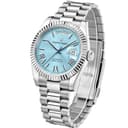
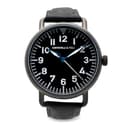
Which design each one echoes
This is the table the category usually refuses to print. Every row names the watch the design comes from, the movement as the maker states it, and the detail that gives each one away:
| Pick | Echoes | Movement, as stated | The giveaway detail |
|---|
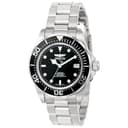
| Invicta Pro Diver 8926OB | Rolex Submariner | Automatic, labeled only “IM-A-005” | Coin-edge bezel, 200m, mineral crystal |
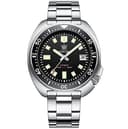
| Steeldive SD1970 | Seiko 6105 cushion-case diver | Seiko NH35 | Cushion case, 43.8mm, ceramic bezel, AR sapphire |
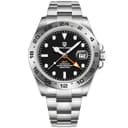
| Pagani Design GMT 42mm | Two-tone-bezel GMT travel watch | Automatic mechanical | 24-hour hand, sapphire, 100m |
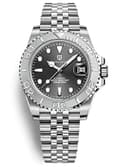
| Pagani Design PD-1651 | Fluted-bezel Swiss dress-sports watch | Seiko NH35 | Jubilee-style bracelet, sapphire, 100m |
| Pagani Design DD36 | 36mm Swiss day-to-day classic | ST16 automatic | 36mm case, AR sapphire, 10 bar |
| Chotovelli Flieger Tipo.4 | German B-Uhr observation watch (Type B) | Automatic, not named on the listing | Triangle at twelve, split hour/minute rings |
Homage, replica, counterfeit: the line that matters
Three words get used as if they were the same thing, and the difference is not subtle:
- An homagewears its own maker’s name and borrows a design. Legal, openly sold on Amazon, and what every watch on this page is.
- A replicawears the original maker’s name. That is trademark counterfeiting regardless of how it is described in the listing, and no price makes it a purchase worth defending.
- A “frankenwatch”mixes genuine and non-genuine parts under a real brand name. It is the version that catches people out second-hand, because the dial really was made by the company whose name is on it — and the case, hands or movement were not.
The practical test takes two seconds: read the dial. If the name on it belongs to a company that did not make the watch, walk away. Every listing linked from this page states its own brand in the title, which is why all six could be included.
How we picked
Three rules, applied before any of the writing:
1. The borrowed design has to be identifiable.Not “vintage-inspired” — a specific lineage that the maker, the listing or the specification makes obvious. Steeldive’s SD1970 is a cushion-cased 6105 interpretation and nobody involved pretends otherwise; the Chotovelli runs a Type B flieger dial, which is a defined layout rather than a vibe. Watches whose design is merely generic did not qualify, however good they are.
2. The listing has to be live and purchasable.Every pick was checked against the retailer on the date in the spec table, and the prices on this page come from an automated daily check rather than from a number typed into the text. If a listing dies, the price disappears and the buy button falls back to a search — it never shows you a stale figure.
3. Specification beats styling where the two conflict. There are prettier homages than the Invicta. None of them gives you a 200m automatic diver for under $100, which is why it leads. Where a maker does not publish a figure, this page prints “Not published” rather than an estimate — and on homage watches that happens a lot.
Why three of the six are Pagani Design
Because the brand’s entire business is this category, and pretending otherwise to look balanced would be dishonest. Pagani Design builds recognizable shapes around documented Japanese movements — usually the Seiko NH35, which any watchmaker can service — and prices them where nothing else with a sapphire crystal sits. The three here are genuinely different watches: a 42mm mechanical GMT, a 100m dress-sports watch on a jubilee-style bracelet, and a 36mm with an anti-reflective sapphire crystal and a 10 bar rating, which is a combination almost nobody offers in a small case.
If you want the brand examined on its own terms — including the arguments against buying one at all — our Pagani Design brand review does that properly. This page is cross-brand and organized by the design being borrowed, which is a different question.
What you are actually giving up
A homage is a real trade, not a free lunch, and the honest list is short:
Resale value is effectively zero. The watches these echo hold value because of the name on the dial. Take the name off and the second-hand market is other people who could buy a new one for the same money. Treat the purchase as spending, not storing.
Service is replacement, not repair.On an NH35 or an ST16, the economically rational fix after a few years is a new movement, because the caliber costs less than the labor to strip it. That is fine — it is how the whole budget-mechanical segment works — but it is not the same as a maker who will take the watch back in twenty years. Our guide to what an automatic service actually costs puts numbers on that gap.
Somebody will ask. If you wear an overt Submariner homage, at some point a stranger will look at your wrist and then at your face. How much that bothers you is a personality question, and only you can answer it before you buy rather than after.
The specifications are thinly documented.Look at the movement column above. Invicta calls its caliber “IM-A-005” and publishes nothing else about it; Chotovelli does not name a movement at all. That is the real cost of the saving, and it is why the two picks running a named Seiko NH35 are the ones we would hand to a first-time buyer.
What we left off, and why
Two kinds of watch were excluded on the rules above rather than on quality.
Budget divers with no stated lineage.Several NH35 divers in our registry are better value than some of the picks here — but their makers do not point at a specific original, and we are not going to invent one from a bezel shape. If what you actually want is the cheapest good mechanical diver rather than a borrowed design, the honest page for that is our automatic dive watches under $200 roundup.
Reissues of a maker’s own design.The Sea-Gull 1963 chronograph looks exactly like the kind of watch this page is about, and it is the opposite: Sea-Gull is reissuing a watch its own factory developed in the 1960s, using its own column-wheel caliber. Copying yourself is not an homage. It gets its own page — our Sea-Gull 1963 review— and it is the single best answer on this site to “I want a mechanical watch nobody else has.”
The alternative nobody mentions: buy an original
The uncomfortable fact about this category is that the money involved overlaps with real Japanese watches that are nobody’s copy. For what the Steeldive costs, Seiko and Orient both sell divers with in-house or own-group movements and decades of design history behind them; several sit at similar money. We would always rather you knew that before buying, so: the best Seiko automatics and the best Orient automatics are the two pages to read against this one.
Where an homage still wins is shape. If the watch you want is a 36mm fluted-bezel classic or a two-tone GMT, no Japanese maker sells you that look at this money, and the choice is a borrowed design or nothing. That is a legitimate reason to buy one, and it is the only reason we would.
Living with one
Mechanically these behave like any other automatic. They wind from wrist movement, they stop after a day or two off the wrist, and they will run roughly within the tolerance their caliber is rated for — where one is published at all. If you own several and resent resetting them, the single watch winder roundup covers the cheapest sensible fix, and whether you need a winder at all argues the other side honestly. Two of the picks here are rated 200m, which makes them genuinely swimmable; the two dress-sports Paganis at 100m are splash-and-shower watches, and our water resistance guide explains why those two ratings are further apart in practice than the numbers suggest.