How we picked
1. A glass lid, stated by the maker
The entry rule for this page is that the listing states a glass or tempered-glass display lid for that exact reference. That is what rules out the travel cases and rolls in our travel case roundup, which are closed by design, and it is why a page about display cases is a different page from our main watch box roundup rather than a rename of it.
2. Then: what is under the glass
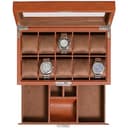
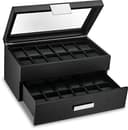
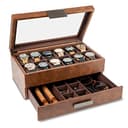
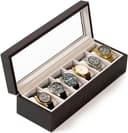
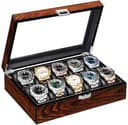
The Rothwell states a microsuede liner, which is the best-specified interior on this page and the reason it leads. Case Elegance states real wood rather than a printed wrap. Glenor’s 24-slot states a carbon-fibre-pattern finish. The ProCase 12-slot is honest about being wrapped board, which is fine for protecting watches — it simply will not age the way leather or hardwood does. Below about $40, wrapped board is what you are buying whatever the photograph suggests.
3. Then: layout, because a display case is read in one glance
Two-tier cases like the Glenor 24-slot show everything at once; single-tier cases show a row cleanly and nothing else. Neither is better, but the two-tier format is the only way a collection past about twelve watches stays visible without a second box. The honest warning on the card applies: do not buy 24 slots for six watches.
4. Then: the drawer
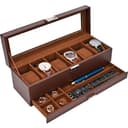
Three picks have one, and it is the upgrade people underestimate. The clutter that accumulates around a watch collection is straps, spring bars, a spring-bar tool and cufflinks, not more watches — and none of that belongs on display. Our valet drawer page is built entirely around that format.
What a display case is not
It is not security. A lock on a glass-topped box is casual deterrence — it keeps curious hands and visitors out, and that is the whole claim. Anything that genuinely needs protecting belongs in a safe. The Rothwell 10-slot leather box states a lock; treat it as a lid that stays shut, not as a strongbox. Our watch boxes for luxury watches page says the same thing at more length.
It is not a good place for direct sunlight. A glass lid on a windowsill is a greenhouse. Sunlight fades dials and dries out leather straps, and a display case does nothing to stop either — it just makes the watches easier to leave somewhere bright. Put the case where you can see it from the room, not where the sun can see it.
It is not a winder. A display case keeps automatics still, which means they stop. That is completely harmless — a stopped mechanical watch is simply a watch at rest — but it does mean resetting the time, and the date if it has one, every time you pick one up. If that is the part you want to avoid, you want a winder instead or as well, and winders with storage combine the two in one object.
How many slots should you actually buy?
Count the watches you own, add two, and buy that. Six slots covers most people properly — it is the most honest size in this category and the reason two of our six picks are six-slot cases. Ten is the sensible next step and the point at which removable pillows start to matter, because a ten-watch collection usually contains at least one tight bracelet. Twelve with a drawer is the format most collectors settle on long-term, which is what the Glenor 12-slot is. Twenty-four is for a collection that has already filled twelve and is not shrinking.
If the box also has to travel, that is a different object again — a hard-shell case with foam pillows, not a glass lid. And if you want the case itself to be the nice thing in the room, our wooden watch box roundup and leather watch box roundup sort the same registry by material instead of by lid.