Dial & Lume

Watch Winder vs Watch Box: Which Do You Need?

Most people who buy a winder needed a box. Here is how to tell which side of that line you are on — and the one situation where a winder genuinely earns its price.

By Stephen V.Last updated How we pick

This comparison is unusual on this site because one side of it is the industry standard answer and the other side is the honest one. A watch winder is a powered box that rotates an automatic watch so it never stops. A watch box is an unpowered box that keeps watches safe and tidy. They cost broadly similar money, and most people who buy the winder needed the box.

The reason is a piece of folklore that will not die: the belief that leaving an automatic watch stopped harms it. It does not. A stopped mechanical watch is simply a watch with an unwound mainspring, and winding it takes twenty seconds. Nothing degrades, nothing settles, nothing is preserved by keeping it running.

There are three real cases where a winder earns its money, and they are set out below. If none applies to you, a box is the better purchase — and the money saved is better spent on the watch. Both options are in the table above with live prices; the reasoning follows.

How this is funded: we earn a commission if you buy through our links, at no extra cost to you. As an Amazon Associate we earn from qualifying purchases. It never changes which watch or winder we recommend, and we’ll tell you plainly when to skip one. Full disclosure.

Quick picks

Ranked on movement, specs and buyer fit. Select a row to jump to the full write-up. We have not tested these — here is exactly what we do instead.

#ProductBest forPrice
1
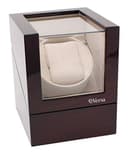
Versa Single Watch Winder Elite

Versa Single Watch Winder Elite

The value sweet spot. A quiet Japanese motor and twelve rotation programs — enough TPD and direction combinations to suit almost any automatic — at roughly a fifth of a premium single's price. The one to buy when you want real control without the badge premium.

Best winder, if you need one
$89.99 · View on Amazon

Price as of September 4, 2026. #ad How we’re funded

2
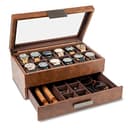
Glenor Co 12-Slot Watch Box with Valet Drawer

Glenor Co 12-Slot Watch Box with Valet Drawer

The watch box most people should buy. Twelve well-padded slots, a glass display lid and a valet drawer for straps, cufflinks and odds and ends — from the brand that made this format popular, at a fair price for what you get.

Best box for most people
$79.95 · View on Amazon

$99.9520% off

Price as of September 4, 2026. #ad How we’re funded

3
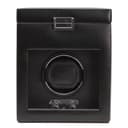
WOLF Heritage Single Winder with Storage

WOLF Heritage Single Winder with Storage

One winding position plus storage for the watches you're not rotating — the right shape for someone with one daily automatic and a couple of others resting. WOLF build quality and the patented cuff, in a case that doubles as a valet.

Best of both
$481.00 · View on Amazon

Price as of September 4, 2026. #ad How we’re funded

The picks in full

#1Best winder, if you need one

Versa Single Watch Winder Elite

The value sweet spot. A quiet Japanese motor and twelve rotation programs — enough TPD and direction combinations to suit almost any automatic — at roughly a fifth of a premium single's price. The one to buy when you want real control without the badge premium.

Strengths

  • Twelve rotation programs cover the TPD/direction range most watches need
  • Quiet Japanese motor
  • AC or battery power for placement flexibility

Trade-offs

  • Cabinet finish is fine, not luxurious
  • No app or memory beyond the on-unit settings
Watches held1
Rotation settings12 rotation programs
DirectionCW, CCW, both
PowerAC adapter + battery
Quiet motorYes
Includes storageNo

Why this one. Twelve programs is the number that matters here: it's enough to cover the common TPD bands (roughly 650-1950) and both directions, which is the whole job of a winder.

Specs read from the product listing and the maker’s published data, on July 21, 2026. “Not published” means the maker does not state that figure.

#2Best box for most people

Glenor Co 12-Slot Watch Box with Valet Drawer

The watch box most people should buy. Twelve well-padded slots, a glass display lid and a valet drawer for straps, cufflinks and odds and ends — from the brand that made this format popular, at a fair price for what you get.

Strengths

  • Twelve padded slots plus a glass lid to see the collection
  • Valet drawer for straps, tools and small items
  • Well-finished for the price, with a metal buckle closure

Trade-offs

  • Pillows suit medium wrists best — very small or large watches need adjusting
  • It's storage, not security — no lock on this model
Watch slots12
MaterialNot published
Glass display lidYes
Valet drawerYes

Why this one. Glenor Co is the default recommendation in this category for a reason: the padding, the glass lid and the drawer are the combination most collectors actually want.

Specs read from the product listing and the maker’s published data, on July 21, 2026. “Not published” means the maker does not state that figure.

#3Best of both

WOLF Heritage Single Winder with Storage

One winding position plus storage for the watches you're not rotating — the right shape for someone with one daily automatic and a couple of others resting. WOLF build quality and the patented cuff, in a case that doubles as a valet.

Strengths

  • Winder position plus fabric-lined storage in one case
  • Patented WOLF cuff and quiet motor
  • Looks like a piece of furniture, not a gadget

Trade-offs

  • Premium price
  • Only one powered position — the rest is static storage
Watches held1
Rotation settingsPre-set rotation programs
DirectionNot published
PowerNot published
Quiet motorYes
Includes storageYes

Why this one. The winder-plus-storage format answers a real question: a watch you wear weekly doesn't need to spin 24/7, it needs to be kept and shown. This does both.

Specs read from the product listing and the maker’s published data, on July 21, 2026. “Not published” means the maker does not state that figure.

What each one actually does

A watch box

Padded slots, usually under a lid, sometimes with a glass top and a valet drawer. It stops watches scratching each other, keeps them out of sunlight, gives them a defined home instead of a drawer, and displays them if you want that. There is no motor and nothing to power. Our best watch boxes page covers the field.

A watch winder

A box with one or more motorized cuffs that rotate a watch a set number of turns per day, keeping the mainspring wound so the watch never stops. Good ones let you set the turns per day and the direction to match the movement; cheap ones offer unnamed “modes”. Our winder hub covers the whole category.

What a winder does not do

This is where the money usually gets wasted, so it is worth being blunt.

It does not preserve the movement. Oils in a mechanical watch degrade with time and use. Running a watch continuously in a winder does not stop that and, if anything, adds running hours to the winding mechanism. A watch that sits still for six months is not damaged by sitting still.

It does not improve accuracy. A watch’s rate is set by its regulation, position and condition — not by whether it was running last week. Our accuracy guide covers what actually affects it, and a winder is not on the list.

It does not prevent a service. Servicing is due on a schedule, roughly every five to seven years, whether the watch has been running or resting.

It does not overwind anything either — and that is the good news. An automatic’s mainspring is held by a slipping bridle that releases at full wind, so a winder physically cannot overwind a watch. That is the one common winder fear that is genuinely unfounded.

What a winder does, precisely and only, is save you the twenty seconds of winding and setting when you pick a watch up.

The three cases where a winder is worth it

1. A perpetual calendar or an annual calendar

This is the strongest case by a distance, and it is the one the winder industry oddly under-uses. Resetting a perpetual calendar is not a twenty-second job — it can involve day, date, month, moonphase and year, sometimes to a specific procedure in a manual. Keeping such a watch running is genuinely valuable, and if you own one, buy the winder.

2. You rotate several automatics and resetting is genuinely tedious

Twenty seconds per watch is trivial. Twenty seconds times four watches, every time you change, several times a week, is a real annoyance for some people and no annoyance at all for others. Only you know which you are. If you find yourself reaching for the same watch because the others need setting, a multi-watch winder is solving a real problem.

3. Dexterity or physical difficulty

Crowns are small, and winding and setting a watch is fiddly work. For anyone with arthritis, tremor or reduced fine motor control, a winder converts a frustrating daily task into nothing at all. This is a completely legitimate reason and it gets mentioned far too rarely.

The cases where a box wins

You own one automatic and wear it most days. It never stops. The winder would run empty. Buy a box — or, honestly, nothing at all.

You own several watches but wear one at a time for weeks. The others are resting, and resting is fine. A box keeps them safe and visible.

You own quartz watches. A winder does nothing for them at all.

Your collection has outgrown the drawer. This is the real problem most people have, and it is a storage problem. Our large watch boxes page is the right answer.

You want to look at the collection. A glass-lidded box displays eight or twelve watches. A winder displays one or two and hums.

Cost, honestly compared

A competent single winder and a good twelve-slot box cost broadly the same. That comparison is worth sitting with: the same money buys one powered position, or twelve padded slots with a glass lid and a valet drawer.

The winder also has running costs — small ones, but it is a motor that cycles around the clock for years, and it will eventually fail. A box has no failure mode beyond a hinge.

If you want both without buying both, the winder-with-storage format exists exactly for this: a small number of powered positions plus static slots, in one object. It is the shape that matches how most collections actually work, and it is the third pick in the table above.

What about magnetism and wear?

Two genuine considerations, neither of which is a reason to avoid winders outright.

Magnetism is the one real mechanical risk in a winder, and it comes from the motor rather than the rotation. A magnetized hairspring makes a watch run fast — sometimes minutes a day — until a watchmaker demagnetizes it, which is quick and cheap. Reputable makers design around it and some state a magnet-free construction; budget boxes usually say nothing either way.

Wear is the theoretical objection: a watch in a winder accumulates running hours on the winding mechanism that a resting watch does not. Whether that matters over a normal ownership period is genuinely debatable, and we are not going to pretend to have settled it. It is a reason to prefer an adjustable winder set to the lowest turn count your movement needs, rather than a fixed high-rate box — our TPD settings guide has the reference table.

The decision, in one paragraph

If you own a perpetual calendar, rotate several automatics and find resetting them genuinely tedious, or have difficulty with small crowns, buy a winder — and buy one with adjustable turns per day and direction rather than unnamed modes. Everyone else should buy a box, spend the difference on the watch, and take the twenty seconds. That is the answer the winder industry will never give you, and it is the right one far more often than not. Our do automatic watches need a winder? guide makes the same case at length.
Frequently asked questions

Do I need a watch winder or a watch box?

A box, in most cases. A winder only saves you the twenty seconds of winding and setting a stopped watch — it doesn't preserve the movement, improve accuracy or delay a service. Buy a winder if you own a perpetual calendar, rotate several automatics and find resetting them genuinely tedious, or have difficulty with small crowns.

Is it bad to let an automatic watch stop?

No. A stopped automatic is simply a watch with an unwound mainspring. Nothing degrades, nothing settles, and nothing is preserved by keeping it running. The oils inside age with time regardless of whether the watch is moving. Wind it 20 to 40 turns at the crown, set it, and wear it.

Can a watch winder damage a watch?

It cannot overwind one — the mainspring's slipping bridle releases at full wind, which is a mechanical design feature. The real risk is magnetism from a cheap motor, which makes a watch run fast until a watchmaker demagnetizes it. The theoretical objection is extra running hours on the winding mechanism, which is a reason to use the lowest turns-per-day setting your movement needs.

Which is better value, a winder or a box?

For the same money you get one powered position or roughly twelve padded slots with a glass lid and a valet drawer. Unless you specifically need a watch kept running, the box is far more useful — and it has no motor to fail. A winder-with-storage cabinet is the compromise if you want a bit of both.

Do I need a winder for a perpetual calendar?

This is the strongest case for one. Resetting a perpetual or annual calendar can involve day, date, month, moonphase and year to a specific procedure, which is a genuinely tedious job rather than a twenty-second one. If you own one, a winder is worth the money and worth buying a good one.

How should I store watches I'm not wearing?

Wound down rather than fully wound, out of direct sunlight, and snug in a padded slot so the case can't slide and rub. UV is what fades a dial and dries out a leather strap; friction inside a loose slot is what marks a bracelet. Neither has anything to do with whether the watch is running.

Sources

  • Automatic watch — WikipediaReference on self-winding watches: most automatics can also be wound by hand at the crown, and a slipping bridle on the mainspring barrel makes overwinding by a rotor or a winder mechanically impossible (accessed August 11, 2026)
  • Barrington Watch Winders — How to set optimal winding parametersA winder maker's guidance on turns per day (TPD) and rotation direction, and why the wrong direction winds nothing — there is no ISO standard for TPD, so maker guidance is the authority (accessed July 21, 2026)
  • Mechanical watch — WikipediaReference walk-through of the power flow in a mechanical/automatic watch: rotor → mainspring → gear train → escapement → balance wheel (accessed July 21, 2026)

Keep reading