What you are actually buying
The movement is not the risk
This surprises people. The Seiko NH35 in most of these watches is built by Seiko and shares its architecture with the 4R35 that Seiko fits to its own watches: automatic with hand winding, 24 jewels, 21,600 vibrations per hour, roughly 41 hours of power reserve, hacking seconds. Seiko publishes that specification openly. Miyota — Citizen’s movement division, which has been making calibers in Nagano since 1959 — publishes the 9015 in the same detail: 28,800 vibrations per hour, 24 jewels, about 42 hours, 3.90mm high, −10 to +30 seconds a day.
So the engine inside a $150 micro-brand diver is the same engine, from the same factory, as the one inside watches from brands you have heard of. That is the genuine, defensible core of the micro-brand argument, and our NH35 versus Miyota 9015 comparison covers the differences between the two.
The case and crystal usually are not either
Sapphire is cheap to buy now. Ceramic bezel inserts are cheap. 316L steel is cheap. A 200m case with a screw-down crown is a solved manufacturing problem. None of these specifications is hard to source, which is exactly why a small brand can put all of them on a $150 watch and a large one chooses not to.
What you give up, specifically
Four things, and they are worth naming rather than gesturing at.
- Service and parts. Most micro-brands have no service network. The practical answer is that an NH35 is cheap enough that a watchmaker will usually replace the whole movement rather than overhaul it — which works, and is not the same as a serviceable watch.
- Resale value. Close to none. A Seiko or Orient holds a meaningful fraction of its price second-hand; a micro-brand generally does not.
- Quality control variance. Small production runs mean bezel alignment, hand alignment and lume application vary more between units than they do at a large maker. This is the most common real-world complaint.
- Longevity of the brand. Some of these companies will not exist in five years. That matters less than it sounds when the movement is industry-standard, and more than it sounds if you ever need a bracelet link or a crystal.
How we picked
1. A named movement
Non-negotiable. Every pick states its caliber — NH35, Miyota 9015 or an equivalent that the listing names. A micro-brand watch listing that says only “automatic movement” is withholding the one specification that determines whether the watch can ever be repaired.
2. A brand with a range, not a listing
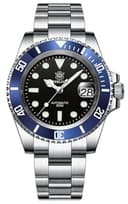
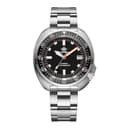
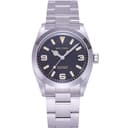
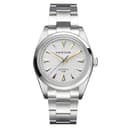
Steeldive, ADDIESDIVE, Baltany, Boderry, Hestur and TOPHILL all sell multiple models across time, which is a weak but real signal that somebody is running a business rather than dropshipping. Single-listing brands with generic names were excluded.
3. Specification that is checkable
Sapphire stated as sapphire, not “sapphire coated.” Water resistance given as a figure. Case size given in millimeters. Where a listing does not state something, the spec table below prints “Not published” rather than a number we invented.
4. What we left out
Direct copies of specific famous watches, which belong in the homage discussion rather than here — our Pagani Design guide handles that category on its own terms. Also excluded: anything claiming a tourbillon at a price no tourbillon has ever cost, and anything whose listing quotes an accuracy figure its movement’s maker does not publish.
Who should buy a micro-brand watch, and who should not
Buy one if this is your second or third mechanical watch, if you want a specification combination the mainstream does not offer at the price, and if you are relaxed about the watch being worth little when you are done with it. A 300m sapphire diver for under $200 is a genuinely good time, and the failure mode is usually disappointment rather than disaster.
Do not buy one as your only mechanical watch, or as a gift for someone who will not understand why the bezel is slightly off. For a first automatic, a Seiko 5 or an Orient Bambino is the better answer: less specification, more watch, and a company that will still be answering the phone in a decade. Our entry-level roundup makes that case, and our guide on cheap automatics works through where the money actually goes.