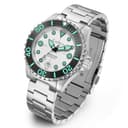
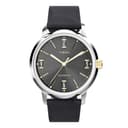
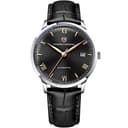
Why 40mm, and what the number does not tell you
Case diameter is the only dimension most listings publish, so it became the number everybody shops on. It is a weak proxy. Diameter is measured across the case at its widest point excluding the crown, and it says nothing about the two things that actually decide how a watch wears:
- Lug-to-lug — the distance from the tip of the top lugs to the tip of the bottom lugs. This is what overhangs a wrist, and two 40mm watches can differ by 4mm here. Very few makers in this price range publish it.
- Thickness — a 40mm watch at 14mm thick wears like a much larger watch and will not go under a cuff. The same 40mm at 11mm disappears.
There is a third effect nobody mentions: bezel width. A 40mm dive watch with a 4mm bezel shows less dial than a 40mm dress watch with a thin polished edge, so the two read as completely different sizes from a meter away even though the spec sheets match. If you are choosing between watches on this page, look at how much of the face is dial, not just at the figure.
Our watch size guide covers how to measure your wrist properly and work out your own lug-to-lug ceiling before you order anything. It takes ninety seconds and it is the cheapest mistake-avoidance on this site.
What the money buys inside one case size
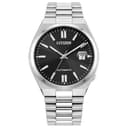
Holding diameter constant is a genuinely useful way to see what you are paying for, because the usual excuse — “it is bigger” — is gone. Across the seven picks here the price roughly quadruples, and this is what changes:
The crystal
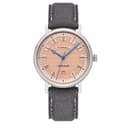
Sapphire is on the Citizen, both Pagani Designs and the TOPHILL. The Timex Marlin uses a domed acrylic crystal, which is a deliberate period choice rather than a cost cut: acrylic sits at roughly 2 to 2.5 on the Mohs scale, so it scratches if you look at it — and unlike sapphire at 9, it polishes back out with a cloth and a tube of paste. Our crystal comparison covers which of the three you actually want.
The movement
The TOPHILL runs a Miyota 9015, and Miyota publishes real numbers for it: -10 to +30 seconds a day, 24 jewels, 28,800 vibrations per hour, about 42 hours of running time, 3.90mm high, with hacking and hand-winding. That is a materially tighter accuracy specification than the Seiko NH35 in the CADISEN and the PD1759, and it is the reason the TOPHILL costs what it does. The Citizen runs Citizen’s own 8210, for which Citizen publishes no accuracy figure at all — the spec table below says so. The 42-hour reserve and the hack feature there are the ones Citizen now lists on its own page for the reference.
Water resistance
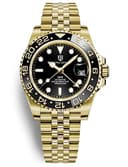
Both Pagani Designs and the Boderry are rated 100m; the Citizen, the TOPHILL and the Marlin are 50m. Fifty meters covers hand-washing, rain and a shower you did not plan for. One hundred covers swimming. Neither is a dive rating — that requires the regulated ISO 6425 diver’s marking, which none of these carries. If you want one that does, the sub-$200 dive roundup is the page for it.
Material
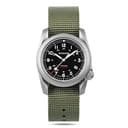
The Boderry is the outlier: a titanium case rather than steel. Titanium’s density is 4.502 g/cm3 against 7.5 to 8.0 for stainless steel, so the same case weighs a little over half as much — on a 40mm watch you notice it within an hour. It also scratches more readily and shows those scratches lighter rather than darker. It is the pick for anyone who has taken a watch off because of its weight.
Who should not buy a 40mm watch
Two groups. If your wrist is under about 6.25 inches, a 40mm case with long lugs will sit on the edges rather than the flat, and you want the 36mm and 38mm picks in our small-wrist roundup instead. If your wrist is over about 7.5 inches, 40mm is not wrong — plenty of people wear it deliberately — but you have the whole 42mm and up field open to you and the dial-to-wrist proportion will look more conventional there.
The other honest caveat: none of these watches is the cheapest way into a mechanical movement. If the size is not the point and the budget is, the under-$200 roundup is a wider field, and best entry-level automatics covers the first-watch question properly.