Dial & Lume

Orient Kamasu Review & Alternatives

Sapphire, a 200m rating and an in-house movement, at a price where all three together should not exist. The Kamasu reviewed honestly — including the two places it loses to a Seiko.

By Stephen V.Last updated How we pick

The Kamasu is the watch that made a lot of people stop automatically recommending Seiko. On a specification sheet it does three things at once that usually cost more money each: a sapphire crystal, a stated 200m water resistance, and an in-house Orient automatic with hacking and hand-winding — features Orient itself withheld from earlier generations of its divers.

The context is worth knowing. Orient is owned by Seiko Epson, which means the two brands are corporate siblings rather than unrelated rivals, and Orient makes its own movements in-house rather than buying them in. The Kamasu’s specification is therefore not a micro-brand parts-bin exercise; it is a real manufacturer choosing to put its better features into a cheaper watch.

So what is the catch? There are two, and they are both real: no ISO 6425 dive certification, and a bracelet that is the obvious place the cost was controlled. Below: the full case, the honest criticisms, and four alternatives that beat it on specific measures. We have not handled it. Standards figures come from the ISO documents cited at the bottom; specifications are read from the maker’s listing on the date shown; prices come from a live daily check.

How this is funded: we earn a commission if you buy through our links, at no extra cost to you. As an Amazon Associate we earn from qualifying purchases. It never changes which watch or winder we recommend, and we’ll tell you plainly when to skip one. Full disclosure.

Quick picks

Ranked on movement, specs and buyer fit. Select a row to jump to the full write-up. We have not tested these — here is exactly what we do instead.

#ProductBest forPrice
1
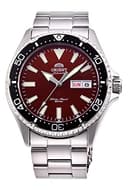
Orient Kamasu Diver (RA-AA0003R)

Orient Kamasu Diver (RA-AA0003R)

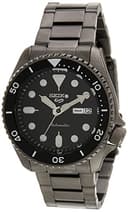
The value dive watch to beat. The Kamasu (Mako III) runs Orient's proven in-house F6922 — which hacks and hand-winds — behind a sapphire crystal, on a true 200m case. That sapphire is the main hardware upgrade over the older mineral-crystal Mako II, and it all lands for well under the Seiko it competes with.

The watch reviewed
$329.34 · View on Amazon

$345.005% off

Price as of September 4, 2026. #ad How we’re funded

2
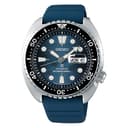
Seiko Prospex Turtle SRP775

Seiko Prospex Turtle SRP775

The step-up diver when you want an ISO-grade Seiko tool watch. This cushion-case Turtle pairs the 4R36 movement with a 200m Prospex case, a screw-down crown and Seiko's excellent LumiBrite — a proper desk-diver you could actually dive with, for well under a grand.

Best certified alternative
$550.00 · View on Amazon

Price as of September 4, 2026. #ad How we’re funded

3
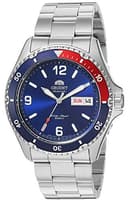
Orient Mako II Diver

Orient Mako II Diver

The budget diver that built the reputation. The Mako II gives you a true 200m case and Orient's in-house F6922 — which hacks and hand-winds — for even less than the Kamasu. The one real trade versus the Kamasu is the crystal: mineral here, sapphire there. A lot of watch for the money.

Best cheaper alternative
$240.00 · View on Amazon

Price as of September 4, 2026. #ad How we’re funded

4
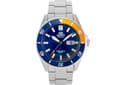
Orient Kanno Diver (RA-AA0913L19B)

Orient Kanno Diver (RA-AA0913L19B)

Orient's under-appreciated diver: the same in-house automatic family as the Kamasu in a slightly chunkier case, usually for less money. If the Kamasu is out of budget, this is the pick rather than dropping to a homage brand.

Best Orient alternative
$244.99 · View on Amazon

Price as of September 4, 2026. #ad How we’re funded

5
Seiko 5 Sports SRPD65

Seiko 5 Sports SRPD65

The default first automatic, and it earns it. Seiko's own 4R36 movement with day-date, hacking and hand-winding, a 100m case and a genuine in-house pedigree — for a price that makes it the reference point every other budget automatic is measured against.

Best budget alternative
$316.00 · View on Amazon

Price as of September 4, 2026. #ad How we’re funded

The picks in full

#1The watch reviewed

Orient Kamasu Diver (RA-AA0003R)

The value dive watch to beat. The Kamasu (Mako III) runs Orient's proven in-house F6922 — which hacks and hand-winds — behind a sapphire crystal, on a true 200m case. That sapphire is the main hardware upgrade over the older mineral-crystal Mako II, and it all lands for well under the Seiko it competes with.

Strengths

  • Sapphire crystal at a price where mineral is the norm
  • True 200m rating with a screw-down crown and solid bracelet
  • In-house F6922 movement that both hacks and hand-winds

Trade-offs

  • The in-house movement isn't chronometer-accurate
  • Roughly 42mm with a broad case — wears large on a small wrist
MovementOrient F6922 (automatic + hand-winding)
Stated accuracyNot published
Power reserve40 hours
Case sizeNot published
Water resistance200 m
CrystalSapphire
Hacks / hand-windsYes / Yes

Why this one. The Kamasu's real upgrade over the Mako II is the sapphire crystal — both share the same F6922 movement, so both already hack and hand-wind. (The Orient diver that does neither is the original Mako I, on the older 46943 caliber.)

Specs read from the product listing and the maker’s published data, on July 21, 2026. “Not published” means the maker does not state that figure.

#2Best certified alternative

Seiko Prospex Turtle SRP775

The step-up diver when you want an ISO-grade Seiko tool watch. This cushion-case Turtle pairs the 4R36 movement with a 200m Prospex case, a screw-down crown and Seiko's excellent LumiBrite — a proper desk-diver you could actually dive with, for well under a grand.

Strengths

  • 200m dive-rated Prospex case with Seiko's class-leading LumiBrite
  • Cushion 'Turtle' case is a genuine icon, with a screw-down crown and unidirectional bezel
  • In-house 4R36 with day-date, hacking and hand-winding

Trade-offs

  • Large 45mm cushion case dominates a smaller wrist
  • Hardlex mineral glass scratches far more readily than sapphire
MovementSeiko 4R36 (automatic + hand-winding)
Stated accuracy+45 / -35 sec/day
Power reserve41 hours
Case size45 mm
Water resistance200 m
CrystalHardlex mineral
Hacks / hand-windsYes / Yes

Why this one. The SRP775 is the mainstream Turtle: black dial on a steel bracelet, Hardlex rather than sapphire, with the day-date the line is known for. Seiko rotates the reference numbers and the dial colors — the SRPE93 that used to sit here is no longer listed — but the 45mm cushion case, the 4R36 and the 200m rating are constant across them. It is a true dive-rated Prospex, not a diver-styled everyday watch.

Specs read from the product listing and the maker’s published data, on September 3, 2026. “Not published” means the maker does not state that figure.

#3Best cheaper alternative

Orient Mako II Diver

The budget diver that built the reputation. The Mako II gives you a true 200m case and Orient's in-house F6922 — which hacks and hand-winds — for even less than the Kamasu. The one real trade versus the Kamasu is the crystal: mineral here, sapphire there. A lot of watch for the money.

Strengths

  • 200m rated automatic diver at a genuinely low price
  • In-house Orient F6922 movement, hacking and hand-winding
  • A modern classic with a huge owner base

Trade-offs

  • Mineral crystal, not sapphire — the Kamasu fixes exactly this
  • Roughly 41mm with a broad case — big on a small wrist
MovementOrient F6922 (automatic + hand-winding)
Stated accuracyNot published
Power reserve40 hours
Case sizeNot published
Water resistance200 m
CrystalMineral (Hardlex-class)
Hacks / hand-windsYes / Yes

Why this one. The Mako II versus Kamasu decision comes down to one thing: the crystal. Both use the same F6922 (both hack and hand-wind), so you're really deciding whether sapphire is worth the small step up from mineral.

Specs read from the product listing and the maker’s published data, on September 3, 2026. “Not published” means the maker does not state that figure.

#4Best Orient alternative

Orient Kanno Diver (RA-AA0913L19B)

Orient's under-appreciated diver: the same in-house automatic family as the Kamasu in a slightly chunkier case, usually for less money. If the Kamasu is out of budget, this is the pick rather than dropping to a homage brand.

Strengths

  • In-house Orient automatic with hand-winding
  • Usually undercuts the Kamasu while sharing its mechanical DNA
  • Proper dive styling with a substantial case

Trade-offs

  • Wears larger than the Kamasu
  • Crystal and exact ratings are not stated on every listing variant
MovementOrient automatic with hand-winding
Stated accuracyNot published
Power reserveNot published
Case sizeNot published
Water resistanceNot published
CrystalNot published
Hacks / hand-windsNot published / Yes

Why this one. Orient is owned by Seiko Epson and builds its own movements — which is why an Orient diver at this price is a genuinely different proposition from a marketplace homage.

Specs read from the product listing and the maker’s published data, on August 11, 2026. “Not published” means the maker does not state that figure.

#5Best budget alternative

Seiko 5 Sports SRPD65

The default first automatic, and it earns it. Seiko's own 4R36 movement with day-date, hacking and hand-winding, a 100m case and a genuine in-house pedigree — for a price that makes it the reference point every other budget automatic is measured against.

Strengths

  • In-house Seiko 4R36 movement with hacking and hand-winding
  • Day-date, 100m water resistance and a see-through caseback onto the movement
  • The most cross-shopped, best-supported budget automatic there is

Trade-offs

  • The 4R36 is reliable, not accurate to chronometer standards
  • Hardlex crystal scratches more easily than sapphire
MovementSeiko 4R36 (automatic + hand-winding)
Stated accuracy+45 / -35 sec/day
Power reserve41 hours
Case size42.5 mm
Water resistance100 m
CrystalHardlex mineral
Hacks / hand-windsYes / Yes

Why this one. The 5 Sports line is the modern heir to the original Seiko 5: an honest, serviceable automatic with real heritage, which is exactly why it anchors so many of our lists.

Specs read from the product listing and the maker’s published data, on August 19, 2026. “Not published” means the maker does not state that figure.

The case for the Kamasu

Sapphire at this price is the headline

A sapphire crystal is the single most visible durability upgrade a watch can have, because it is the part you look at. Sapphire is dramatically harder than mineral glass and stays clear through years of ordinary knocks. Its counterpart, Seiko’s Hardlex, is tough against impact but picks up hairlines quickly.

On a dive-style watch — a category defined by being worn while doing things — that difference compounds. Five years in, this is the specification you will actually have noticed.

An in-house movement that hacks and hand-winds

Orient’s current diver caliber added two features its predecessors lacked: hacking, so the seconds hand stops when you pull the crown and you can set the time precisely, and hand-winding, so a stopped watch can be started at the crown rather than by shaking it. Both were long-standing complaints about earlier Orient divers, and fixing them is why the Kamasu supplanted the Mako in most recommendations.

200m, honestly stated

The Kamasu states 200m water resistance with a screw-down crown. That is a genuine engineering claim from a real manufacturer, not a number invented for a listing. What it is not is an ISO 6425 certification — see the next section, because that distinction is the main reason to buy a Turtle instead.

The two honest criticisms

1. No ISO 6425 marking

ISO 6425 is the standard behind the “DIVER’S” marking: a minimum 100m rating, a unidirectional or lockable elapsed-time bezel, legibility in darkness, and testing of every individual watch rather than a production sample. A stated 200m rating is a design claim; an ISO marking is a tested one.

For swimming, snorkeling and everyday water this makes no practical difference whatsoever. For actual scuba diving it does, and if that is your use case the Seiko Turtle is the correct purchase despite its inferior crystal.

2. The bracelet

The consistent criticism of the Kamasu, and a fair one. The bracelet is where Orient controlled the cost: hollow end links and a stamped clasp rather than the solid, machined hardware on watches costing twice as much. It is functional and it is not going to fail, but it is the part of the watch that gives away the price.

The upside is that it is also the cheapest thing to fix. An aftermarket bracelet or a good rubber strap transforms the watch for a modest sum, and many owners do exactly that.

Kamasu vs Mako vs Ray

Orient’s diver naming is genuinely confusing, so here is the short version. The Mako and Ray are the long-running earlier lines — excellent value, mineral crystals, and depending on generation, no hacking or hand-winding. The Kamasu is the newer design that added sapphire, hacking and hand-winding.

The decision is straightforward: if the budget stretches, buy the Kamasu, because sapphire and hacking are worth the difference. If it does not, the Mako II remains one of the best-value automatic divers there is. Neither is a mistake.

The alternatives, and what each wins on

The Seiko Turtle wins on certification and case character — the ISO 6425 marking and the cushion case are things the Kamasu cannot offer at any price. The Orient Mako II wins on price alone. The Orient Kanno is the same movement and crystal proposition in a larger, more aggressive case, for anyone who finds the Kamasu too restrained. And the Seiko 5 SRPD65 is the budget option: the Seiko diver look, a 4R36 movement, no sapphire and no certification, for considerably less money.

Living with one

The crown screws down. Screw it back in after setting the time — a crown left unscrewed is the most common cause of water ingress in a watch that was otherwise perfectly sealed, and our water resistance guide covers the rest of the practical rules.

Because the movement hand-winds, a stopped Kamasu should be started at the crown rather than shaken — how to wind an automatic watch explains why, and why you cannot overwind it. And if it is going into a rotation rather than daily wear, a winder is a convenience rather than a necessity; our guide on that question makes the honest case.

Frequently asked questions

Is the Orient Kamasu a real dive watch?

It states 200m water resistance with a screw-down crown, which is a genuine engineering claim from a real manufacturer. What it does not carry is an ISO 6425 DIVER'S marking, which requires every individual watch to be tested. For swimming and everyday water that makes no practical difference; for scuba diving it does.

Does the Orient Kamasu have a sapphire crystal?

Yes, and it is the headline feature. Sapphire is dramatically harder than the mineral glass used on comparably priced Seikos, so it stays clear through years of ordinary knocks. On a watch designed to be worn while doing things, it is the specification you will actually notice over time.

Orient Kamasu or Seiko Turtle?

The Kamasu adds a sapphire crystal and usually costs less; the Turtle has ISO 6425 certification, the cushion case and Seiko's service network. If you dive, buy the Turtle. If you want the best specification per dollar for land use and swimming, buy the Kamasu.

What is the difference between the Orient Kamasu and Mako?

The Kamasu is the newer design and adds three things the earlier Mako and Ray generations lacked: a sapphire crystal, hacking seconds and hand-winding. The Mako II remains excellent value with a mineral crystal — if the budget stretches, the Kamasu is worth the difference.

Does the Orient Kamasu hack and hand-wind?

Yes, both. The seconds hand stops when you pull the crown, so you can set the time to the second, and you can wind it at the crown rather than shaking a stopped watch to start it. Earlier Orient divers lacked both features, which is the main reason the Kamasu replaced them in most recommendations.

Is the Orient Kamasu bracelet any good?

It is the weakest part of the watch — hollow end links and a stamped clasp rather than solid machined hardware. It works and it will not fail, but it gives away the price. It is also the cheapest thing to upgrade, and many owners fit an aftermarket bracelet or rubber strap.

Sources

  • ISO 6425:2018 — Divers' watchesThe standard a watch must meet to be legally marked 'Diver's [depth]m': minimum 100m, a unidirectional/lockable elapsed-time bezel, dark legibility, and testing of every piece (accessed July 21, 2026)
  • ISO 22810:2010 — Water-resistant watchesDefines the requirements, test methods and permitted markings for ordinary water-resistant watches (daily use / swimming, not scuba diving) (accessed July 21, 2026)
  • Water Resistant mark — WikipediaWhat the depth markings actually mean: 30m is splash resistance only, 50m covers showering and shallow swimming, 100m covers swimming and water sports, and only an ISO 6425 'DIVER'S' mark is rated for scuba (accessed August 11, 2026)
  • Automatic watch — WikipediaReference on self-winding watches: most automatics can also be wound by hand at the crown, and a slipping bridle on the mainspring barrel makes overwinding by a rotor or a winder mechanically impossible (accessed August 11, 2026)

Keep reading