The one-line answer
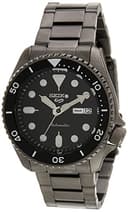
Buy Seiko if this is your first automatic, or your only one. The parts, servicing, aftermarket straps and sheer weight of owner knowledge make everything about ownership easier, and the catalog is deep enough that there is a Seiko for every brief.
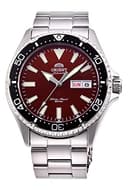
Buy Orient if you want the most watch for the money. Sapphire where Seiko fits mineral glass, in-house movements, and prices that consistently undercut the equivalent Seiko.
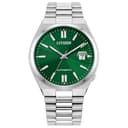
Buy Citizen if you want a mechanical watch from a major manufacturer that nobody else on the train is wearing — and you are happy with less published detail in exchange.
Movements: all three build their own
Seiko publishes the most. The 4R35 and 4R36 are specified openly: automatic with hand-winding, 24 jewels, 21,600 vibrations per hour, roughly 41 hours of reserve, and an accuracy range of -35 to +45 seconds a day worn on the wrist. Almost no other maker at this price commits to an accuracy figure, and being able to hold a watch to its own maker’s spec is genuinely useful.
Orient builds its own calibers with hand-winding and hacking, but publishes far less detail — no accuracy range on most references. The movements have a strong reliability reputation and appear across the Bambino, Kamasu, Mako, Ray and Kanno lines.
Citizen publishes power reserve figures — 42 hours on the Tsuyosa — and little else. Its movement division, Miyota, also supplies calibers to a great many other brands, which is a quiet indication of how much volume it builds.
The practical upshot: all three are documented enough to service, and none is meaningfully more accurate than the others in normal wear. Our guide to automatic watch movements covers what these figures actually tell you.
Crystals: the difference that surprises people
This is the single most useful practical difference between Seiko and Orient, and it catches out a lot of cross-shoppers.
Seiko uses Hardlex, its own mineral glass, on watches well past $400 — including the SSK GMT line at around $400 and most of the 5 Sports range. Hardlex is tougher than ordinary mineral glass and it still picks up hairline scratches from doorframes, desks and sleeves.
Orient frequently fits sapphire at $250–$330 — the Kamasu is the obvious example. Sapphire is close to unscratchable in normal wear, and over a decade it is the difference between a watch that looks five years old and one that looks new.
If you are hard on watches, this alone may decide it. Check the specific reference rather than assuming by brand or price.
Support and availability
Seiko wins comfortably, and it is not close. Parts are available, watchmakers everywhere have worked on 4R movements, replacement bracelets and aftermarket straps are abundant, and there is an enormous body of owner discussion for every reference. For a first mechanical watch or a watch you intend to keep for decades, that ecosystem is worth paying a small premium for.
Orient is thinner on all counts — fewer retailers, less community knowledge, less marketing. The watches are excellent; finding help with one is marginally harder.
Citizen has an enormous service network, but it is built around Eco-Drive. Its mechanical models are a small part of a large business, which shows in how little is written about them.
Value: where Orient is hard to argue with
Cross-shop like for like and Orient generally comes out ahead. An Orient diver with a sapphire crystal and an in-house automatic typically costs less than a Seiko 5 Sports with Hardlex. The Bambino has been the default affordable dress watch for a decade precisely because nothing at its price does the same job as well.
Citizen’s value case is different and more interesting: because Citizen is famous for solar quartz, its mechanical watches attract a fraction of the attention Seiko’s do and stay correspondingly cheap. The Tsuyosa undercut every other integrated-bracelet automatic by a wide margin, and its Promaster automatic divers are similarly overlooked. If you want to spend less than the market rate for the engineering, that inattention is the opportunity — our best Citizen automatic watches roundup lists the mechanical Citizens you can actually buy, on Citizen’s own published specs.
Seiko’s prices reflect its brand equity. You are paying for the support network and the catalog, and whether that is worth it depends on whether this is your only watch.
Personality, which matters more than people admit
Seiko is the safe, respected, slightly obvious answer — the watch equivalent of a good, well-known choice everyone nods at. That familiarity is an advantage when you want help and a mild disadvantage when you want the watch to be yours.
Orient is the enthusiast’s value pick: the brand people recommend once you have already bought a Seiko, and the one that quietly delivers more than it charges for.
Citizen is the outlier. Buying a mechanical Citizen is a slightly unusual decision, and that is most of the appeal — same class of engineering, different silhouette, fewer people wearing it.
What about everyone else?
Worth stating plainly, because it explains why this page has three brands on it and not six. Bulova, Timex, Fossil and Invicta all buy their movements in and design the watch around them. That can produce excellent watches — our Timex Marlin review recommends one on design merit — but it is a different proposition, with less published detail and a shorter parts tail. Our best automatic watch brands guide covers all of them, including the two we deliberately don’t link.
How to actually decide
Answer three questions in this order.
Is this your only nice watch? If yes, buy the Seiko. The support network matters more over twenty years than a hundred dollars does today.
Are you hard on watches? If yes, buy the Orient with the sapphire crystal. It will look better in five years and it will probably cost less.
Do you already own a Seiko? If yes, buy the Citizen. You have the safe option covered; the interesting one is a better use of the next purchase.
The model-level version of this question
Brands are a useful first cut and a poor final one — you buy a reference, not a logo. Two head-to-heads take it down to individual watches: Seiko 5 Sports vs Citizen Tsuyosa for the everyday steel watch, and Orient Kamasu vs Mako II for the two Orient divers people most often confuse. For the dive-watch version of the Seiko-against-Citizen argument, with the makers’ own published sheets on the table, Prospex vs Promaster is the page.
If you would rather shop the three houses as one shelf than pick a winner between them, our best Japanese automatic watches page does that — six picks spread across Seiko, Orient and Citizen, with what each maker publishes about reserve, hacking and hand-winding, and an honest note on why a Seiko NH35 inside someone else’s watch is not the same purchase.