The question that decides it
What are you wearing on the day you most want to wear the watch?
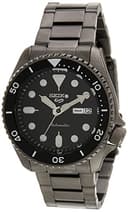
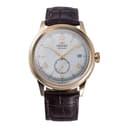
That is genuinely it. The Seiko 5 Sports is a sports watch: a rotating bezel, a steel bracelet, 100m of water resistance, and a case that reads casual with jeans and slightly out of place with a suit. The Orient Bambino is a dress watch: a domed crystal, a clean dial, a leather strap, and a case that slides under a cuff and looks slightly underdressed at a barbecue.
Neither is more “beginner” than the other. They are answers to different briefs, and buying the wrong one is the most common way people end up with a first automatic they do not wear.
Specification, honestly compared
Movement: Seiko publishes more
Both are in-house automatics with hand-winding. Seiko’s 4R36 is documented openly: 24 jewels, 21,600 vibrations per hour, roughly 41 hours of reserve, and an accuracy range of -35 to +45 seconds a day on the wrist, plus day and date. Orient publishes considerably less — the caliber hand-winds and the reputation is strong, but there is no stated accuracy figure to hold it to.
In practice both will keep similar time. The difference is that with the Seiko you have a benchmark, which our accuracy guide explains how to use.
Water resistance: Seiko, decisively
The Seiko 5 Sports is rated 100m, which covers swimming and water sports. The Bambino is a dress watch and should be treated as splash-resistant — and the leather strap will be ruined by repeated soaking well before the case objects anyway.
If the watch will get wet, this ends the comparison on its own.
Crystal: a genuine trade
Seiko fits Hardlex, its own mineral glass, which is tough but scratches over time. Orient uses a domed crystal on the Bambino that is central to how the watch looks — the edge distortion is most of what makes it read as a period piece — and specifications vary by version, so check the reference you are buying.
Size: closer than the numbers suggest
The SRPD65 is 42.5mm with a wide bezel, and it wears every bit of that. The Bambino is 40.5mm with slim lugs and a thin bezel, which wears noticeably smaller. If you have a smaller wrist, the Bambino is the more comfortable watch by a clear margin — and Orient also offers a 38mm version, which is one of the better unisex dress automatics at any price.
Price: usually close, Orient slightly ahead
The two land in similar territory and swap places depending on the reference and the day. Neither is expensive enough for the difference to decide anything, which is exactly why the styling question is the one that matters. The live prices in the table above are the current numbers.
What the Seiko does better
Versatility, downward. A sports watch on a bracelet works with jeans, shorts, workwear and a gym kit. It is out of place at a wedding; it is fine everywhere else.
Durability. 100m of water resistance and a steel bracelet mean you can stop thinking about it. The Bambino needs thinking about.
Support. The 5 Sports range is the most cross-shopped affordable automatic there is, which means an enormous body of owner knowledge, easy parts and straps in every size. Our Seiko 5 page covers the variants.
Published specifications. Seiko tells you what the movement does. That is worth more than it sounds when you are new to mechanical watches and wondering whether yours is behaving.
What the Bambino does better
Versatility, upward. A dress watch works with a suit, at a wedding or an interview, and looks entirely correct with a shirt and jeans. It is only wrong at the beach.
It looks more expensive than it is. This is the Bambino’s real trick. The domed crystal, the clean dial and the proportions read as a far costlier watch, and that is why it has been the default recommendation for a decade. Nothing in the Seiko range at this money does the same.
Comfort. Thinner, lighter, smaller, and on a leather strap that molds to your wrist. It disappears in a way the Seiko doesn’t.
Cheap variety. A $25 strap changes a Bambino completely. That is not available on an integrated bracelet or a sports watch you want to keep on steel — our full Bambino review covers the versions and the alternatives.
The honest tiebreakers
Small wrist? Bambino, and consider the 38mm version.
Will it get wet? Seiko.
Only own trainers? Seiko.
Own a suit you actually wear? Bambino.
Genuinely cannot decide? Buy the Bambino. It is the more surprising watch to own and the easier one to dress up, and if you later want a sports automatic the Seiko will still be there — it is not going anywhere and it never goes out of stock.
When neither is the answer
Two situations worth naming.
If you want one watch for absolutely everything, a field watch is a better brief than either — more legible than the Bambino, less bulky than the Seiko, and it goes under a cuff without looking formal. See our field watch picks.
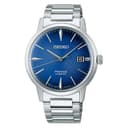
If what you actually liked about the Bambino was the dial, the step up is Seiko’s Presage line, which is built around dial finishing on top of a documented in-house movement. It costs appreciably more and it is obvious where the money went, which is the best thing you can say about a price increase. It is the third pick in the table above for exactly that reason.