The brands that make their own movements
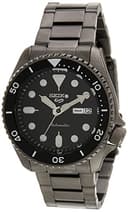
Seiko
The default recommendation in affordable mechanical watches, and it earns it. Seiko builds the 4R family in-house, publishes real specifications for it — including an accuracy range of -35 to +45 seconds a day, which almost nobody else at this price will commit to — and supports it with a global parts and service network. It also has the deepest catalog: the 5 Sports line alone covers dive, field and street styling on one movement platform.
The consistent criticism is crystals. Seiko uses its own Hardlex mineral glass on watches well past $400, where competitors fit sapphire for less. That is a real difference over a decade of wear and the most common surprise for anyone cross-shopping Seiko against Orient.
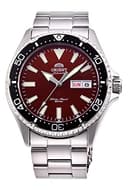
Orient
Owned within the Seiko Epson group, and the best-value brand in this whole category. Orient makes its own calibers, frequently fits sapphire where Seiko does not, and consistently undercuts the equivalent Seiko. The Bambino has been the default affordable dress watch for a decade; the Kamasu and Kanno do the same job in dive styling.
The trade is presence. Fewer retailers stock Orient, there is less owner knowledge to draw on, and the brand does very little marketing. If you want the best specification per dollar from a company that builds its own engines, this is it — our best Orient watches roundup ranks the whole catalog on the dimensions Orient publishes itself.
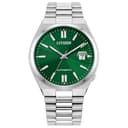
Citizen
The most underrated name here, for an accidental reason: Citizen is so strongly associated with Eco-Drive solar quartz that its mechanical watches get a fraction of the attention Seiko’s equivalents do — and stay correspondingly cheap. The Tsuyosa is the clearest example: an integrated-bracelet automatic that undercut everything in its class, and the Promaster automatic divers are similarly overlooked. Our best Citizen automatic watches roundup ranks every mechanical Citizen we could find in stock on Citizen’s own published specs.
The brands that buy their movements in
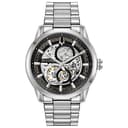
Bulova
American, founded 1875, and unusually transparent for a brand at this level — Bulova publishes jewel counts and power reserve figures on much of its automatic range, where fashion-adjacent competitors publish nothing. The Sutton line is its signature affordable automatic and the grown-up option in our skeleton picks. You are paying for heritage, warranty and design rather than an in-house caliber.
Timex
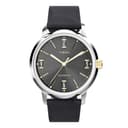
Timex earns its place on design. The Marlin is a faithful reissue of a 1960s Timex, and the Waterbury line is genuinely its own thing rather than a homage of someone else’s. Timex publishes very little about its automatic movements, so buy a Timex because you want that watch, not because of what is inside it — and it is honest enough about that not to pretend otherwise.
Invicta
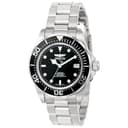
The most-mocked brand in watches and the reason a list of automatics under $100 can exist at all. The Pro Diver family uses a Japanese automatic movement in a steel case and bracelet at a price no other brand approaches. The objections — loud dial branding, openly Rolex-derived styling, wildly inflated “list prices” — are all fair. None of them stops the watch working.
Fossil (and Relic)
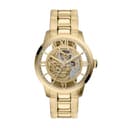
Fossil designs for how a watch looks on a wrist and specifies second, which is a legitimate way to sell a watch and is exactly what a high-street brand is for. You get a warranty department, a returns path and shops you can walk into. You do not get a published caliber, accuracy figure or power reserve. Relic is the budget sub-brand, and it is the cheapest point on this whole site at which a real company stands behind the watch.
The two brands we won’t link
Tissot and Hamilton both belong in any serious discussion of affordable mechanical watches. Tissot’s PRX Powermatic 80 and Hamilton’s Khaki Field are, on the merits, among the best watches you can buy under $1,000 — Swiss movements, long power reserves, and designs that have been genuinely influential.
We do not carry a buy link for either. Their listings on the marketplace we use are not reliably first-party, and pointing you at a gray-market seller for a $700 watch — where warranty coverage may not apply — is not something we are willing to do for a commission. If you want one, buy from an authorized dealer. That advice earns us nothing, which is rather the point; our disclosure page explains how the site is funded and what that does and doesn’t change.
Which brand should you actually buy?
First automatic, want it to be easy: Seiko. The support network and catalog depth make everything simpler.
Best specification for the money: Orient. More watch per dollar than anyone with an in-house movement.
Don’t want what everyone else has: Citizen. Same class of engineering, a fraction of the attention.
Buying on looks, and honest about it: Timex or Bulova. Both make watches you’d choose from across a room.
Smallest possible budget: Invicta. Nothing else does what the Pro Diver does at that price.
It’s a gift and it has to be simple: Fossil. A warranty, a returns desk and a shop you can walk into is worth a lot when the recipient isn’t a watch person.
One narrower cut of this page is worth its own read. Three of the brands above — Seiko, Orient and Citizen — are the only houses still building automatic calibers in volume at these prices, and they publish far more about their movements than anyone else here does. Our best Japanese automatic watches page compares them on exactly that, and draws the line between a Japanese watch and a watch that merely contains a Japanese movement.