How to measure, in ninety seconds
Take a soft tape measure or a strip of paper and measure straight across the flat top of your wrist, from where it starts curving down on one side to where it starts curving down on the other. That figure — typically somewhere between about 38mm and 50mm on adult wrists — is your practical lug-to-lug limit. A watch whose lug-to-lug exceeds it will overhang.
Then check the listing for lug-to-lug, sometimes called “length” or “L2L”. Plenty of makers do not publish it, which is exactly why several spec tables on this page read “Not published” — we would rather say so than estimate a number from a photograph. Where it is missing, a 36mm case with conventional lugs is very unlikely to exceed 46mm overall, which suits most wrists.
Two secondary factors. Thickness matters more on a small wrist than a large one, because a tall case on a narrow wrist looks like a puck; under about 12mm is comfortable. And strap or bracelet width should be proportional — a 36mm watch typically takes an 18mm or 20mm band, and putting a 22mm strap on one looks wrong immediately.
How we picked
1. Genuinely small, not “small for a men’s watch”
Every pick is 38mm or under. That excludes a great many watches marketed as compact — the 40mm sports automatics that dominate the affordable market are not small watches, they are ordinary ones. Where a case is 36mm we have said so and where the maker does not publish a diameter we have not filled in a guess.
2. Designed small, not shrunk
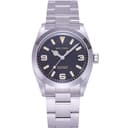
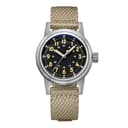
There is a real difference between a watch designed at 36mm and a 42mm watch photographically reduced. Designed-small watches use proportional hands, appropriately sized markers and a dial layout that stays legible — the 3-6-9 layout on the Baltany is a good example. Shrunk watches end up with cramped sub-dials and date windows you cannot read.
3. Not treating small as a women’s category
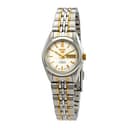
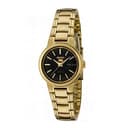
Two picks here come from Seiko’s women’s line and four do not, and none of them is on this page because of who it is marketed at. Small watches suit small wrists, which are not distributed by gender. Our women’s automatic guide covers the marketed category separately, because it has its own problem — almost everything in it is quartz.
4. Real mechanical movements only
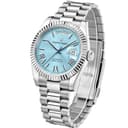
The small-watch market is where fashion quartz is most concentrated, so this filter excludes the majority of what a search returns. Every pick here is self-winding. Where a listing names its caliber — the Pagani’s ST16, for example — we have recorded it; where it does not, the spec table says so.
The compromises of buying small
Worth being straight about. Small automatic watches carry three real trade-offs. The selection is much narrower, so you will find fewer options at any given price. Water resistance tends to be lower, because dress-oriented small cases often use push-in crowns rather than screw-down ones. And a smaller case means a smaller movement or more empty space around a standard one, which is why some small watches feel oddly light.
None of these is a reason not to buy small. They are reasons to check the specific watch rather than assuming. If water resistance matters to you, our water resistance guide explains what the depth markings on these listings actually permit.
Where to go from here
If nothing here fits, two adjacent categories are worth a look. Field watches run smaller than average by tradition and are built for legibility, so our field watch picks include several compact options. And dress watches are usually the flattest and least obtrusive things you can wear, which suits a slim wrist — see our dress automatic picks.
What to avoid: dive watches, almost universally. They are thick, heavy and large by design, and a 200m diver on a small wrist is the least comfortable combination in watches.
And if you landed here buying for someone else: the same measurement decides the opposite problem. Our big-wrist roundup covers 42mm to 47mm automatics, where the lug-to-lug ceiling stops binding and diameter becomes a styling decision instead of a fit one.
If 38mm turns out to be too small
The step up from this page is not 42mm, it is 40mm — the size that suits the largest number of wrists and where the affordable competition is fiercest. Our 40mm roundup applies the same rule as this one: the diameter has to be published for that exact reference, never estimated from a photograph.
If 38mm is exactly where you want to land rather than a ceiling to come down from, there is now a dedicated page for it: best 38mm automatic watches only admits watches whose makers or listings publish 38mm for that reference, and it sets out why a 44mm lug span matters more than the diameter in front of it.