How lume works, and why that decides which watch to buy
Modern watch lume is a photoluminescent pigment: a strontium aluminate doped with europium and dysprosium that absorbs light and re-emits it slowly. It is not radioactive, it is not powered, and it does not wear out with use. Super-LumiNova — the dominant brand, made by RC Tritec in Switzerland with Nemoto & Co. — is documented as recharging indefinitely without chemical degradation. Seiko’s in-house equivalent, LumiBrite, works the same way, and Seiko states plainly that it is completely free of radioactive material.
Two practical consequences follow, and they are the whole buying argument. First, lume is a store of light that never runs out but is always discharging. It has no battery. It gives back what you put in, fast at first and then slowly, which is why a watch is blinding at midnight and faint by five. Second, how much pigment is applied matters at least as much as which pigment it is. A thick application of a mid-grade compound will out-glow a thin wash of the best material on the market, and thickness is exactly what no listing ever states.
The one number anybody publishes
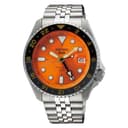
Seiko is the only maker in this price band that puts a figure to it. Its own customer-service documentation for LumiBrite states that after exposure to more than 500 lux for about 10 minutes, the material emits light for about three to five hours in the dark. That is a real, checkable, falsifiable claim, and it is why two of the six picks here are Seikos and why a Prospex takes the top spot.
It is also a sobering number if you expected a watch to glow all night. Three to five hours from a full charge is the honest ceiling for a light-charged dial. If you genuinely need legibility at 4am after a dark evening, no photoluminescent lume will do it — that is what tritium gas tubes are for, and they are a different technology at a different price.
Reading a lume claim before you pay for it
“Luminous” on its own means nothing
It is an adjective, not a specification. Every dial with any glowing paint on it qualifies, including the thin, dim, fast-fading kind. When a listing’s only lume language is “luminous hands,” treat the lume as unrated and buy the watch for its other qualities.
A named code is a real signal
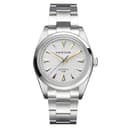
C3 and BGW9 are Super-LumiNova color codes. C3 glows green and looks pale yellow-green in daylight, with emission at 515nm. BGW9 glows blue-green and looks white in daylight, with emission at 485nm. C3 reads brighter to the human eye; BGW9 is what a brand picks when it wants markers that look white by day rather than cream.
A brand that prints a code is making a specific, checkable claim about which material it bought. That is meaningfully more information than “luminous” — but it is not the whole story, because the code identifies the color, not the grade.
The grade is the part nobody tells you
Super-LumiNova is sold in three grade levels: Standard, A and X1. The higher grades decay substantially more slowly, which is precisely the property you care about at 3am. Almost no affordable listing states the grade. So the honest reading of a “BGW9” claim is: this brand bought a documented Swiss-formula pigment in a known color, and we do not know which grade it is or how thickly it went on. That is better than nothing and short of a specification.
How we picked
1. The luminous material is named somewhere real
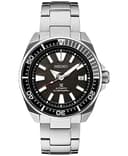
Every pick either states its lume on the maker’s own product page — Seiko’s page for the SRPF03 says “LumiBrite on hands and index(es)” in as many words — or names the pigment or its code on the retail listing. Watches whose lume exists only in a seller’s long-exposure photograph were excluded, however good the photograph.
2. A movement worth putting under a bright dial
Lume is a coating; it should not be the only reason to own the watch. Five of the six picks run a named caliber with published specifications — Seiko’s 4R35 and 4R34, the Seiko NH35 that half the micro-brand world uses, and Miyota’s 9015. Our guide to NH35 watches explains why that one caliber turns up at every price under $300.
3. Dive watches, but not only dive watches
Divers dominate any lume list for a real reason: ISO 6425, the standard behind a genuine Diver’s marking, requires legibility in darkness, so the category has to take lume seriously. But most people buying a bright watch are not diving. The six here include an everyday sports watch, a 36mm dress-sized automatic and a GMT alongside the divers.
4. What we left out
Two categories. First, watches we like whose makers publish nothing about the lume at all — Orient is the conspicuous example. The Orient Kamasu is an excellent dive watch with a sapphire crystal and an in-house movement, and Orient simply does not describe its luminous material the way Seiko does. That is a gap in the documentation rather than evidence the lume is poor, and it is why the Kamasu leads our dive watch roundup and not this one.
Second, references we could not confirm as currently purchasable. The Seiko Prospex Turtle would otherwise be an obvious candidate; on the day we built this page the reference we track came back unavailable rather than in stock, so it is not here. We check availability before featuring a watch, not after.
Living with a luminous dial
Charge it properly: short and bright beats long and dim
The single most useful habit is ten to thirty seconds of strong light before bed — a desk lamp at close range, a phone flashlight held against the crystal, or a minute of direct sun earlier in the day. Ambient room light charges the pigment slowly and never fully saturates it, which is why a watch worn indoors all evening glows weakly and then dies within an hour.
What ages, and what does not
The pigment itself effectively does not degrade; the charge-and-discharge cycle repeats indefinitely. What ages is the binder holding it to the dial and hands, which can yellow or lift over decades. On a watch bought new that is a problem for the 2050s, not for you. It matters if you are cross-shopping genuine vintage, where a beautifully patinated dial often glows barely at all — our vintage-style automatics page covers why buying the look new is usually the better trade.
Lume is not a reason to ignore the rest of the spec
A bright dial under a crystal covered in fine scratches is still hard to read. If you are choosing between two watches with comparable lume claims, the crystal is the more consequential decision over a few years of wear, and our sapphire crystal roundup makes that case with the hardness numbers behind it.