Dial & Lume

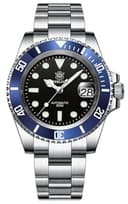
Steeldive SD1970 Review: Specs, Rivals and Who Should Buy One

AR-coated sapphire, a 120-click ceramic bezel, a Seiko NH35 and a published lug-to-lug - for a fraction of what the watch it echoes costs. Here is what Steeldive gets right, what it does not, and the four watches to weigh it against.

By Stephen V.Last updated How we pick

The short answer

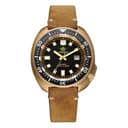
The Steeldive SD1970 is the clearest demonstration on this site that a specification sheet and a brand name are different things to pay for. Steeldive publishes 43.8mm across without the crown, 13.5mm thick and a 46.8mm lug-to-lug, fits an AR-coated sapphire crystal and a 120-click unidirectional ceramic bezel, and runs the Japanese NH35with a stated 41 hours in a 200m 316L case. Buy it if you want that hardware and are comfortable wearing a Seiko 6105 interpretation. Do not buy it expecting a service network, a resale value, or a design that is anybody’s but Seiko’s.

The SD1970 is a cushion-cased dive watch built in the shape of the Seiko 6105 — the reference collectors call the Willard — and it is one of a very small number of sub-$250 watches whose maker publishes the measurement that actually decides whether a watch fits.

That measurement is lug-to-lug, and Steeldive’s own store lists it at 46.8mm. For comparison, Seiko publishes 49.4mm for the SRPG57, a Prospex diver that is a full millimeter narrower across the dial. So the SD1970 is a wide watch that does not run long down the wrist, which is exactly the opposite of how its 44mm Amazon title reads.

Below: the specification as Steeldive publishes it, the three honest caveats, and four alternatives worth weighing against it — including the one from the same maker with a deeper rating, and the real Seiko you could buy instead. We have not handled any of them. Every figure here was read from Steeldive’s own store listing or the maker’s page for the alternative, and prices come from an automated daily check.

How this is funded: we earn a commission if you buy through our links, at no extra cost to you. As an Amazon Associate we earn from qualifying purchases. It never changes which watch or winder we recommend, and we’ll tell you plainly when to skip one. Full disclosure.

Quick picks

Ranked on movement, specs and buyer fit. Select a row to jump to the full write-up. We have not tested these — here is exactly what we do instead.

#ProductBest forPriceMovementCase sizeWater resistanceCrystal
1
Steeldive SD1970 200m Diver

Steeldive SD1970 200m Diver

The one watch on this list whose maker publishes the measurement that actually decides fit. Steeldive states 43.8mm across, 13.5mm thick and 46.8mm lug-to-lug - a shorter lug span than Seiko publishes for its own 42.4mm diver - so this is a wide watch that does not run long down the wrist. Sapphire with AR coating and a 120-click ceramic bezel at this money is the specification story.

The watch reviewed
$219.90 · View on Amazon

Price as of October 13, 2026. #ad How we’re funded

Seiko NH35 automatic43.8 mm200 mSapphire with AR coating
2
Steeldive SD1953 300m Diver

Steeldive SD1953 300m Diver

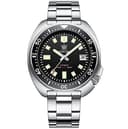
The enthusiast's NH35 diver. Steeldive builds the closest thing to a proper tool-watch case at this price — a stated 300m rating, an anti-reflective sapphire crystal and lume that people buy the watch for.

Best water resistance
$195.00 · View on Amazon

Price as of October 13, 2026. #ad How we’re funded

Seiko NH35 automaticNot published300 mSapphire (anti-reflective)
3
ADDIESDIVE NH35 Ceramic Bezel Diver

ADDIESDIVE NH35 Ceramic Bezel Diver

The step-up ADDIESDIVE: the same NH35 and sapphire, with a ceramic bezel insert instead of aluminum. Ceramic does not scratch or fade, which on a dive bezel is the single most visible durability difference there is.

Best cheaper option
$179.54 · View on Amazon

$199.4910% off

Price as of October 13, 2026. #ad How we’re funded

Seiko NH35 automaticNot published200 mSapphire
4
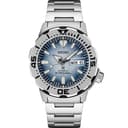
Seiko Prospex SRPG57

Seiko Prospex SRPG57

The cheapest watch Seiko will sell you with a diver's marking on the dial, and the single most useful watch in this comparison. It runs the same 4R36 as the Seiko 5 Sports, in a case the same thickness and a tenth of a millimeter narrower - what the extra money actually buys is a screw-down crown, a 200m diver's rating and LumiBrite on the bezel as well as the hands.

Best documented rival
$440.00 · View on Amazon

$550.0020% off

Price as of October 13, 2026. #ad How we’re funded

Seiko 4R36 (automatic + hand-winding)42.4 mm200 mHardlex with magnified glass
5
Pagani Design GMT Automatic 42mm

Pagani Design GMT Automatic 42mm

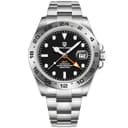
The homage that made mechanical GMTs cheap. Sapphire glass and a stated 100m rating at well under half the Seiko's price — the compromise is the styling, which borrows heavily and makes no secret of it.

Best complication
$139.90 · View on Amazon

Price as of October 13, 2026. #ad How we’re funded

Automatic mechanical42 mm100 mSapphire

Specs read from each maker’s published data and retail listing on August 11, September 1 and September 8, 2026. Prices checked live — as of October 13, 2026. “Not published” means the maker does not state that figure; we don’t fill the gap with a guess.

The picks in full

#1The watch reviewed

Steeldive SD1970 200m Diver

The one watch on this list whose maker publishes the measurement that actually decides fit. Steeldive states 43.8mm across, 13.5mm thick and 46.8mm lug-to-lug - a shorter lug span than Seiko publishes for its own 42.4mm diver - so this is a wide watch that does not run long down the wrist. Sapphire with AR coating and a 120-click ceramic bezel at this money is the specification story.

Strengths

  • Steeldive publishes 43.8mm diameter, 13.5mm thickness AND 46.8mm lug-to-lug
  • AR-coated sapphire and a 120-click unidirectional ceramic bezel
  • Seiko NH35 automatic with a stated 41 hours, in a 200m 316L case

Trade-offs

  • 13.5mm is thick, and thickness is what makes a big watch feel heavy
  • A Seiko 6105 homage, so you are wearing someone else's design
  • Micro-brand support: the repair path is movement replacement, not service
MovementSeiko NH35 automatic
Stated accuracyNot published
Power reserve41 hours
Case size43.8 mm
Water resistance200 m
CrystalSapphire with AR coating
Hacks / hand-windsYes / Yes

Why this one. Steeldive lists the diameter as 43.8mm WITHOUT the crown; the Amazon title rounds it to 44mm. The 46.8mm lug-to-lug is the number worth knowing - it is 2.6mm shorter than the 49.4mm Seiko publishes for the smaller-diameter SRPG57, which is the clearest demonstration on this page that diameter and wearing size are different things.

Specs read from the product listing and the maker’s published data, on September 8, 2026. “Not published” means the maker does not state that figure.

#2Best water resistance

Steeldive SD1953 300m Diver

The enthusiast's NH35 diver. Steeldive builds the closest thing to a proper tool-watch case at this price — a stated 300m rating, an anti-reflective sapphire crystal and lume that people buy the watch for.

Strengths

  • Stated 300m rating with a screw-down crown
  • Anti-reflective sapphire and unusually strong lume
  • The homage the enthusiast forums actually recommend

Trade-offs

  • Thick and heavy — this is a full-size dive watch
  • Availability comes and goes between sellers
MovementSeiko NH35 automatic
Stated accuracyNot published
Power reserveNot published
Case sizeNot published
Water resistance300 m
CrystalSapphire (anti-reflective)
Hacks / hand-windsYes / Yes

Why this one. Steeldive's reputation rests on case construction rather than on the movement, which is the same NH35 half this list uses.

Specs read from the product listing and the maker’s published data, on August 11, 2026. “Not published” means the maker does not state that figure.

#3Best cheaper option

ADDIESDIVE NH35 Ceramic Bezel Diver

The step-up ADDIESDIVE: the same NH35 and sapphire, with a ceramic bezel insert instead of aluminum. Ceramic does not scratch or fade, which on a dive bezel is the single most visible durability difference there is.

Strengths

  • Ceramic bezel insert — no fading, very hard to scratch
  • NH35 with sapphire and a stated 200m rating
  • Bronze-finished buckle detail lifts it above the plain versions

Trade-offs

  • Ceramic chips rather than scratching if you knock it hard
  • Still an unknown brand with no service network
MovementSeiko NH35 automatic
Stated accuracyNot published
Power reserveNot published
Case sizeNot published
Water resistance200 m
CrystalSapphire
Hacks / hand-windsYes / Yes

Why this one. Aluminum bezel inserts fade and scratch; ceramic does not, but it can chip. Neither behavior is a fault — they are different failure modes.

Specs read from the product listing and the maker’s published data, on August 11, 2026. “Not published” means the maker does not state that figure.

#4Best documented rival

Seiko Prospex SRPG57

The cheapest watch Seiko will sell you with a diver's marking on the dial, and the single most useful watch in this comparison. It runs the same 4R36 as the Seiko 5 Sports, in a case the same thickness and a tenth of a millimeter narrower - what the extra money actually buys is a screw-down crown, a 200m diver's rating and LumiBrite on the bezel as well as the hands.

Strengths

  • 200m diver's rating with a screw-down crown and unidirectional bezel
  • Seiko states LumiBrite on hands, indexes AND bezel - the 5 Sports omits the bezel
  • 42.4mm and 13.4mm, so no thicker or wider than the 5 Sports it replaces

Trade-offs

  • 49.4mm lug-to-lug wears noticeably longer than the 5 Sports' 46.0mm
  • Hardlex mineral crystal, not sapphire, at well over $400
  • Solid screw case back - you lose the 5 Sports' view of the movement
MovementSeiko 4R36 (automatic + hand-winding)
Stated accuracyNot published
Power reserve41 hours
Case size42.4 mm
Water resistance200 m
CrystalHardlex with magnified glass
Hacks / hand-windsYes / Yes

Why this one. This is the reference that makes the whole Seiko 5 versus Prospex argument concrete. Seiko publishes both: 4R36 and approximately 41 hours on each, 42.5mm/13.4mm on the SRPD65 against 42.4mm/13.4mm here. The movement and the case size are not what you are paying for.

Specs read from the product listing and the maker’s published data, on September 1, 2026. “Not published” means the maker does not state that figure.

#5Best complication

Pagani Design GMT Automatic 42mm

The homage that made mechanical GMTs cheap. Sapphire glass and a stated 100m rating at well under half the Seiko's price — the compromise is the styling, which borrows heavily and makes no secret of it.

Strengths

  • Sapphire crystal at a price where nothing else has it
  • Mechanical GMT function for well under $150
  • Stated 100m water resistance

Trade-offs

  • Openly derivative styling — this is an homage watch
  • No service network and no meaningful resale value
MovementAutomatic mechanical
Stated accuracyNot published
Power reserveNot published
Case size42 mm
Water resistance100 m
CrystalSapphire
Hacks / hand-windsNot published / Not published

Why this one. Homage watches copy a famous design without faking a brand. That is legal and common, but it does mean you are buying someone else's design language.

Specs read from the product listing and the maker’s published data, on August 11, 2026. “Not published” means the maker does not state that figure.

What the SD1970 actually is

A 200m automatic dive watch in a 316L stainless cushion case, with a 120-click unidirectional ceramic bezel, a sapphire crystal with anti-reflective coating, a screw-down crown at four o’clock, 20mm lugs, and the Seiko NH35 automatic inside. Steeldive states Swiss C3 green and BGW9 blue luminous material, which is unusually specific for the price — most listings at this money say “luminous” and leave it there.

The NH35 is the part worth understanding, because it is the engine of this entire price band. It is made by Seiko’s movement arm, it hacks and hand-winds, it runs about 41 hours, and crucially any watchmaker can get parts for it. A micro brand fitting an NH35 is making a specific promise: the movement is not a mystery. Our NH35 roundup covers the rest of the field built on it, and NH35 vs Miyota 9015 compares it with the other caliber you will meet at this price.

The numbers that matter, and the one that does not

Amazon’s title says 44mm. Steeldive’s own listing says 43.8mm without the crown. Neither is wrong, and both are the least useful figure on the sheet. What decides whether a cushion-case diver works on your wrist is the 46.8mm lug span and the 13.5mm thickness — the first because lugs that overhang look wrong no matter how narrow the dial is, the second because thickness is what makes a watch catch on a cuff and feel heavier than its weight. Our watch size guide explains how to measure for both in about a minute.

The three honest caveats

1. It is somebody else’s design

The cushion case, the crown at four, the proportions: this is a Seiko 6105 interpretation and nobody involved pretends otherwise. That is an homage, not a counterfeit — the dial says Steeldive, which is the whole legal and ethical distinction — but it is still a borrowed shape, and some people will not want to wear one. Our best homage watches roundup sets out where that line sits, including the difference between an homage, a replica and a frankenwatch.

2. Support means replacement, not service

The economically rational repair on an NH35 after a few years is a new movement, because the caliber costs less than the labor to strip and rebuild it. That is how the whole budget-mechanical segment works and it is not a scandal — but it is not the same as a maker who will still take the watch back in twenty years. Our automatic watch service cost guide puts figures on both paths.

3. Thickness is the specification that bites

13.5mm is thick. It is thicker than the Prospex references Seiko publishes sheets for, all of which sit between 12.3mm and 13.4mm, and on a cushion case that height is concentrated in the middle of the watch rather than tapering. If you are buying your first dive watch and have never worn something over 13mm, that is the number to think hardest about.

What the sapphire and ceramic actually buy you

These two specifications are the reason the SD1970 gets recommended, and both are worth real money. On the Mohs hardness scale sapphire sits at 9, quartz at 7 and ordinary glass at about 5.5 — and everyday grit is largely quartz, which is why a mineral crystal collects fine hairlines over a few years of daily wear and sapphire mostly does not. Steeldive adds an anti-reflective coating on top, which is a legibility upgrade rather than a durability one.

A ceramic bezel insert resists the same scratching and, more to the point, will not fade. The 120-click unidirectional action is the part a dive bezel needs to be useful: it only turns one way, so an accidental knock can shorten your elapsed time but never lengthen it. That is a requirement of the dive standard rather than a feature. Our sapphire vs mineral crystal comparison covers how much the crystal difference is worth paying for, and the automatics with a sapphire crystal roundup is the field of watches that fit one at this price.

About the 200m rating

Steeldive states 200m / 20 ATM. Be precise about what that does and does not mean: the ISO 6425 diver’s standard requires a minimum 100m rating, a unidirectional or lockable elapsed-time bezel, legibility in the dark at 25cm and testing of every individual watch rather than a batch sample. Steeldive publishes the rating. It does not publish a claim of ISO 6425 compliance, and we are not going to infer one from a bezel and a number.

For swimming, snorkeling and anything you will realistically do, the case specification here is ample and the screw-down crown is the part that has to be done up. For actual scuba diving, a watch that has never been pressure-tested since it was assembled is not one to trust on faith, from any maker at this price. Our water resistance guide explains why the rating on the dial is not a depth limit, and what a screw-down crown is covers the half-turn most people get wrong.

The four alternatives, and when each one wins

The Steeldive SD1953is the same maker’s take on a different Seiko-adjacent classic, with a 300m rating and AR-coated sapphire, and it usually costs less than the SD1970. If the rating is what you are shopping on, it is the better buy outright; the SD1970 wins on the cushion case and the published lug-to-lug.

The ADDIESDIVE NH35 ceramic-bezel diveris the cheaper version of the same idea: the same Japanese caliber, sapphire and a ceramic bezel, for appreciably less. What you give up is Steeldive’s published case dimensions — which, on a watch this size, is giving up the ability to predict fit. Worth it if the budget is the binding constraint.

The Seiko Prospex SRPG57is the honest un-homage answer: the cheapest reference Seiko sells with a diver’s marking on the dial, from the company whose design the SD1970 borrows, with a full published specification sheet and a service network. It costs about twice as much and gives you a worsecrystal — Hardlex mineral, not sapphire. That trade is the entire argument for and against micro brands in one sentence. The Prospex roundup is the page for that side of the decision.

The Pagani Design GMTis here for anyone whose real want is a complication rather than a dive case. It puts a mechanical second time zone on your wrist for less than the SD1970 costs, with sapphire and a 100m rating — so it swims but it does not dive. If that is the trade you want, our GMT roundup covers the field.

Who should buy the SD1970

Buy it if you want the most dive-watch hardware your money can buy and you care more about the crystal, the bezel and the published dimensions than about the name on the dial. Buy it if your wrist suits a wide case but not a long one — the 46.8mm lug span is the specification that makes this watch unusual, and almost nobody else in the price band publishes theirs.

Do not buy it if you want a watch you can hand to an authorized service center in a decade, if resale value matters to you at all, or if wearing a recognizable interpretation of someone else’s design would bother you every time you looked at your wrist. Those are preferences rather than faults, and only you can price them. If any of them lands, the honest alternatives are a Seiko or an Orientat similar or slightly higher money, both from makers whose movements are their own and whose designs are nobody else’s.

Living with one

It behaves like any NH35 automatic. It winds from wrist motion, holds about 41 hours off the wrist, hacks so you can set it to the second, and hand-winds from the crown so a stopped watch starts without shaking. Expect it to run within a few tens of seconds a day; Seiko’s movement arm does not publish a rate specification for the NH35 the way it does for the 4R series, so this page does not print one either.

A 200m cushion-case diver is also a watch you will take off most evenings, which means it will be stopped when you reach for it on Monday. Resetting a date takes seconds, so the case for a winder is weaker than winder marketing suggests — we argue both sides in do automatic watches need a winder. If you decide you want one, a 43.8mm case needs a cushion that actually fits it, which the single watch winder roundup covers.
Frequently asked questions

Is the Steeldive SD1970 any good?

On published specification it is one of the best-equipped automatic divers under $250: AR-coated sapphire, a 120-click unidirectional ceramic bezel, a 200m 316L case and the Seiko NH35, with Steeldive publishing 43.8mm across, 13.5mm thick and a 46.8mm lug-to-lug. The honest limits are that it is a Seiko 6105 interpretation rather than an original design, that support means movement replacement rather than service, and that 13.5mm is genuinely thick.

Is the SD1970 a Captain Willard homage?

It is built in the shape of the Seiko 6105, the reference collectors associate with that nickname, and Steeldive does not pretend otherwise. It is an homage, not a replica: the dial carries Steeldive's own name, which is the distinction that separates a legal design homage from a counterfeit.

What movement is in the Steeldive SD1970?

A Japanese Seiko NH35 automatic, with 41 hours of energy storage per Steeldive's own listing. It hacks and hand-winds, and parts are available to any watchmaker - which is the practical reason an NH35 is worth more than an unnamed 'automatic movement' at the same price.

How big does the SD1970 wear?

Wide but not long. Steeldive publishes 43.8mm across without the crown and a 46.8mm lug-to-lug, which is shorter than the 49.4mm Seiko publishes for its narrower 42.4mm SRPG57. The figure to watch is the 13.5mm thickness, which is more than any current Prospex diver Seiko publishes a sheet for.

Does the Steeldive SD1970 have a sapphire crystal?

Yes - Steeldive's own listing states a sapphire crystal with an anti-reflective coating, plus a ceramic bezel insert. On the Mohs scale sapphire is 9 against about 5.5 for ordinary glass, and everyday grit is largely quartz at 7, which is why sapphire stays clear where mineral crystals collect hairlines.

Steeldive SD1970 or a real Seiko?

If the service network, the resale value and owning an original design matter, buy the Seiko - the Prospex SRPG57 is the cheapest reference Seiko sells with a diver's marking on the dial. If hardware per dollar matters most, the Steeldive gives you sapphire and ceramic where the Seiko gives you Hardlex mineral, for roughly half the money. Neither answer is wrong; they are different purchases.

Can you dive with a Steeldive SD1970?

Steeldive publishes a 200m / 20 ATM rating and fits a unidirectional bezel and a screw-down crown, which is ample for swimming and snorkeling. It does not publish a claim of ISO 6425 compliance, and we will not infer one - under that standard every individual watch is pressure-tested, not a sample. For real scuba use, get any watch of this price pressure-tested before you trust it at depth.

Sources

  • Steeldive - SD1970 200m diver product specification (Steeldive Watch Store) — Steeldive's own store listing for the SD1970: 43.8mm case diameter without the crown, 13.5mm thick, 46.8mm lug-to-lug ('case length'), 20mm lug width, 316L stainless steel, Japan NH35 automatic with 41 hours of energy storage, sapphire crystal with AR coating, a 120-click unidirectional ceramic bezel, 200m / 20 ATM, and Swiss C3 green plus BGW9 blue luminous. Amazon's listing title rounds the diameter to 44mm (accessed September 8, 2026)
  • ISO 6425:2018 — Divers' watches — The standard a watch must meet to be legally marked 'Diver's [depth]m': minimum 100m, a unidirectional/lockable elapsed-time bezel, dark legibility, and testing of every piece (accessed July 21, 2026)
  • ISO 22810:2010 — Water-resistant watches — Defines the requirements, test methods and permitted markings for ordinary water-resistant watches (daily use / swimming, not scuba diving) (accessed July 21, 2026)
  • Super-LumiNova — Wikipedia — Super-LumiNova is a strontium-aluminate photoluminescent pigment (europium- and dysprosium-doped) made by RC Tritec AG in Switzerland with Nemoto & Co. It is non-radioactive, is recharged by light indefinitely without chemical degradation, and its higher grades (A and X1) decay far more slowly than Standard grade. It is offered in colors identified by code: C3 glows green and appears pale yellow-green in daylight (emission at 515 nm); BGW9 glows blue-green and appears white in daylight (emission at 485 nm) (accessed August 19, 2026)
  • Mohs scale of mineral hardness — Wikipedia — The hardness ranking behind every watch-crystal argument: corundum (sapphire) 9, quartz 7, glass 5.5, plastic 2 to 2.5 — which is why sand and grit, largely quartz, scratch mineral glass and acrylic but not sapphire (accessed August 19, 2026)
  • Seiko - Prospex SRPG57 product specification — Seiko's own listing for the SRPG57: caliber 4R36, approx. 41h reserve, 42.4mm diameter, 13.4mm thick, 49.4mm lug-to-lug, Hardlex with magnified glass, '200m / 660ft diver's' water resistance, a screw-down crown, a unidirectional rotating bezel, a screw case back, and LumiBrite on hands, index(es) AND bezel (accessed September 1, 2026)
  • Mechanical watch — Wikipedia — Reference walk-through of the power flow in a mechanical/automatic watch: rotor → mainspring → gear train → escapement → balance wheel (accessed July 21, 2026)

Keep reading