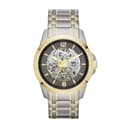
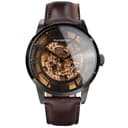
How we picked
1. Can you still read the time?
This is the criterion that eliminates most of the category. A dial cut away to nothing, with skeletonized hands over a busy movement, is genuinely hard to read in anything but bright light — the hands and the background have the same visual texture. The picks here all keep either a substantial ring of dial with proper markers, or hands with enough contrast to separate from what is behind them. If a watch looked spectacular in the product photo and unreadable in the wrist shot, it is not on this list.
2. Open heart or full skeleton, chosen honestly
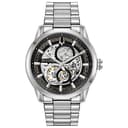
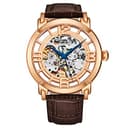
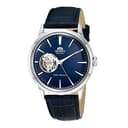
These are not competitors, they are different things, and the ranking reflects which does its own job best. The Bulova and the Orient are open-heart designs that work as normal watches with an interesting detail. The Stuhrling is a genuine full skeleton and is ranked as the best of those, with the legibility cost stated on its card rather than hidden. If you are still choosing between the two formats, open heart versus skeleton is the comparison written for exactly that decision.
3. Who stands behind it
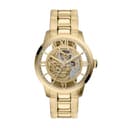
This category attracts marketplace brands more than any other, because an impressive-looking openwork dial is the cheapest way to make a $60 watch look like a $600 one in a photograph. That is why brand backing is weighted heavily here: Bulova, Fossil and Relic all have warranty departments and returns processes. Below them, you are buying from a listing rather than from a company, and the card for each pick says so.
4. What the maker actually publishes
Bulova states a 21-jewel automatic with a 42-hour power reserve on the Sutton — genuinely unusual transparency at this price. Fossil publishes nothing about its calibers. The marketplace brands publish less still. That gap is the main reason the ranking looks the way it does, because on a watch bought to be looked at, the movement inside is the entire proposition.
What you are actually looking at
Through an open heart you are seeing the balance wheel — the oscillating wheel that regulates the watch, swinging back and forth several times a second. On a 21,600 vibrations-per-hour movement, which covers most watches here, that is three full oscillations every second. It is the component that does the actual timekeeping, and it is the right thing to put a window over, because it is the only part that visibly moves at a human speed.
Through a full skeleton you are additionally seeing the gear train — the wheels transmitting power from the mainspring to the escapement — and often the mainspring barrel itself. Most of it moves too slowly to see. Our guide to how automatic watches work explains what each part does, and it makes a skeleton watch considerably more interesting to own once you know what you are looking at.
What you are generally not looking at, at this price, is hand-finishing. True skeletonization is a craft: bridges cut away by hand, edges beveled and polished, engraving under a loupe. That work costs thousands. A $130 skeleton is a stock movement with a decorated cut-out dial in front of it, and there is nothing dishonest about that unless the marketing pretends otherwise.
The legibility trade, stated plainly
You will read a skeleton watch more slowly than a plain one. In good light with a well-designed dial the difference is small; in a dim restaurant with a full skeleton it is significant. If you want a watch you glance at rather than look at, our field watch picks are the direct opposite of this page and the honest alternative.
The mitigation, if you want the look and the function, is the open heart. A small aperture at 12 or 9 o’clock costs you almost nothing in legibility while still giving you something to watch. That is why the Orient Bambino Open Heart appears on both this page and our dress watch list — it is the version of this idea with the fewest compromises.
Display casebacks: the other way to see the movement
Worth mentioning because it solves the same want without any of the costs. A display caseback puts a window in the back of the watch, so you see the rotor and bridges when you take it off, and a completely normal, legible dial when you have it on. Many of the watches on our other pages have one — it is common from about $130 up.
If what you actually want is to watch a mechanical movement run, a display caseback delivers more of it than most skeleton dials do, because you see the whole movement rather than a slice of it. If what you want is other people to notice the watch is mechanical, only a skeleton dial does that. Both are legitimate; they are just answering different questions, and it is worth knowing which one you are asking before you spend.