Dial & Lume

Best Watch Winders With Adjustable TPD Settings

Most winders give you a mode dial and no numbers. These give you turns per day and direction as figures you can set — with each maker's published range printed next to it.

By Stephen V.Last updated How we pick

Almost every winder on Amazon advertises “multiple rotation modes.” Very few tell you what those modes actually are. You get a dial marked 1 to 4, or a button that cycles through settings the manual describes as B and L, and no number anywhere. That is a problem, because the specification your watch’s maker publishes is a number: a turns-per-day figure and a direction.

This page collects the winders that close that gap — the ones whose makers publish an actual TPD range and let you choose it, rather than hiding it behind a mode letter. Every pick below either states its TPD figures on the maker’s own spec page or prints them in the product listing, and each entry says which. Where a maker declines to publish a number, this page says so instead of guessing one.

Six picks, from about $34 to just over $300. We have not handled any of them. TPD figures come from each maker’s own specification, cited at the bottom; prices come from a live daily check rather than a number typed into this page. If you do not yet know what TPD your watch needs, start with our turns-per-day guide and come back with a figure.

How this is funded: we earn a commission if you buy through our links, at no extra cost to you. As an Amazon Associate we earn from qualifying purchases. It never changes which watch or winder we recommend, and we’ll tell you plainly when to skip one. Full disclosure.

Quick picks

Ranked on movement, specs and buyer fit. Select a row to jump to the full write-up. We have not tested these — here is exactly what we do instead.

#ProductBest forPrice
1
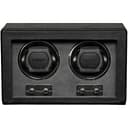
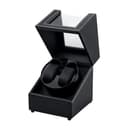
Rothwell Double Watch Winder

Rothwell Double Watch Winder

The widest settings range on this list, in the nicest case. Rothwell publishes five TPD speeds up to 1,950 and three directions, gives each watch its own setting, and runs two separate quiet Japanese motors instead of driving both positions off one. It also takes AA batteries, which is the difference between a winder that has to sit by an outlet and one that can go in a safe.

Best overall
$204.95 · View on Amazon

Price as of September 4, 2026. #ad How we’re funded

2
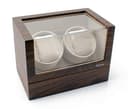
Versa Double Watch Winder Elite

Versa Double Watch Winder Elite

The double winder to buy for most collections. Versa publishes what it does: four turns-per-day settings from 650 to 1,850, all three directions, and each of the two positions set independently. That combination — real numbers, per-watch control, an ultra-quiet Japanese motor — is exactly what a second winding position is for, and it costs roughly what one premium single does.

Best value
$129.99 · View on Amazon

Price as of September 4, 2026. #ad How we’re funded

3
Barrington Single Watch Winder

Barrington Single Watch Winder

The enthusiast-forum favorite. A silent Japanese motor, the full range of turns-per-day settings, and both directions — so you can dial in exactly what a Rolex, Omega or Seiko movement asks for. It also stacks with matching modules if your collection grows.

Best single position
$475.00 · View on Amazon

Price as of September 4, 2026. #ad How we’re funded

4
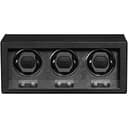
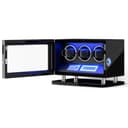
Rothwell Triple Watch Winder

Rothwell Triple Watch Winder

The three-position winder to buy if you actually care what the winder is doing. Rothwell's published spec gives five turns-per-day speeds and three rotation modes, and its doubles are already the reference for per-position control at this size.

Best for three watches
$309.95 · View on Amazon

Price as of September 4, 2026. #ad How we’re funded

5
DUKWIN 3-Watch Winder with Fingerprint Lock

DUKWIN 3-Watch Winder with Fingerprint Lock

The one to buy if the winder also has to keep people out of it. A fingerprint lock and an LCD control panel on three positions — features nothing else at this capacity offers, at a price that reflects them.

Best display and controls
$267.96 · View on Amazon

$282.075% off

Price as of September 4, 2026. #ad How we’re funded

6
Mcbazel Double Watch Winder (2 Slots)

Mcbazel Double Watch Winder (2 Slots)

The cheapest double we'd actually recommend, from the same maker as our budget single. Quiet Japan-made motor, USB-C power, two slots, and — unusually for this price — a published turns-per-day range. That range is the reason it isn't ranked higher: it starts at 970 TPD, above what many movements need.

Cheapest with a published figure
$33.79 · View on Amazon

Price as of September 4, 2026. #ad How we’re funded

The picks in full

#1Best overall

Rothwell Double Watch Winder

The widest settings range on this list, in the nicest case. Rothwell publishes five TPD speeds up to 1,950 and three directions, gives each watch its own setting, and runs two separate quiet Japanese motors instead of driving both positions off one. It also takes AA batteries, which is the difference between a winder that has to sit by an outlet and one that can go in a safe.

Strengths

  • Five published TPD speeds (650/750/850/1000/1950) with per-watch settings
  • Two separate quiet Japanese motors rather than one shared drive
  • Runs on AA batteries or mains — Rothwell states roughly 3-4 weeks per set

Trade-offs

  • The most expensive pick here by a wide margin
  • Large at roughly 11.75 x 6.25 x 7.25 inches — it needs real dresser space
Watches held2
Rotation settings5 TPD speeds x 3 directions, set per watch
DirectionCW, CCW, both
PowerAC adapter or AA batteries
Quiet motorYes
Includes storageNo

Why this one. The 1,950 TPD top step matters for the small number of movements that genuinely want a high turn count; most automatics sit far below it. Battery operation is the quieter selling point — it's what lets the winder live somewhere without a socket.

Specs read from the product listing and the maker’s published data, on July 23, 2026. “Not published” means the maker does not state that figure.

#2Best value

Versa Double Watch Winder Elite

The double winder to buy for most collections. Versa publishes what it does: four turns-per-day settings from 650 to 1,850, all three directions, and each of the two positions set independently. That combination — real numbers, per-watch control, an ultra-quiet Japanese motor — is exactly what a second winding position is for, and it costs roughly what one premium single does.

Strengths

  • Four published TPD steps (650/950/1250/1850) rather than unnamed 'modes'
  • Clockwise, counter-clockwise and bi-directional, set per position
  • Ultra-quiet Japanese motor, so it can live on a dresser

Trade-offs

  • Costs about four times what a budget double does
  • Mains power only — there's no battery option if you want it in a safe
Watches held2
Rotation settings4 TPD settings x 3 directions, set per position
DirectionCW, CCW, both
PowerAC adapter
Quiet motorYes
Includes storageNo

Why this one. The reason to pay this much for a double is the published TPD ladder. A winder that lists 'mode 1-5' leaves you guessing whether your movement is getting 650 turns or 2,400; Versa states the number, so you can match it to what the caliber actually asks for.

Specs read from the product listing and the maker’s published data, on July 23, 2026. “Not published” means the maker does not state that figure.

#3Best single position

Barrington Single Watch Winder

The enthusiast-forum favorite. A silent Japanese motor, the full range of turns-per-day settings, and both directions — so you can dial in exactly what a Rolex, Omega or Seiko movement asks for. It also stacks with matching modules if your collection grows.

Strengths

  • Silent Japanese motor with adjustable TPD and CW / CCW / both directions
  • Modular — add units later instead of rebuying
  • Long track record and readily available replacement parts

Trade-offs

  • Premium price for a single position
  • Understated looks won't wow anyone who wanted a showpiece
Watches held1
Rotation settingsAdjustable TPD + direction
DirectionCW, CCW, both
PowerAC adapter + battery
Quiet motorYes
Includes storageNo

Why this one. Barrington's selling point is control: a full TPD range plus direction choice lets you match the winder to the movement instead of hoping a pre-set is close enough.

Specs read from the product listing and the maker’s published data, on September 3, 2026. “Not published” means the maker does not state that figure.

#4Best for three watches

Rothwell Triple Watch Winder

The three-position winder to buy if you actually care what the winder is doing. Rothwell's published spec gives five turns-per-day speeds and three rotation modes, and its doubles are already the reference for per-position control at this size.

Strengths

  • Five published TPD speeds and three rotation directions
  • Quiet Japanese motors, one per position
  • Leather-finished case that suits a dresser rather than a desk

Trade-offs

  • Costs six times what the cheapest three-position boxes do
  • Big — three winders side by side is a wide object
Watches held3
Rotation settings5 TPD speeds x 3 directions
DirectionCW, CCW, both
PowerAC adapter or AA batteries
Quiet motorYes
Includes storageNo

Why this one. Rothwell publishes its TPD range, which most winder makers at any price do not. That is the single reason to pay this much for three positions.

Specs read from the product listing and the maker’s published data, on August 11, 2026. “Not published” means the maker does not state that figure.

#5Best display and controls

DUKWIN 3-Watch Winder with Fingerprint Lock

The one to buy if the winder also has to keep people out of it. A fingerprint lock and an LCD control panel on three positions — features nothing else at this capacity offers, at a price that reflects them.

Strengths

  • Fingerprint lock rather than a token key
  • LCD touchscreen control instead of a hidden rotary switch
  • Remote control and adjustable pillows

Trade-offs

  • The most expensive three-position winder here
  • Electronic lock is another thing that can fail
Watches held3
Rotation settingsMultiple rotation modes, LCD-set
DirectionNot published
PowerNot published
Quiet motorYes
Includes storageNo

Why this one. A fingerprint lock deters a casual hand, not a determined thief. Treat it as convenience and privacy, not as security for genuinely valuable watches.

Specs read from the product listing and the maker’s published data, on August 11, 2026. “Not published” means the maker does not state that figure.

#6Cheapest with a published figure

Mcbazel Double Watch Winder (2 Slots)

The cheapest double we'd actually recommend, from the same maker as our budget single. Quiet Japan-made motor, USB-C power, two slots, and — unusually for this price — a published turns-per-day range. That range is the reason it isn't ranked higher: it starts at 970 TPD, above what many movements need.

Strengths

  • Quiet Japan-made motor and USB-C power for around the price of a nice strap
  • Publishes its TPD range (970-2,430) where most budget doubles publish nothing
  • Programmed pauses between winding cycles rather than constant rotation

Trade-offs

  • Lowest setting is 970 TPD — more turns than plenty of automatics ask for
  • Two preset modes only, applied to both slots; no per-watch control
Watches held2
Rotation settings2 preset winding modes (B and L)
DirectionCW and CCW within each cycle
PowerUSB-C (3-9V)
Quiet motorYes
Includes storageNo

Why this one. Over-winding isn't the risk people fear — a healthy automatic's mainspring slips once full. The real cost of a high fixed TPD is unnecessary running hours on the winding mechanism, which is why we'd still take the adjustable Versa if the budget stretches.

Specs read from the product listing and the maker’s published data, on July 23, 2026. “Not published” means the maker does not state that figure.

What “adjustable TPD” actually means

TPD is turns per day: how many full rotations the winder gives the watch in twenty-four hours. A movement needs enough rotation to keep its mainspring wound and no more, and manufacturers publish a figure — usually somewhere between about 650 and 1,000 turns for common automatics, with some going higher.

A winder with genuinely adjustable TPD lets you set that number. A winder with “modes” makes you accept whatever the designer decided a mode means. Sometimes those are the same thing under a different label — the Versa Elite Double’s four settings are 650, 950, 1,250 and 1,850 TPD, which is a genuine range with names attached. Often they are not, and the manual never tells you.

Direction matters as much as the number

The second half of the setting is rotation direction: clockwise, counter-clockwise, or alternating between the two. This is not cosmetic. Many automatic movements wind in one direction only, and a winder turning the wrong way can run all day and put almost nothing into the mainspring. Barrington — a winder maker, and therefore an interested party, but the only one publishing practical guidance — makes exactly this point in its own setup notes.

Bidirectional or “both” mode is the safe default when you do not know your movement’s winding behavior. It costs you nothing except a slightly longer time to full wind, and it cannot leave a one-direction movement unwound.

Per-position settings, on multi-watch winders

This is the specification that separates a real double from a cosmetic one. A genuine double winder lets you set each position independently — 650 TPD clockwise on the left, 1,000 bidirectional on the right. A cheap one drives both positions from a single motor and a single setting, so your two watches get whatever suits neither.

Both Rothwell winders and the Versa Elite Double state per-position control on their own spec pages. That is the single biggest reason they cost what they cost, and if you own two watches with different requirements it is the only feature on this page you genuinely cannot work around.

How we picked

1. A published number, not a mode letter

The entry requirement for this page. Rothwell publishes five TPD speeds (650/750/850/1000/1950) and three rotation modes for its double and triple; Versa publishes four (650/950/1250/1850) plus clockwise, counter-clockwise and bidirectional. Mcbazel’s double states 970–2,430 TPD in its listing. Barrington states an adjustable TPD range and direction choice without printing the endpoints, which is why it sits third rather than first.

2. Whether the settings are per position

Weighted heavily, because it is the difference between two watches correctly wound and two watches approximately wound. The Rothwells and the Versa Elite do it. The budget picks do not, and their entries say so plainly.

3. Motor noise, which nobody quantifies

Every winder on this list is marketed as quiet, and not one maker publishes a decibel figure. We have not measured them, so this page prints no numbers for noise. What can be said honestly is that Japanese-motor winders — the Rothwells, the Versas, the Barrington — are the ones enthusiasts consistently describe as bedroom-quiet, and that a winder in a bedroom is the use case where this matters at all. Our quiet winder roundup goes further into it.

4. What we left out

Any winder whose listing claims a TPD range that its own settings cannot deliver, and anything advertising “programmable” control that turns out to mean a timer. A timer that runs the motor for three hours and rests for nine is a reasonable design — the ANWBROAD double does exactly that — but it is not a TPD setting, and calling it one is how buyers end up disappointed.

Setting yours, in order

Find your movement’s published TPD figure first. Seiko, Orient, Rolex and Omega all state one for their calibers, and our TPD settings guide collects the common ones in a table. If your movement is unlisted, 650 to 800 TPD bidirectional is the conventional starting point and will not harm anything.

Set direction next. If you know the movement winds one way only, match it. If you do not, choose bidirectional. Then leave it alone for a week and check the watch is still running and roughly on time in the morning — that is the only test that matters, and it costs nothing.

One thing you do not need to worry about: overwinding. A modern automatic has a slipping clutch on the mainspring barrel precisely so that a rotor — or a winder — cannot force more energy in than the spring will hold. Our guide to whether winders damage watches covers the mechanics, and the honest wear argument that does exist.

Frequently asked questions

What does TPD mean on a watch winder?

Turns per day — the number of full rotations the winder gives the watch in twenty-four hours. Watch manufacturers publish a TPD figure for their calibers, typically between roughly 650 and 1,000 turns for common automatics, and setting the winder to match is the whole point of an adjustable model.

Do I need a winder with adjustable TPD, or will a preset one do?

A preset winder is fine if its fixed setting happens to exceed what your movement needs, which for most affordable Japanese automatics it does. Adjustable TPD matters when you own a watch with a specific published requirement, when you want to run the winder as little as possible, or when you have two watches with different figures on a double.

What TPD should I set for a Rolex or an Omega?

Use the figure the manufacturer publishes for your specific caliber rather than a rule of thumb — the requirement varies by movement, not by brand. Our turns-per-day guide collects the common published figures. Where no figure is published, roughly 650 to 800 TPD bidirectional is the conventional safe starting point.

Does rotation direction actually matter?

Yes. Many automatic movements wind in one direction only, so a winder turning the wrong way can run all day and put almost nothing into the mainspring. If you do not know your movement's winding behavior, set the winder to bidirectional — it cannot leave a one-direction movement unwound.

Can you set each watch separately on a double winder?

Only on winders that state per-position control. Rothwell's double and triple and the Versa Elite Double all publish independent settings per position. Cheaper doubles typically drive both cups from one motor and one setting, so both watches get the same program whether it suits them or not.

Can a winder overwind my watch if I set the TPD too high?

No. A modern automatic has a slipping clutch on the mainspring barrel that prevents more energy going in than the spring will hold — the same mechanism that stops your own wrist from overwinding it. A high TPD setting means more motor running and more rotor movement, not a damaged mainspring.

Sources

Keep reading