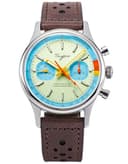
Hand-wound or automatic: read this before you buy
The single most useful paragraph on this page. A hand-wound chronograph has no rotor. You wind the crown every day — typically twenty to thirty turns — and if you leave it in a drawer over a weekend it stops. That is not a fault; it is how the ST1901 was designed, and it is the same arrangement as the 1960s watches these are reissuing.
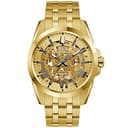
An automatic chronograph adds a rotor, so wearing it keeps it wound. Building one means fitting an automatic winding module around an already crowded chronograph mechanism, which is why the price jumps and why exactly one watch on this page manages it. If the daily wind sounds like a pleasure, buy an ST1901. If it sounds like a chore, buy the Bulova — there is no shame in either answer, but choosing the wrong one is the most common regret in this category. Our mechanical vs automatic comparison works that decision through in full, beyond chronographs.
A related consequence people miss: because the ST1901 watches are not self-winding, a winder is useless to them. If you were planning to buy both, read do automatic watches need a winder first — a hand-wound movement is outside the argument entirely.
How we picked
1. A real mechanical chronograph, not a meca-quartz
Excluded from this list: quartz chronographs, and the very common “meca-quartz” movements — a quartz timekeeping module with a mechanical chronograph layer, which gives you the crisp pusher feel and the snap-back reset for a fraction of the price. Meca-quartz watches are genuinely good and we are not sneering at them, but they are not mechanical watches and this site is about mechanical watches. If a listing does not name a caliber, assume it is not mechanical.
2. The column wheel, and what it does
The ST1901 uses a column wheel rather than a cam to coordinate the start, stop and reset functions. A column wheel is harder and more expensive to make, and the payoff is in feel: pushers that operate smoothly and predictably rather than with a mushy click. Whether that is worth caring about is a matter of taste. That a $200 watch has one at all is genuinely unusual.
3. Crystal, where the picks actually differ
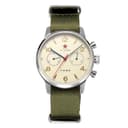
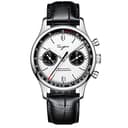
Since four of these share a movement, the crystal is one of the few real differentiators. The TOPHILL and both Sugess models state sapphire; sapphire resists scratching far better than mineral glass or acrylic, and on a watch you wind every day — and therefore handle every day — that matters more than usual.
4. Who is actually behind the watch
Sea-Gull makes the movement, so buying a Sea-Gull-branded 1963 means buying from the caliber’s own manufacturer. Sugess and TOPHILL fit the same bought-in movement into their own cases. Bulova is an established brand with a US service network and a warranty. None of these is wrong; they are different amounts of institutional support behind the same idea, and the price reflects it.
The 1963 reissue, and why there are so many of them
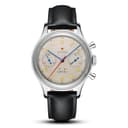
Nearly every watch here is a version of the same design: the Tianjin 1963 aviation chronograph, made for the Chinese air force. When Sea-Gull began selling civilian reissues, other brands began buying the same ST1901 movement and building their own interpretations around it. The result is a market where a dozen brands sell visually similar watches with identical mechanics.
The practical guidance: since the movement is the same, choose on case size, crystal and dial. Do not pay a premium for a name you have not heard of. Do consider paying the premium for the Sea-Gull-branded version, because that is the one where the company that made the movement also stands behind the watch — our Sea-Gull 1963 review examines that watch on its own, including the specifications Sea-Gull does not publish.
Using a chronograph without wearing it out
Two pieces of practical guidance that apply to every mechanical chronograph. First, do not leave the chronograph running permanently. It can be done and it will not explode, but the chronograph train is being driven continuously while it runs, which is more wear than the watch sees at rest — and on a hand-wound movement it also eats into the power reserve noticeably.
Second, never operate the pushers underwater. Chronograph pushers are the weakest point in the case seal on almost any watch, and pressing one while submerged is the most reliable way to flood a chronograph. Our water resistance guide covers what the depth markings actually permit.