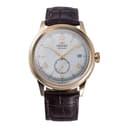
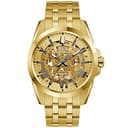
The difference, in one table
Every figure here is published by the maker of the movement concerned. Where nobody publishes one — which on the hand-wound side happens more than it should — the row says so:
| Factor | Automatic (self-winding) | Hand-wound mechanical |
|---|
| What winds the mainspring | A rotor that swings as your arm moves (plus the crown on most) | The crown, by hand, usually once a day |
| Published power reserve | Seiko 4R35/4R36 about 41h; Orient F6222 about 40h; Citizen 8204 about 42h | Sea-Gull publishes no English reserve figure for the ST1901 |
| What happens when you stop wearing it | Runs out the reserve, then stops - typically inside two days | Same, counted from the last time you wound it |
| Does a watch winder help? | Yes - that is exactly what a winder is for | No. No rotor means motion winds nothing |
| Thickness | The rotor is an extra layer, so the movement is taller | Thinner for the same movement architecture |
| Seeing the movement | A rotor covers roughly half of it through the caseback | Nothing in the way - the whole bridge layout is visible |
| Chronographs at this money | Rare and expensive; one pick here | The norm - three picks here, all the same column-wheel caliber |
What the rotor actually does
In both formats the power flow is identical: a coiled mainspring drives a gear train, the gear train is released in regular beats by an escapement, and a balance wheel oscillating back and forth sets the rate of those beats. Nothing about that changes when you add self-winding. The rotor is simply a weighted semicircle on a pivot, geared to the mainspring barrel, that harvests the swing of your arm and does the winding you would otherwise do with the crown.
That is why the two formats cannot differ in accuracy by virtue of being automatic or hand-wound. Accuracy is a property of the escapement, the balance and how well the watch was regulated — which is why Seiko publishes a rate tolerance for the 4R caliber family and not for “automatics” in general, and why the Swiss chronometer standard tests individual movements over fifteen days in five positions rather than certifying a winding method.
Most modern automatics also wind by hand through the crown, which blurs the line further. Seiko’s 4R35 and 4R36, Orient’s F6222 and Citizen’s 8204 all do. That matters on a Monday morning: you can start a stopped automatic in twenty seconds at the crown instead of shaking it, and our guide to winding an automatic watch explains how many turns is sensible.
Where the formats genuinely diverge
1. The ritual, and whether you want one
A hand-wound watch needs about twenty to thirty seconds of attention each morning. For some people that is the appeal — the one mechanical object in a digital day that asks something of them. For others it is a chore they will resent by week three, and the watch ends up stopped in a drawer. There is no right answer, but be honest with yourself before you buy, because this is the difference you will feel every single day.
The automatic’s version of the same problem is subtler: it only winds itself if you wear it. Leave it on the dresser for two days and it stops anyway — which is the entire reason the winder category exists, and why we argue in do automatic watches need a winder that most people with one or two watches do not need one.
2. A winder is useless on a hand-wound watch
This is the most expensive mistake in the comparison, and it is worth being unambiguous. A winder works by moving the watch so the watch winds itself. A hand-wound movement has no rotor for that motion to act on, so a winder will rock it gently back and forth for days and wind precisely nothing. If you buy one of the three ST1901 chronographs on this page, you are buying a daily crown routine with it; our guide on whether watch winders work on manual watches covers the one exception that confuses everybody.
3. Thickness and the view through the back
The rotor sits on top of the movement, so an automatic version of a given caliber is taller than a hand-wound one — a real constraint if you want a dress watch that slides under a cuff. It also covers roughly half the movement when you look through an exhibition caseback. On a watch where the finishing is part of the point, that is a genuine loss: the Sugess chronographs here are bought partly for a decorated, fully visible column-wheel caliber, which an automatic layout would hide.
4. Chronographs, where the price gap is brutal
An automatic chronograph needs a self-winding module and a chronograph mechanism in the same movement, and building both well is expensive. That is why the affordable mechanical chronograph market is almost entirely hand-wound: three of the six picks here are chronographs, all three run the same Sea-Gull ST1901 column-wheel caliber, and all three cost a fraction of the one genuinely automatic chronograph on the page. If a stopwatch complication is what you want and your budget is mid three figures, the format is chosen for you. Our mechanical chronograph roundup works through the full field.
5. What the makers tell you
Look at the spec table above. On the automatic side Seiko, Orient and Citizen all publish a named caliber and a reserve figure. On the hand-wound side, Sea-Gull publishes very little in English for the ST1901 — no reserve, no rate tolerance — and the brands that buy the caliber in publish less still. That disclosure gap is not a statement about the movement’s quality; it is a statement about who is willing to write the number down, and it is a legitimate reason to prefer the Japanese side if specifications matter to you.
Durability: the question behind the question
“Which lasts longer” is the most common follow-up, and the honest answer is that the format barely moves the needle. Both are mainspring watches with the same wear points: the mainspring itself, the lubricants, the escapement, the gear train pivots. Both want servicing on a similar cycle — see what a service actually costs for real numbers.
There are two small, real differences, and we will state them as reasoning rather than as maker claims. The rotor is an extra moving assembly with its own bearing, so it is one more thing that can wear out — a worn rotor bearing is a well-known failure on cheap automatics. Against that, a hand-wound watch puts your fingers on the crown and the crown gasket every single day, and crown wear and water ingress are the other classic failure path. Neither effect is large enough to choose a watch on.
What does matter for longevity is whether the caliber is one a watchmaker can actually get parts for. A Seiko 4R36 or an NH35 is serviced everywhere. A movement nobody names — which is the real problem with the cheapest end of both formats — usually gets replaced rather than repaired.
So which should you buy?
Buy an automatic ifthis is your first mechanical watch, if you want to put it on and forget it, if you will wear it most days, or if you want the broadest possible choice — nearly everything made under $500 with a mechanical movement is self-winding. The Seiko 5 Sports is the default recommendation for a reason; the Bambino is the same argument in a dress case.
Buy hand-wound if you want a column-wheel chronograph without spending four figures, if you want to see the whole movement through the back, if you want a thinner watch, or if the daily winding is a feature rather than a tax. Just go in knowing that a winder will never help you and that the watch will be stopped every time you come back to it after a few days.
Buy neither ifwhat you actually want is a watch that is right to the second and never stops — that is quartz, and there is no shame in it. Our automatic vs quartz comparison makes that case properly rather than dismissing it.
One last practical note: if you are not sure which kind you already own, there are six checks that settle it, and the famous sweeping seconds hand is the least reliable of them. Our guide to telling whether a watch is automatic runs through them in order of certainty.