How we picked
1. The listing has to name the caliber
Four of these five state a Seiko NH35 or NH35A outright, and one goes as far as naming 24 jewels. That is the whole value proposition of the brand, and it is why a page about ADDIESDIVE is worth writing at all: these are not anonymous movements in cheap cases, they are a documented workhorse caliber in cheap cases. The difference matters on the day something needs servicing.
2. Then: the bezel, because that is where the money went
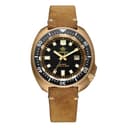
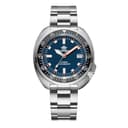
Ceramic and aluminium fail differently rather than better and worse. Aluminium inserts fade in sunlight and pick up scratches; ceramic resists both and chips instead. On a watch that will be knocked against door frames, ceramic is the one most people will prefer, and on this range it costs about $35. That is the entire argument for the top pick over the second.
3. Then: what the listing says about lume
Most budget divers say “luminous”. The BGW9 reference says BGW9, which is a documented Super-LumiNova emission code rather than an adjective — it glows blue-green and reads white in daylight, where C3 glows green and reads pale yellow-green. Neither code tells you the grade, Standard, A or X1, which is what actually decides how slowly the glow decays. A brand that prints the code is still telling you more than one that does not. Our lume roundup is built around that distinction.
4. What we did not take at face value
A stated 200 m rating is not an ISO 6425 diver’s watch. ISO 6425 involves testing every individual watch and earns the watch the word “DIVER’S” on the dial. Nothing in this range carries it, and nothing in this range claims it. A 200 m rating is a perfectly good swimming and snorkelling number; it is not a certification. Read what the ratings actually mean before you take any budget diver near real depth.
Which ADDIESDIVE should you buy?
If the bezel will get used, take the ceramic one. It is the flagship of the range for a reason, and the upgrade is visible rather than theoretical.
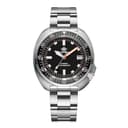
If you want the cheapest honest version, take the MY-H2. It is a sterile dial — no brand name printed on it at all — with a stated 316L steel case, synthetic sapphire, an NH35A at 24 jewels and 200 m. At about $120 that is more specification per dollar than almost anything else in our registry. The catch is the same as everywhere else here: the listing publishes no diameter.
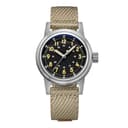
If you are not actually a dive-watch person, take the 36 mm field. It is the only non-diver in the range, it states its diameter, and it comes on a nylon strap that sizes down easily. It is the cheapest sensible way to test whether you prefer a small watch before spending Orient or Seiko money on the idea — our small-wrist page is where that question gets answered properly.
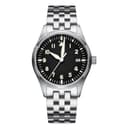
If lume is the thing you care about, the BGW9 reference is the one that names its pigment — although as the card notes, its listing was not returning a live purchasable offer at our last price check, so treat it as the one to watch rather than the one to click.
ADDIESDIVE against the alternatives
The closest comparison is Steeldive, which builds the same kind of watch with more published specification and a higher price — our Steeldive vs ADDIESDIVE comparison is the head-to-head. Against Pagani Design, the difference is intent: Pagani builds recognisable homages of famous designs, while ADDIESDIVE mostly builds generic divers, which our homage page draws the line through.
Against the obvious benchmark — a Seiko 5 Sports, or an Orient Kamasu — ADDIESDIVE wins on the spec sheet and loses on everything that is not on it: service network, resale, published dimensions, and a dial that says something. Whether that trade is worth it is the whole subject of our micro-brand roundup and of are cheap automatic watches worth it.