Dial & Lume

Rolex Explorer Alternatives: 6 Automatics to Buy Instead

The Explorer is a 36mm or 40mm steel automatic with a clean bezel-free dial. Six watches that match that brief on published figures, from about $140 to $410 - and the one that copies the dial layout.

By Stephen V.Last updated How we pick

The short answer

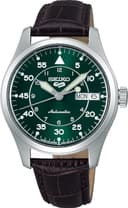
The Seiko 5 Sports Field SRPG35 is the closest honest alternative to a Rolex Explorer. It is a steel, bezel-free, high-contrast three-hander at 39.4 mm — within half a millimetre of the Explorer case Rolex sold from 2010 to 2021 — and Seiko publishes the whole sheet for it: the in-house 4R36 with hacking and hand-winding, 13.2 mm thick, 48.1 mm lug-to-lug, 10 bar, curved Hardlex and about 41 hours of reserve. The budget pick is the CADISEN NH35A at about $140, a 40 mm steel automatic with a named, serviceable Seiko NH35A caliber. If the Explorer’s 3–6–9 dial is the thing you actually want, the Baltany S4056 Adventure is the only watch here that uses that layout, at 36 mm. Prices on every card came from our live price check as of November 23, 2026.

The Rolex Explorer is unusually easy to find an alternative to, because it is unusually plain. Wikipedia’s article describes a line of sports watches introduced in 1953, “self-winding, water-resistant and ... originally designed as a tool watch to aid mountaineers”, launched after Rolex supplied a watch to the 1953 Everest expedition. There is no rotating bezel, no complication and no date on the classic reference. It is a steel case, a black dial and three hands.

That makes the brief for an alternative short and checkable: a steel or titanium automatic, 36 mm to 40 mm, with a clean bezel-free dial and high-contrast hands. The size range is not arbitrary — Rolex increased the Explorer to 39 mm in 2010, produced that until 2021, re-introduced the 36 mm model, and has offered 36 mm and 40 mm since 2023. Anything bigger than 40 is answering a different question.

One thing no watch on this page attempts, and we will not pretend otherwise: the Explorer’s value is a certified chronometer movement, a 904L steel case and a name that holds its price. None of these six is a chronometer, none publishes a COSC certificate, and none will be worth what you paid in ten years. What they offer is the shape— and in two cases, a published specification more complete than the price suggests.

How this is funded: we earn a commission if you buy through our links, at no extra cost to you. As an Amazon Associate we earn from qualifying purchases. It never changes which watch or winder we recommend, and we’ll tell you plainly when to skip one. Full disclosure.

Quick picks

Ranked on movement, specs and buyer fit. Select a row to jump to the full write-up. We have not tested these — here is exactly what we do instead.

#ProductBest forPriceMovementCase sizeWater resistanceCrystal
1
Seiko 5 Sports Field SRPG35

Seiko 5 Sports Field SRPG35

The field-flavored 5 Sports: a clean, bezel-free dial on a steel case and a nylon strap, driven by Seiko's own automatic with hand-winding. It is the model to buy when the SRPD's dive bezel is more watch than you want.

Best overall
$252.00 · View on Amazon

Price as of November 23, 2026. #ad How we’re funded

Seiko 4R36 (automatic + hand-winding)39.4 mm100 mCurved Hardlex
2
Baltany S4056 Adventure 36mm

Baltany S4056 Adventure 36mm

The best-considered small automatic here. Baltany designs at 36mm deliberately rather than shrinking a men's watch, and the 3-6-9 dial is the layout that stays legible when a case gets this compact.

Closest dial layout
$233.03 · View on Amazon

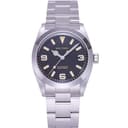
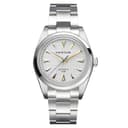
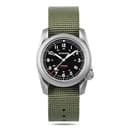
$274.9015% off

Price as of November 23, 2026. #ad How we’re funded

Automatic36 mmNot publishedNot published
3
Hestur Miyota 9015 Vintage 36mm

Hestur Miyota 9015 Vintage 36mm

A 36mm vintage-styled automatic on a Miyota 9015, with a domed sapphire crystal and a solid steel bracelet — a rare combination of a small case, a named movement and real materials.

Best on a steel bracelet
$259.00 · View on Amazon

Price as of November 23, 2026. #ad How we’re funded

Miyota 9015 automatic36 mmNot publishedDomed sapphire
4
Seiko 5 Sports Field SRPJ89 (36mm)

Seiko 5 Sports Field SRPJ89 (36mm)

The smallest Seiko we list, and the number that matters is the 44.4mm lug-to-lug rather than the 36.4mm dial. Seiko's 36mm 5 Sports field line puts the same in-house 4R36 as the bigger 5 Sports into a case that genuinely fits a slim wrist, with the same 10 bar rating and the same published 41-hour reserve - on cow leather rather than a bracelet.

Best 36mm from a major brand
$410.00 · View on Amazon

Price as of November 23, 2026. #ad How we’re funded

Seiko 4R36 (automatic + hand-winding)36.4 mm100 mCurved Hardlex
5
Boderry Titanium Field Automatic 40mm

Boderry Titanium Field Automatic 40mm

Titanium, 40mm, day-date and a stated 100m rating for well under $200 — a combination that did not exist at this price a few years ago. The catch is a micro-brand with no service network, which is a real cost when the movement eventually needs work.

Lightest on the wrist
$149.00 · View on Amazon

Price as of November 23, 2026. #ad How we’re funded

Automatic40 mm100 mNot published
6
CADISEN NH35A Automatic 40mm

CADISEN NH35A Automatic 40mm

The value case for micro-brands in one watch: a named Seiko NH35A movement — the same workhorse the enthusiast world builds on — in a 40mm steel case for around a third of what a branded watch with that caliber costs.

Best on a budget
$139.99 · View on Amazon

Price as of November 23, 2026. #ad How we’re funded

Seiko NH35A automatic40 mmNot publishedNot published

Specs read from each maker’s published data and retail listing on August 11, September 18, September 30 and October 20, 2026. Prices checked live — as of November 23, 2026. “Not published” means the maker does not state that figure; we don’t fill the gap with a guess.

The picks in full

#1Best overall

Seiko 5 Sports Field SRPG35

The field-flavored 5 Sports: a clean, bezel-free dial on a steel case and a nylon strap, driven by Seiko's own automatic with hand-winding. It is the model to buy when the SRPD's dive bezel is more watch than you want.

Strengths

  • Seiko's own 4R36 with hacking and hand-winding
  • 39.4mm case, the smallest diameter of the Seiko references we compare
  • Clean, legible dial without a dive bezel

Trade-offs

  • Curved Hardlex, not sapphire
  • 48.1mm lug-to-lug on a 39.4mm case, so it wears longer than the diameter suggests
  • 10 bar, not a diver's rating - fine for swimming, not dive equipment
MovementSeiko 4R36 (automatic + hand-winding)
Stated accuracyNot published
Power reserve41 hours
Case size39.4 mm
Water resistance100 m
CrystalCurved Hardlex
Hacks / hand-windsYes / Yes

Why this one. The 5 Sports line covers field, dive and street styling on one movement platform. Choosing between them is a styling decision, not a mechanical one. Seiko publishes this reference in full: 4R36, 39.4mm across, 13.2mm thick, 48.1mm lug-to-lug, 10 bar, curved Hardlex, approximately 41 hours of reserve, LumiBrite on hands and index(es), on a nylon band.

Specs read from the product listing and the maker’s published data, on September 18, 2026. “Not published” means the maker does not state that figure.

#2Closest dial layout

Baltany S4056 Adventure 36mm

The best-considered small automatic here. Baltany designs at 36mm deliberately rather than shrinking a men's watch, and the 3-6-9 dial is the layout that stays legible when a case gets this compact.

Strengths

  • Designed at 36mm rather than scaled down from 40mm+
  • 3-6-9 dial layout stays readable at a small diameter
  • Also offered at 39mm if you land between sizes

Trade-offs

  • Priced against Seiko and Orient, with none of their service network
  • Micro-brand availability can be intermittent
MovementAutomatic
Stated accuracyNot published
Power reserveNot published
Case size36 mm
Water resistanceNot published
CrystalNot published
Hacks / hand-windsNot published / Not published

Why this one. Case diameter alone does not decide fit. Lug-to-lug distance is what determines whether a watch overhangs a wrist, and small-diameter watches usually win there too.

Specs read from the product listing and the maker’s published data, on August 11, 2026. “Not published” means the maker does not state that figure.

#3Best on a steel bracelet

Hestur Miyota 9015 Vintage 36mm

A 36mm vintage-styled automatic on a Miyota 9015, with a domed sapphire crystal and a solid steel bracelet — a rare combination of a small case, a named movement and real materials.

Strengths

  • 36mm case with a named Miyota 9015 inside
  • Domed sapphire crystal and BGW-9 luminous material
  • Solid stainless bracelet rather than hollow links

Trade-offs

  • The listing's water-resistance wording is unclear, so we have not recorded a figure
  • Small brand — resale and support are both unknowns
MovementMiyota 9015 automatic
Stated accuracyNot published
Power reserveNot published
Case size36 mm
Water resistanceNot published
CrystalDomed sapphire
Hacks / hand-windsYes / Yes

Why this one. BGW-9 is a Super-LumiNova grade that glows blue and is among the brighter compounds in common use. It is a genuine material specification rather than a marketing word.

Specs read from the product listing and the maker’s published data, on August 11, 2026. “Not published” means the maker does not state that figure.

#4Best 36mm from a major brand

Seiko 5 Sports Field SRPJ89 (36mm)

The smallest Seiko we list, and the number that matters is the 44.4mm lug-to-lug rather than the 36.4mm dial. Seiko's 36mm 5 Sports field line puts the same in-house 4R36 as the bigger 5 Sports into a case that genuinely fits a slim wrist, with the same 10 bar rating and the same published 41-hour reserve - on cow leather rather than a bracelet.

Strengths

  • 36.4mm across and 44.4mm lug-to-lug - the smallest case on our field roundup
  • Seiko's own 4R36 with a stop-seconds function and manual winding, and a published 41-hour reserve
  • Day-date display and 10 bar, on Seiko's own published sheet for this exact reference

Trade-offs

  • Curved Hardlex rather than sapphire, which is Seiko's usual omission at this price
  • 12.5mm thick on a 36.4mm case, so it wears chunkier than the diameter suggests
  • Leather band on a field watch means a strap change before you swim in it
MovementSeiko 4R36 (automatic + hand-winding)
Stated accuracyNot published
Power reserve41 hours
Case size36.4 mm
Water resistance100 m
CrystalCurved Hardlex
Hacks / hand-windsYes / Yes

Why this one. This slot has now been round the houses: the SRPJ89 was retired on 2026-10-03 when its listing died and the bracelet SRPJ81 took over; the SRPJ81 listing has now died in turn and the SRPJ89 is live again. Every figure above is Seiko's own, read from its global page for the SRPJ89 itself rather than inferred from the line - 4R36, approximately 41 hours, 36.4mm by 12.5mm with a 44.4mm case length, curved Hardlex, 10 bar, cow leather, day/date.

Specs read from the product listing and the maker’s published data, on October 20, 2026. “Not published” means the maker does not state that figure.

#5Lightest on the wrist

Boderry Titanium Field Automatic 40mm

Titanium, 40mm, day-date and a stated 100m rating for well under $200 — a combination that did not exist at this price a few years ago. The catch is a micro-brand with no service network, which is a real cost when the movement eventually needs work.

Strengths

  • Titanium case — lighter and less allergenic than steel
  • Stated 100m water resistance with day-date
  • 40mm is the most wearable field-watch size there is

Trade-offs

  • No established service or warranty network
  • Movement is not named on the listing
MovementAutomatic
Stated accuracyNot published
Power reserveNot published
Case size40 mm
Water resistance100 m
CrystalNot published
Hacks / hand-windsNot published / Not published

Why this one. Titanium at this price is the headline, but it scratches more visibly than steel. The trade is weight and skin comfort against a case that shows its life.

Specs read from the product listing and the maker’s published data, on August 11, 2026. “Not published” means the maker does not state that figure.

#6Best on a budget

CADISEN NH35A Automatic 40mm

The value case for micro-brands in one watch: a named Seiko NH35A movement — the same workhorse the enthusiast world builds on — in a 40mm steel case for around a third of what a branded watch with that caliber costs.

Strengths

  • Seiko NH35A movement — named, documented and widely serviceable
  • 40mm steel case and bracelet
  • The one budget watch here whose caliber you can actually look up

Trade-offs

  • No brand equity, no resale value
  • Case finishing is fair, not fine
MovementSeiko NH35A automatic
Stated accuracyNot published
Power reserveNot published
Case size40 mm
Water resistanceNot published
CrystalNot published
Hacks / hand-windsYes / Yes

Why this one. The NH35 is the unbranded cousin of Seiko's 4R35. A watchmaker anywhere can service or swap one, which is the single biggest argument for a micro-brand that uses it.

Specs read from the product listing and the maker’s published data, on September 30, 2026. “Not published” means the maker does not state that figure.

How we picked

1. The size the Explorer is actually sold in

36 mm to 40 mm, published for that exact reference. Four of these six are 36 mm or 36.4 mm, one is 39.4 mm and one is 40 mm. That spread is deliberate: the Explorer has been both a small watch and a mid-size one within the last fifteen years, so “Explorer-sized” genuinely covers the whole range rather than one number. If you want to narrow it, our 38 mm and 40 mm pages sort the registry by diameter directly.

2. No rotating bezel, nothing extra on the dial

This is what rules out most of the affordable-watch world, where a dive bezel is the default. A clean fixed bezel and a legible three-hand dial is what makes a watch read as an Explorer rather than a diver — and it is why our Submariner alternatives page shares almost no picks with this one despite covering the same brand.

3. Then: the 3–6–9 dial, which only one of them has

The Explorer’s signature is three oversized Arabic numerals at three, six and nine with batons elsewhere. Exactly one watch here uses it: the Baltany S4056, and Baltany designs at 36 mm deliberately rather than shrinking a larger watch, so the layout stays legible at that diameter. If the numerals are what you picture when you picture an Explorer, this is the only pick that delivers them.

4. Then: what the maker publishes

Seiko publishes everything for both of its references here, including the figure that actually decides fit: 48.1 mm lug-to-lug on the SRPG35 and 44.4 mm on the 36 mm SRPJ89. Hestur states a Miyota 9015 and a domed sapphire crystal. CADISEN names a Seiko NH35A. Boderry states titanium, 40 mm and 100 m but no crystal material. Baltany states 36 mm and little else. Where a maker published nothing, our table prints “Not published”.

What you give up, honestly

Chronometer certification. Rolex movements are COSC-certified Swiss chronometers. Seiko publishes a band of −35 to +45 seconds a day for the 4R36 worn on the wrist; Miyota publishes −10 to +30 for the 9015. Those are honest numbers from the makers, and they are not chronometer numbers. Our accuracy guide puts the difference in context, which is smaller in daily use than the specification gap suggests.

The case material and the finishing. Nothing here is 904L steel and nothing here is finished to that standard. Two picks counter with titanium, which is a genuine advantage in weight if not in hardness.

Resale. An Explorer is a liquid asset. These are watches. That is the single largest practical difference and it is worth saying plainly before anyone spends $400 expecting otherwise.

Which alternative, for which buyer

You want the closest thing on paper. The Seiko 5 Sports Field SRPG35 at about $250. A real in-house caliber from a company with a service network, a published lug-to-lug, 10 bar, and a 39.4 mm case that lands where the 2010–2021 Explorer did. It comes on a nylon strap, which is a cheaper fix than any of the other gaps on this page.

You want the dial. The Baltany S4056. 3–6–9, 36 mm, designed small rather than shrunk.

You want it on a steel bracelet. The Hestur: a 36 mm case, a named Miyota 9015 high-beat caliber, a domed sapphire crystal and a solid steel bracelet — a combination that is genuinely rare at the money. Our Miyota roundup has the caliber’s published figures.

You want a major brand at 36 mm. The Seiko 5 Sports Field SRPJ89, at 36.4 mm with a 44.4 mm lug-to-lug and the same 4R36. It is the most expensive pick here and the only one that is both genuinely small and fully documented — more in our small-wrist roundup.

You want to spend as little as possible. The CADISEN at about $140: a named Seiko NH35A in a 40 mm steel case, which is the cheapest serviceable, documented caliber in this shape. For the same money the Boderry gives you titanium, a day-date and a stated 100 m instead — both are in our field watches under $200 page.
Frequently asked questions

What is the best Rolex Explorer alternative?

The Seiko 5 Sports Field SRPG35. It is a bezel-free steel three-hander at 39.4 mm - within half a millimetre of the Explorer case Rolex sold from 2010 to 2021 - with Seiko's own 4R36 caliber, a published 48.1 mm lug-to-lug, 13.2 mm thickness, 10 bar rating and roughly 41 hours of power reserve. No other watch at the price is documented this fully in this shape.

What size is a Rolex Explorer?

It depends on the era. Rolex increased the Explorer case to 39 mm in 2010 and produced that until 2021, then re-introduced the 36 mm model, and since 2023 has offered the watch in both 36 mm and 40 mm. That is why the alternatives on this page span 36 mm to 40 mm rather than targeting a single number.

Which affordable watch has the Explorer's 3-6-9 dial?

The Baltany S4056 Adventure, at 36 mm. It is the only watch in our registry using the oversized 3, 6 and 9 numerals with batons elsewhere, and Baltany designs at 36 mm deliberately rather than shrinking a larger watch - which matters, because that layout is the first thing to become illegible on a cramped small dial.

Is there a titanium Explorer alternative?

Two here. The Boderry Titanium Field Automatic is 40 mm with a day-date and a stated 100 m rating for about $149, and the BERNY full titanium field watch on our under-$200 page is the lighter option again. Titanium is substantially lighter than steel for the same case, with the trade that it marks more visibly.

How close is any of these to an actual Explorer?

In shape and size, very. In everything else, not close at all - none is a COSC-certified chronometer, none uses 904L steel, and none will hold its value. What you are buying is the format: a clean, bezel-free, legible steel automatic in the right size, for between one and two per cent of what the original costs.

Explorer alternative or Submariner alternative?

They are different watches despite the shared brand. An Explorer alternative has no rotating bezel and a plain three-hand dial; a Submariner alternative has a unidirectional dive bezel and a deep water-resistance rating. Almost none of the picks overlap, which is why we run them as separate pages.

Do any of these publish a lug-to-lug measurement?

Both Seikos do - 48.1 mm for the 39.4 mm SRPG35 and 44.4 mm for the 36.4 mm SRPJ89 - and that is the figure that actually decides whether a watch fits, because it governs overhang. The other four publish none, which is the standard state of affairs below about $250.

What accuracy should I expect from these?

Seiko publishes -35 to +45 seconds a day for the 4R36 worn on the wrist, and Miyota publishes -10 to +30 for the 9015 in the Hestur. A Rolex is COSC-certified to a far tighter band. In daily wear the practical gap is smaller than those numbers suggest, but it is real, and no watch on this page claims otherwise.

Sources

  • Rolex Explorer - Wikipedia — The watch this page proposes alternatives to. The article states the Explorer is "a line of sports watches manufactured by Rolex, introduced in 1953", that it "is self-winding, water-resistant and was originally designed as a tool watch to aid mountaineers", and that it followed Rolex's sponsorship of the 1953 Everest expedition by Hillary and Tenzing, the first model being "the reference 6350 which featured the moniker 'Explorer' on the dial". On size, which is the whole argument of this page: "For the first time, in 2010, Rolex increased the diameter of the Explorer case to 39mm. This model was produced until 2021, at which point Rolex re-introduced the 36mm model", and "Since 2023, Rolex has offered the watch in both 36mm and 40mm variations." The Explorer II, introduced in 1971, "featured a fixed 24-hour bezel, and independent 24-hour hand" (accessed November 22, 2026)
  • Seiko - 5 Sports SRPG37 product specification — Seiko's own listing for the SRPG37: caliber 4R36, automatic with manual winding, approx. 41h reserve, 24 jewels, 39.4mm diameter, 13.2mm thick, curved Hardlex, a 20mm band width (Seiko's "distance between lugs"), 10 bar water resistance, magnetic resistance 4,800 A/m, 77.0g. No accuracy figure is published for this reference (accessed September 18, 2026)
  • Seiko - 5 Sports SRPJ89 product specification — Seiko's own global page for the SRPJ89, the brown-leather reference from the 36mm 5 Sports field line: caliber 4R36, 'Automatic with manual winding', a stop second hand function, approximately 41 hours of power reserve, a 36.4mm case 12.5mm thick with a 44.4mm case length, curved Hardlex crystal, 10 bar water resistance, a cow leather band with 18mm between the lugs, and a day/date display. Seiko's US site publishes no page for this reference; the global page does (accessed October 20, 2026)
  • Seiko — Caliber 4R35 / 4R36 instruction & specification — Seiko's official spec for the 4R35/4R36: automatic + hand-winding, 24 jewels, 21,600 vph, ~41h reserve, accuracy +45 to -35 sec/day worn on wrist (accessed July 21, 2026)
  • MIYOTA — Caliber 9015 Premium Automatic specification — Miyota's own spec for the 9015: -10 to +30 sec/day, 24 jewels, 28,800 vibrations per hour, approximately 42 hours of running time, 3.90mm high, with a stop-second device and automatic plus hand winding (accessed August 19, 2026)
  • COSC — Contrôle Officiel Suisse des Chronomètres: certified chronometer — The Swiss chronometer standard: a certified mechanical chronometer must average -4/+6 seconds per day, tested per ISO 3159 over ~15 days in 5 positions and 3 temperatures (accessed July 21, 2026)

Keep reading