How we picked
1. Drawer depth, which decides what fits
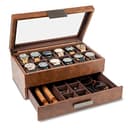
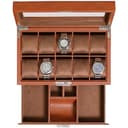
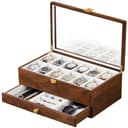
The difference between a shallow tray and a genuine drawer is the difference between storing cufflinks and storing sunglasses. A shallow drawer takes straps laid flat, small tools and jewelry. A deep one takes a pair of glasses, a spare bracelet coiled, and a watch in its own pouch. Where a maker states the drawer’s intended contents we have said so on the pick, because it is the specification that most changes how useful the box is.
2. Compartments or open?
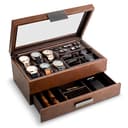
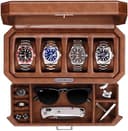
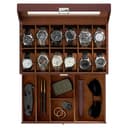
An open drawer is more flexible; a compartmented one is tidier. The Glenor valet organizer on this list goes furthest in the compartmented direction, with dedicated positions for cufflinks and sunglasses — which is excellent if that is your clutter and wasted space if it is not. Think about what you are actually trying to put away before you buy.
3. The lining, as always
The interior surface is what your watches rest against every day, and microsuede or a soft velour is what keeps a polished case free of hairline marks. It matters in the drawer too — a rough drawer lining will mark a bracelet just as readily as a rough pillow will mark a case. Where the maker states the lining material we have recorded it.
4. Does the drawer cost you slots?
Sometimes. A box with a drawer is taller than the same box without one, and on some models the drawer replaces a second tier of watch slots. That trade is usually worth making — most people have more clutter than watches — but it is worth noticing. The Glenor valet organizer is the extreme case: six watch slots for the footprint of a twelve-slot box, because the accessory storage takes the rest.
What actually goes in a watch drawer
Worth thinking about concretely, because it determines the size you need. The standard contents of a watch collector’s drawer, in rough order of frequency: spare straps, a spring bar tool, removed bracelet links, a microfiber cloth, the watch’s original box paperwork, cufflinks, a loupe if you have gone that far, and a silica-gel pack.
That last one is worth a specific mention. Humidity is the ambient condition that matters most for a stored mechanical watch, and a cheap silica-gel pack in the drawer costs almost nothing. Our guide on how long automatic watches last covers storage conditions and what actually shortens a movement’s life.
Locks: what they are and are not
Several picks here have a locking glass top. Be realistic about what that means: a small cam lock in a wooden or board carcass, which will keep a child or a curious houseguest out and nothing more. It is not security in any meaningful sense.
Anything genuinely valuable belongs in a safe. If you go that route and want to keep an automatic running inside one, our battery-powered winder picks cover the models that run without a socket — along with an honest account of what that actually costs in batteries.
Valet box or winder?
A question worth asking before you spend, because the two purchases solve different problems and most people buy the wrong one first. A winder keeps a watch running so you do not have to reset it. A valet box stores watches properly and clears everything else off the dresser.
For the large majority of collections, the box is the better first purchase, and a good valet box costs about the same as a mediocre winder. Our winder versus box comparison makes that case in full — and if you decide you want both, winders with storage combine the two formats in one object.