Dial & Lume

Orient Mako II Review: Specs, Rivals and Who Should Buy One

A 200m case and an in-house automatic that hacks and hand-winds, for less than most homage divers cost. Here is what the Mako II gets right, what it doesn't, and the four watches to weigh it against.

By Stephen V.Last updated How we pick

The Orient Mako II is one of a very small number of watches that gets recommended so consistently it has become slightly boring to recommend. It earns it. For roughly $240 you get a 200 meter dive case, a screw-down crown, and Orient’s own F6922 automatic movement — a caliber the company designs and builds itself, which hacks and hand-winds, in a price band where almost every competitor is buying its movement from someone else.

The trade is a mineral crystal rather than sapphire, and a case that wears wide on a small wrist. Both are real, and the second matters more than the first for a lot of people. Everything else about the watch is unusually hard to argue with at the money.

Below: the specification as Orient publishes it, the honest caveats, and four alternatives worth weighing it against — including the one Orient makes itself that fixes the crystal complaint. We have not handled any of them. Prices come from a live daily check.

How this is funded: we earn a commission if you buy through our links, at no extra cost to you. As an Amazon Associate we earn from qualifying purchases. It never changes which watch or winder we recommend, and we’ll tell you plainly when to skip one. Full disclosure.

Quick picks

Ranked on movement, specs and buyer fit. Select a row to jump to the full write-up. We have not tested these — here is exactly what we do instead.

#ProductBest forPrice
1
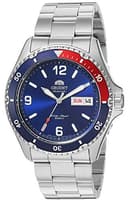
Orient Mako II Diver

Orient Mako II Diver

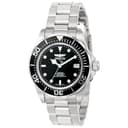
The budget diver that built the reputation. The Mako II gives you a true 200m case and Orient's in-house F6922 — which hacks and hand-winds — for even less than the Kamasu. The one real trade versus the Kamasu is the crystal: mineral here, sapphire there. A lot of watch for the money.

The watch reviewed
$240.00 · View on Amazon

Price as of September 4, 2026. #ad How we’re funded

2
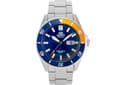
Orient Kamasu Diver (RA-AA0003R)

Orient Kamasu Diver (RA-AA0003R)

The value dive watch to beat. The Kamasu (Mako III) runs Orient's proven in-house F6922 — which hacks and hand-winds — behind a sapphire crystal, on a true 200m case. That sapphire is the main hardware upgrade over the older mineral-crystal Mako II, and it all lands for well under the Seiko it competes with.

Best upgrade
$329.34 · View on Amazon

$345.005% off

Price as of September 4, 2026. #ad How we’re funded

3
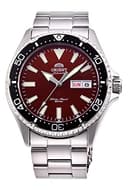
Orient Kanno Diver (RA-AA0913L19B)

Orient Kanno Diver (RA-AA0913L19B)

Orient's under-appreciated diver: the same in-house automatic family as the Kamasu in a slightly chunkier case, usually for less money. If the Kamasu is out of budget, this is the pick rather than dropping to a homage brand.

Best alternative look
$244.99 · View on Amazon

Price as of September 4, 2026. #ad How we’re funded

4
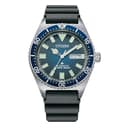
Citizen Promaster Dive Automatic (Day-Date)

Citizen Promaster Dive Automatic (Day-Date)

Citizen's mechanical diver, and the most overlooked serious tool watch under $300. Citizen is best known for solar quartz, which is exactly why its automatic divers stay cheap while the Seiko equivalents climb.

Best rival brand
$255.99 · View on Amazon

Price as of September 4, 2026. #ad How we’re funded

5
Invicta Pro Diver 8926OB

Invicta Pro Diver 8926OB

The cheapest automatic diver worth owning, and an honest one about what it is: a Submariner-homage case, a 200m rating, and a Japanese automatic Invicta labels only 'IM-A-005' — widely reported to be a Seiko/TMI NH35-class unit — for around a hundred dollars. Nobody's fooled it's a Rolex, and at this price nobody minds.

Best cheaper option
$86.69 · View on Amazon

$94.999% off

Price as of September 4, 2026. #ad How we’re funded

The picks in full

#1The watch reviewed

Orient Mako II Diver

The budget diver that built the reputation. The Mako II gives you a true 200m case and Orient's in-house F6922 — which hacks and hand-winds — for even less than the Kamasu. The one real trade versus the Kamasu is the crystal: mineral here, sapphire there. A lot of watch for the money.

Strengths

  • 200m rated automatic diver at a genuinely low price
  • In-house Orient F6922 movement, hacking and hand-winding
  • A modern classic with a huge owner base

Trade-offs

  • Mineral crystal, not sapphire — the Kamasu fixes exactly this
  • Roughly 41mm with a broad case — big on a small wrist
MovementOrient F6922 (automatic + hand-winding)
Stated accuracyNot published
Power reserve40 hours
Case sizeNot published
Water resistance200 m
CrystalMineral (Hardlex-class)
Hacks / hand-windsYes / Yes

Why this one. The Mako II versus Kamasu decision comes down to one thing: the crystal. Both use the same F6922 (both hack and hand-wind), so you're really deciding whether sapphire is worth the small step up from mineral.

Specs read from the product listing and the maker’s published data, on September 3, 2026. “Not published” means the maker does not state that figure.

#2Best upgrade

Orient Kamasu Diver (RA-AA0003R)

The value dive watch to beat. The Kamasu (Mako III) runs Orient's proven in-house F6922 — which hacks and hand-winds — behind a sapphire crystal, on a true 200m case. That sapphire is the main hardware upgrade over the older mineral-crystal Mako II, and it all lands for well under the Seiko it competes with.

Strengths

  • Sapphire crystal at a price where mineral is the norm
  • True 200m rating with a screw-down crown and solid bracelet
  • In-house F6922 movement that both hacks and hand-winds

Trade-offs

  • The in-house movement isn't chronometer-accurate
  • Roughly 42mm with a broad case — wears large on a small wrist
MovementOrient F6922 (automatic + hand-winding)
Stated accuracyNot published
Power reserve40 hours
Case sizeNot published
Water resistance200 m
CrystalSapphire
Hacks / hand-windsYes / Yes

Why this one. The Kamasu's real upgrade over the Mako II is the sapphire crystal — both share the same F6922 movement, so both already hack and hand-wind. (The Orient diver that does neither is the original Mako I, on the older 46943 caliber.)

Specs read from the product listing and the maker’s published data, on July 21, 2026. “Not published” means the maker does not state that figure.

#3Best alternative look

Orient Kanno Diver (RA-AA0913L19B)

Orient's under-appreciated diver: the same in-house automatic family as the Kamasu in a slightly chunkier case, usually for less money. If the Kamasu is out of budget, this is the pick rather than dropping to a homage brand.

Strengths

  • In-house Orient automatic with hand-winding
  • Usually undercuts the Kamasu while sharing its mechanical DNA
  • Proper dive styling with a substantial case

Trade-offs

  • Wears larger than the Kamasu
  • Crystal and exact ratings are not stated on every listing variant
MovementOrient automatic with hand-winding
Stated accuracyNot published
Power reserveNot published
Case sizeNot published
Water resistanceNot published
CrystalNot published
Hacks / hand-windsNot published / Yes

Why this one. Orient is owned by Seiko Epson and builds its own movements — which is why an Orient diver at this price is a genuinely different proposition from a marketplace homage.

Specs read from the product listing and the maker’s published data, on August 11, 2026. “Not published” means the maker does not state that figure.

#4Best rival brand

Citizen Promaster Dive Automatic (Day-Date)

Citizen's mechanical diver, and the most overlooked serious tool watch under $300. Citizen is best known for solar quartz, which is exactly why its automatic divers stay cheap while the Seiko equivalents climb.

Strengths

  • Automatic movement from one of the big three Japanese makers
  • Day-date and proper dive-watch proportions
  • Under-the-radar pricing versus the Seiko equivalents

Trade-offs

  • Citizen does not publish caliber specs on this listing
  • Polyurethane strap will be the first thing you replace
MovementAutomatic
Stated accuracyNot published
Power reserveNot published
Case sizeNot published
Water resistanceNot published
CrystalNot published
Hacks / hand-windsNot published / Not published

Why this one. Citizen's Promaster line is its tool-watch range. The automatic versions are a small part of it, which is why they get so much less attention than the Eco-Drive models.

Specs read from the product listing and the maker’s published data, on September 3, 2026. “Not published” means the maker does not state that figure.

#5Best cheaper option

Invicta Pro Diver 8926OB

The cheapest automatic diver worth owning, and an honest one about what it is: a Submariner-homage case, a 200m rating, and a Japanese automatic Invicta labels only 'IM-A-005' — widely reported to be a Seiko/TMI NH35-class unit — for around a hundred dollars. Nobody's fooled it's a Rolex, and at this price nobody minds.

Strengths

  • 200m rated automatic diver for roughly $100
  • Reportedly a Japanese Seiko/TMI (NH35-class) movement
  • Coin-edge bezel and a look far above the price

Trade-offs

  • Overt Submariner homage won't suit everyone
  • Invicta doesn't name the movement, and the bracelet feels its price
MovementAutomatic — Invicta labels it only "IM-A-005"
Stated accuracyNot published
Power reserveNot published
Case size40 mm
Water resistance200 m
CrystalMineral
Hacks / hand-windsNot published / Not published

Why this one. Invicta's reputation is mixed, but the 8926 Pro Diver is the exception enthusiasts actually endorse. Invicta names the movement only as 'IM-A-005'; it's widely reported to be a Seiko/TMI NH35-class caliber, and the value is real.

Specs read from the product listing and the maker’s published data, on July 21, 2026. “Not published” means the maker does not state that figure.

What the Mako II actually is

A 200m automatic dive watch with a unidirectional bezel, a screw-down crown, a day and date display, and Orient’s in-house F6922 caliber running roughly a 40-hour power reserve. It replaced the original Mako, and the “II” matters: the earlier version’s movement neither hacked nor hand-wound, and the F6922 does both.

That is the specification, and the reason it reads impressively is the movement line. Orient is one of a handful of companies at this price making its own calibers — it is part of the Epson group alongside Seiko’s movement operations, and it has been building automatics for decades. Almost everything else near $240 with a 200m case is running a bought-in Seiko NH35 or a Miyota, which is fine but is not the same claim.

Hacking and hand-winding, and why they are on the box

Hacking means the seconds hand stops when you pull the crown, so you can set the watch to the second against a reference. Hand-winding means the crown will wind the mainspring directly, so you can start a stopped watch without shaking it. Neither is exotic, and both were missing from the original Mako, which is why the Mako II gets talked about the way it does. Our guide on what hacking means covers both in full.

The two honest caveats

1. The crystal is mineral, not sapphire

Orient fits a Hardlex-class mineral crystal. On the Mohs hardness scale ordinary glass sits at 5.5, quartz at 7 and sapphire at 9 — and everyday grit is largely quartz. So a mineral crystal will pick up fine scratches over a few years of daily wear in a way sapphire will not.

This is a genuine limitation and it is also the single easiest one to fix, because Orient sells the fix: the Kamasu is essentially the same watch with a sapphire crystal for a modest step up. If the watch is going to be worn hard and daily, that step is worth taking. Our crystal comparison sets out what you actually gain and what you give up.

2. It wears wide

The case measures around 41mm across but reads larger, because the bezel is broad and the lugs are not short. Orient does not publish a lug-to-lug figure for this reference, so the spec table below prints “Not published” for case size rather than a number we estimated.

The practical version: if your wrist is under about 6.5 inches, try before you commit, and read our watch size guide on why lug-to-lug decides fit far more than diameter does. If it does not work, the 36mm and 38mm options in our small-wrist roundup are the honest alternative rather than talking yourself into a big watch.

Mako II versus the alternatives

Versus the Orient Kamasu

Same F6922 movement, same 200m case class, same maker. The Kamasu adds a sapphire crystal and a slightly more refined dial and bezel treatment for a modest premium. If you can afford the difference, take it — this is close to the cleanest upgrade decision on the site. If you cannot, you are not missing a better watch, just a harder window.

Versus the Orient Kanno

The Kanno is the same idea with a different personality: a bigger, more assertive case and a look that owes more to 1970s divers than to the Mako’s conventional styling. Choose on appearance, because mechanically you are in the same family.

Versus the Citizen Promaster Sea

The nearest rival from another Japanese maker with its own movements. Citizen’s automatic Promasters are excellent and generally cost a little more; the choice is largely brand preference and dial design. Our Seiko versus Orient versus Citizen comparison works through how the three makers actually differ.

Versus the Invicta Pro Diver

The Pro Diver 8926OB costs roughly a third of the Mako II and is the default answer to “cheapest automatic diver.” What you give up is the in-house movement, the finishing and, for many people, the willingness to wear a watch with Invicta on the dial. It is a lot of watch for under $100 and we would rather say so than pretend otherwise — our Seiko 5 versus Invicta comparison covers that trade at length.

Who should buy one

Buy the Mako II if you want a genuine 200m automatic diver from a maker that builds its own movements, for the least money that proposition is available, and you are not precious about crystal scratches. It is the sensible default in its price band and has been for years.

Buy the Kamasu instead if the watch will be worn every day and the sapphire matters to you — which for most daily-wear buyers it should.

Buy something else if your wrist is small, in which case the case width is a real problem no specification fixes, or if you want a dressier watch, in which case the Bambino from the same maker is the better call — see our Orient Bambino review.

Frequently asked questions

Is the Orient Mako II a good watch?

Yes, and unusually so for the money. You get a 200m dive case, a screw-down crown and Orient's own in-house F6922 automatic — which hacks and hand-winds — for around $240, at a price where nearly every competitor buys its movement in. The two real limitations are a mineral rather than sapphire crystal and a case that wears wide.

What is the difference between the Orient Mako and Mako II?

The movement. The original Mako's caliber neither hacked nor hand-wound; the Mako II uses the F6922, which does both — so you can stop the seconds hand to set the watch precisely and wind it at the crown rather than shaking it. That change is the reason the Mako II is the one people recommend.

Mako II or Kamasu — which should I buy?

The Kamasu, if the price difference is comfortable. Both use the same Orient F6922 movement and the same 200m case class; the Kamasu adds a sapphire crystal and slightly finer dial and bezel finishing. For a watch worn daily, sapphire is the single upgrade most worth paying for.

Does the Orient Mako II have a sapphire crystal?

No. It uses a Hardlex-class mineral crystal, which sits around 5.5 on the Mohs hardness scale against 9 for sapphire — so it will pick up fine scratches over years of daily wear. The Orient Kamasu is essentially the same watch with sapphire fitted, and is the direct answer if this matters to you.

How big is the Orient Mako II on the wrist?

It measures roughly 41mm across and wears wider than that, because the bezel is broad and the lugs are not short. Orient does not publish a lug-to-lug figure for this reference, so we do not print one. If your wrist is under about 6.5 inches, treat it as a large watch and check the fit before committing.

Can you swim and dive with a Mako II?

It carries a 200m rating with a screw-down crown, which comfortably covers swimming, snorkeling and surface water sports. Whether it is certified for scuba is a separate question — that requires an ISO 6425 DIVER'S marking, which involves testing every individual watch rather than a production sample.

Sources

  • Mohs scale of mineral hardness — WikipediaThe hardness ranking behind every watch-crystal argument: corundum (sapphire) 9, quartz 7, glass 5.5, plastic 2 to 2.5 — which is why sand and grit, largely quartz, scratch mineral glass and acrylic but not sapphire (accessed August 19, 2026)
  • ISO 6425:2018 — Divers' watchesThe standard a watch must meet to be legally marked 'Diver's [depth]m': minimum 100m, a unidirectional/lockable elapsed-time bezel, dark legibility, and testing of every piece (accessed July 21, 2026)
  • Water Resistant mark — WikipediaWhat the depth markings actually mean: 30m is splash resistance only, 50m covers showering and shallow swimming, 100m covers swimming and water sports, and only an ISO 6425 'DIVER'S' mark is rated for scuba (accessed August 11, 2026)
  • Automatic watch — WikipediaReference on self-winding watches: most automatics can also be wound by hand at the crown, and a slipping bridle on the mainspring barrel makes overwinding by a rotor or a winder mechanically impossible (accessed August 11, 2026)

Keep reading