How we picked
1. Who made the movement
Orient is owned by Seiko Epson and builds its own calibers. Seiko builds the 4R family in-house. Citizen builds its own automatics alongside the Eco-Drive line it is better known for. Those three facts are why this page leans Japanese: at this price you can have a watch where the company on the dial made the engine, which is unusual and genuinely valuable. Timex and Praesidus are here on design merit, and their cards say so plainly rather than implying a movement pedigree they don’t claim.
2. Water resistance you can rely on
A dive bezel is styling; a tested rating is a specification. In this band you can have the second, so we have preferred watches whose makers publish a real figure. It is worth knowing what those numbers permit: 30m is splash resistance, 50m covers showering and shallow swimming, 100m covers swimming and water sports, and only a watch marked “DIVER’S” to ISO 6425 is built for scuba. Our dive watch page goes into which watches actually earn the mark.
3. Hacking and hand-winding
Two small features that make a watch far nicer to live with. Hackingmeans the seconds hand stops when you pull the crown, so you can set the time to the second. Hand-winding means you can start a stopped watch at the crown instead of shaking it awake. Both are near-universal on Japanese in-house movements at this price and frequently absent below it — a good example of why the caliber matters more than the spec sheet headline. Our guide to winding an automatic explains why hand-winding is the right way to start one.
4. Design you’d choose anyway
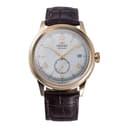
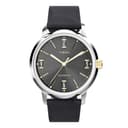
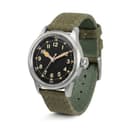
Under $200, a great deal of the market is homage watches. Here you can buy designs with their own identity: the Bambino’s domed-crystal dress case, the Marlin’s 1960s Timex reissue, the Praesidus A-11’s reproduction of an actual wartime military specification. Buying a design rather than a resemblance is a real upgrade, and it is one of the more under-rated things this price band buys you.
Orient, Seiko or Citizen?
Short version: Orient for value, Seiko for support, Citizen for the watch nobody else on the train is wearing.
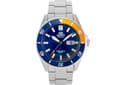
Orient consistently offers the most watch for the money at this price. The Kanno and the Kamasu share a movement family, and either undercuts the equivalent Seiko while giving you the same in-house-caliber argument. The trade-off is a thinner retail presence and less community knowledge to lean on.
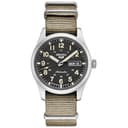
Seiko is the safest purchase in watches. Parts, servicing, aftermarket straps and an enormous body of owner knowledge are all a search away, and the 5 Sports line has more variants than any other family here. You usually pay a small premium for that, and Seiko’s crystals stay Hardlex rather than sapphire well past this price.
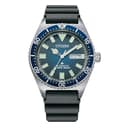
Citizen is the value anomaly. Because Citizen is famous for solar quartz, its mechanical divers get a fraction of the attention Seiko’s do and stay correspondingly cheap. If you want a mechanical tool watch from a major brand and you don’t want the watch everyone else has, this is where to look. Our Seiko vs Orient vs Citizen comparison works through the three brands properly.
What still isn’t standard at $300
Sapphire. Orient often has it; Seiko frequently doesn’t, using Hardlex mineral glass instead even on watches well above this price. It is the single most common surprise for buyers cross-shopping the two brands, and it is a real difference over a decade of wear.
Published accuracy. Seiko states -35/+45 seconds a day on the 4R36; most other makers at this price state nothing at all. That silence is not evidence of poor timekeeping, but it does mean you have no benchmark to hold the watch to. Our guide to automatic watch accuracy explains what these numbers mean and when a watch is genuinely running badly.
Finishing you notice in the hand. Applied indices, sharply defined case edges, a bracelet that feels solid rather than rattly — these arrive around $400 and above. It is exactly what our under-$1,000 page is about.