Moonphase vs sun-and-moon: which do you want?
The true moonphase
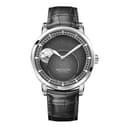
A disc under the dial carries two moons and rotates once per lunar cycle, so the aperture shows the Moon growing from new to full and back again over roughly 29 and a half days. This is the complication people picture when they search for a moonphase watch: romantic, useless in the best way, and the reason the display appears on some of the most expensive watches ever made.
Because the actual synodic month is 29 days, 12 hours, 44 minutes and 2.9 seconds long, a standard 59-tooth moonphase gear runs fast and needs correcting roughly every two and a half years. High-end “astronomical” moonphases use more teeth and go decades between corrections. Nothing at this price does that, and any listing claiming otherwise deserves skepticism.
The sun-and-moon day/night indicator
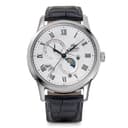
An arched aperture, usually at 12 o’clock, showing a sun during daylight hours and a moon at night, driven from a 24-hour wheel. It cycles once a day. Orient built an entire well-regarded line around it, and it is a genuinely charming thing on a dial — it just tells you nothing about the Moon.
The practical advantage is real: it is far cheaper to build, which is why three of the six picks here have one and why they come from a brand with an actual service network. If your interest is in a dial that does something interesting rather than in lunar astronomy, this is the better buy.
How we picked
1. Saying which complication it actually is
The first criterion is simply honesty about the mechanism, and it is where most of this category falls down. Every pick here is labeled for what it is: a true lunar moonphase or a 24-hour sun-and-moon. Where a listing is ambiguous we have described what the listing states rather than assuming.
2. A real automatic movement
Every pick is self-winding. The Orients use the brand’s own automatic calibers, which also hand-wind — useful on a watch you may not wear daily. The budget picks state automatic movements without naming a caliber, which is normal at their price and which we have said plainly on each card rather than glossing over.
3. Legibility, because these dials get crowded
A moonphase aperture, a date and often a power reserve on one dial adds up quickly. The Orients rank highly here partly because the aperture is integrated into the design rather than dropped on top of it. The heavily skeletonized budget picks are the opposite — visually busy, and much harder to read at a glance.
4. Marketing language you should discount
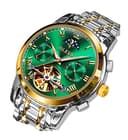
One pick’s listing calls a rotating balance display a “tourbillon”. It is not one. A genuine tourbillon puts the entire escapement in a rotating cage and costs thousands; budget listings routinely apply the word to any visible moving part. We have kept the watch on the list because it is a real automatic at a remarkable price, and flagged the claim as false rather than repeating it.
Setting a moonphase, and the danger window
Setting the moon disc is usually done through a recessed pusher on the case side, or by cycling the hands through twenty-four hours repeatedly on watches without one. The method varies by movement, so the manual is the authority.
The universal warning: like a date, a moonphase should not be adjusted while the movement is midway through changing it. On most watches the changeover happens somewhere between roughly 9pm and 3am, and forcing a correction during that window can damage the teeth on the driving wheel. Set the time to a safe hour — mid-morning is the conventional advice — before touching any calendar or moon adjustment. Our guide to setting an automatic watch covers the order and the danger window in detail.
Where the money goes
Between the $40 watch and the $500 one on this page, the differences are: whether the complication is a real lunar display or a day/night disc; whether the movement comes from a manufacturer that publishes anything about it; whether there is a service network; and how well the dial is finished. What does not change much is timekeeping, which at every price on this page is ordinary. Our guide on whether cheap automatics are worth it walks through that trade properly.