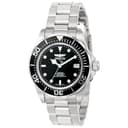
The case for the Turtle
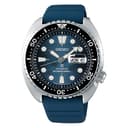
It is a genuine ISO dive watch
This is the specification that separates the Turtle from most of what it is cross-shopped against. ISO 6425 is the standard a watch must meet to be marked “DIVER’S”: a minimum 100m rating, a unidirectional or lockable elapsed-time bezel, legibility in darkness, and — the part that matters — testing of every individual watch rather than a sample.
Most affordable “dive watches” state a depth rating and stop there. A stated 200m is a manufacturer claim; an ISO 6425 marking is a tested one. If you genuinely intend to dive, that distinction is the entire point of the category.
The cushion case wears smaller than it measures
The Turtle is a large watch on paper and a surprisingly manageable one in practice, because the cushion shape pulls the lugs inward and downward. The lug-to-lug distance — the measurement that actually decides fit, as our small-wrist guide explains — is much shorter than the diameter suggests. It is still not a small watch, but it is considerably more wearable than a conventional case of the same width.
The movement is boring in the best way
The 4R36 is not exciting and does not pretend to be. It is a workhorse: hacking, hand-winding, bidirectional, serviceable anywhere, with parts availability that will outlast most of us. When something eventually goes wrong, the repair is routine and the parts exist. That is worth a great deal more over twenty years than a slightly better specification from a brand that may not be there.
The three honest criticisms
1. The crystal depends entirely on which reference you buy
The mainstream Turtle uses Seiko’s Hardlex mineral glass rather than sapphire. Hardlex is tough and resists shattering well, but it scratches far more readily than sapphire, and on a watch designed to be knocked about that shows — which is why this was the Turtle’s best-known weakness for years. It is not a safe assumption any more. Seiko publishes a sapphire crystal with magnifier for the SRPF77 priced at the top of this page, and for every other Turtle reference we could find live on Amazon on 30 September 2026 (the SRPE05 and the SRPK01). Read the specification for the exact reference in front of you rather than the line the internet repeats about the line as a whole — our spec table below names the one we checked and the date we checked it.
2. It is thick
Cushion case plus a 200m rating plus a screw-down crown adds up to a tall watch. It does not slide under a shirt cuff, and on a slim wrist it can read as a puck. This is inherent to the format rather than a design failure, but it is the reason many people try one and move on.
3. The price has drifted
The Turtle’s reputation was built when it was substantially cheaper than it is now. At current prices it faces real competition from watches that match it on crystal and sometimes beat it on movement specification. The counter-argument — the ISO certification and the service network — is genuine, but it is a narrower advantage than it once was. The live price on this page is the number to judge it by.
The alternatives, and what each one wins on
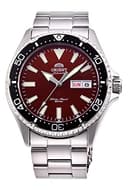
The Orient Kamasu is the closest competitor and the honest answer for a lot of buyers: sapphire crystal, a 200m rating and Orient’s own in-house movement, typically for less money. What it lacks is the ISO 6425 marking and the cushion-case character. Our Turtle versus Kamasu comparison takes that head-to-head properly.
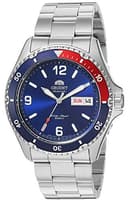
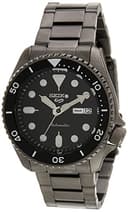
The Orient Mako II is the value play — the same broad proposition at a lower price, with a mineral crystal rather than sapphire. The Seiko 5 SRPD65 shares the Turtle’s movement family in a lighter, cheaper, non-ISO case, and is the right answer if you want the Seiko diver look without the dive credentials. The Invicta Pro Diver is the budget entry: a real automatic in a diver-styled case at a fraction of the money, with none of the certification and none of the pretense, reviewed in full on its own page.
Which Turtle reference?
Seiko sells the Turtle under a rotating cast of references that differ in dial and bezel color, bracelet or strap, and occasionally in regional exclusivity. The case, movement and rating are constant across the mainstream ones.
The practical guidance is the same as for the Presage line: choose on looks and price, not on reference number, and check whether the listing you are buying includes the bracelet or a rubber strap, since that swings the value meaningfully.
Living with one
Two things. The crown screws down, so remember to screw it back in after setting the time — an unscrewed crown is the most common way an otherwise sound dive watch takes on water, and our water resistance guide covers the rest of that ground.
And if the Turtle goes into a rotation, it needs nothing special from a winder. The 4R36 winds bidirectionally and asks for a modest turns-per-day figure, which our Seiko winder guide covers — though given how easy the watch is to reset, the honest answer is that you probably do not need one at all.
If you are still weighing a Prospex against the cheaper 5 Sports, that decision turns on less than most people assume: Seiko publishes the same 4R36 caliber and the same case thickness on both, and the money goes on the screw-down crown, the bezel lume and the diver’s marking. Our Seiko 5 Sports vs Prospex comparison lays both specification sheets out in full.