The question that decides it
Are you going to scuba dive with this watch?
If yes — genuinely yes, with tanks, not snorkeling — buy the Turtle. ISO 6425 is the standard that exists precisely for this use case, and the individual-unit testing it requires is not a marketing distinction. Pay the price difference for it.
If no — and for the overwhelming majority of buyers the answer is no — buy the Kamasu. For swimming, snorkeling, showering and everything else a watch encounters, a stated 200m rating with a screw-down crown is entirely sufficient, and you are not paying for a certification you will never use.
Everything below is detail on that decision.
Crystal: check the reference, not the reputation
Sapphire versus Hardlex is the most consequential difference in daily ownership when it exists. Sapphire is second only to diamond in hardness among common materials and effectively does not scratch under ordinary use. Seiko’s Hardlex is a hardened mineral glass: excellent at resisting shattering, considerably worse at resisting scratches. On a dive watch — a category defined by being worn while doing things — that compounds into a constellation of fine marks two or three years in.
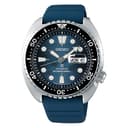
Which is why the Turtle’s long-standing weakness here needs re-checking rather than repeating. Seiko publishes sapphire crystal with magnifier for the SRPF77 priced above, and for the SRPE05 and SRPK01 — the only other Turtle references we found live on Amazon on 30 September 2026. Against those, the Kamasu no longer wins the crystal; it ties and undercuts on price. Against a Hardlex Turtle bought elsewhere, the old argument stands in full. The spec table on each product page names the reference we read and the date we read it, which is the only way to tell the two cases apart.
Certification: the Turtle’s clear win
ISO 6425 requires a minimum 100m rating, a unidirectional or lockable elapsed-time bezel, legibility in darkness at 25cm, resistance to magnetism and shock, and testing of every individual watch rather than a sample from the line.
The Kamasu states 200m. That is a genuine engineering claim from a real manufacturer with its own factories, and it is not the same thing as a certification. The gap is not about how deep each watch can physically go — it is about whether the specific unit on your wrist was tested. Our water resistance guide sets out what each standard actually covers.
Movements: a close-run thing
Seiko’s 4R36 is documented publicly: automatic with hand-winding and hacking, 24 jewels, 21,600 vibrations per hour, roughly 41 hours of reserve, and a stated accuracy of about -35 to +45 seconds a day worn on the wrist. That published transparency is worth something, and Seiko is unusual in providing it.
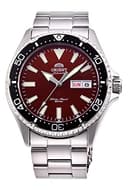
Orient’s current diver caliber is also in-house and also hacks and hand-winds — features earlier Orient divers famously lacked, which is precisely why the Kamasu replaced the Mako in most recommendations. Orient publishes the Kamasu’s dimensions in full (41.88mm across, 47mm lug-to-lug, 12.8mm thick) but states no accuracy figure for the F6922, where Seiko does for the 4R36 — which is why that one row in our Kamasu spec table reads “Not published” rather than carrying a number we could not verify. Our best Orient watches roundup collects what Orient does and does not publish across the range.
In practice both are ordinary, reliable, serviceable workhorses. Neither is a reason to choose one watch over the other.
Case shape: taste, and it is a big taste
The Turtle’s cushion case is the most distinctive thing about it. It descends from Seiko’s 1970s divers, it is instantly recognizable, and — usefully — it wears smaller than its diameter suggests, because the rounded case pulls the lugs inward and shortens the lug-to-lug span that actually decides fit.
The Kamasu uses a conventional round case. It is cleaner, more restrained and less interesting. If you want a watch with character, that point goes to the Turtle decisively. If you want something that disappears under a cuff, the Kamasu is easier to live with.
Both are thick. Neither suits a genuinely small wrist — our small-wrist guide covers what does.
Bracelets: both are the weak point
Neither watch has a bracelet that matches the rest of it. The Kamasu’s is the more criticized of the two — hollow end links and a stamped clasp — but Seiko’s bracelets in this range have never been a strong point either.
The practical answer is the same for both: this is the cheapest part of the watch to improve. An aftermarket bracelet or a good rubber strap transforms either watch for a modest sum, and a great many owners of both do exactly that.
Price and value
The Kamasu has historically undercut the Turtle, sometimes substantially. Prices move, which is why every figure on this page comes from a live daily check rather than a number typed into the text — look at the cards above rather than trusting any claim about which is cheaper today.
If the gap is small, the argument shifts toward the Turtle, because certification and case character start to look worth a modest premium. If the gap is wide, the Kamasu becomes very hard to argue against for anyone not diving.
The alternatives, briefly
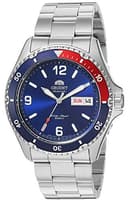
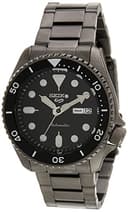
Two other watches deserve mention because they change the calculation for some buyers. The Orient Mako II is the same broad proposition as the Kamasu for less money, with a mineral crystal rather than sapphire — the value play if the budget is tight. The Seiko 5 SRPD65 shares the Turtle’s movement family in a lighter, cheaper, non-certified case, and is the right answer if you want the Seiko diver look without the dive credentials.
And if pure specification is what you are chasing, the NH35 micro-brand divers beat both of these on paper — sapphire, ceramic bezels, higher stated ratings — while giving up the in-house movement, the service network and the original design. Our full dive watch guide covers that whole field.