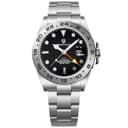
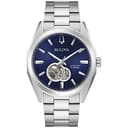
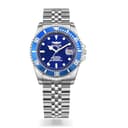
How we picked
1. A published 42mm, for that exact reference
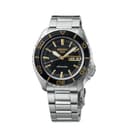
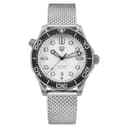
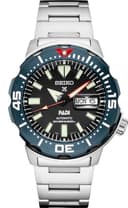
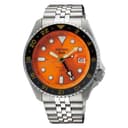
Not “about 42”, not a figure carried over from a sibling model. Seiko publishes 42.5 mm for the 5 Sports SRPK99 and the 5 Sports GMT SSK005, and 42.4 mm for the Prospex SRPE27. Watchdives, Pagani Design, Bulova and Invicta each state a flat 42 mm on their listings. Everything whose diameter is unstated is off this page by definition, which is why several popular budget divers in our registry do not appear here at all.
2. Then: what the maker publishes beyond the number
The gap between the best and worst spec sheets at this size is wider than the gap in price. Seiko publishes caliber, jewels, power reserve, crystal, water resistance and an accuracy band. Watchdives states the titanium grade— Grade 2, the commercially pure specification, which is softer and marks more easily than the Grade 5 alloy, so saying so is honest rather than flattering. Then there is Bulova’s Surveyor, which publishes a 42 mm case, a mineral crystal, a 22 mm lug width and “WR [Splash Resistant]” with no meter figure and no caliber at all — on a watch costing over $300.
3. Then: crystal, because 42mm sits proud
A bigger case catches more doorframes. Two picks state sapphire (the Pagani GMT and the Watchdives, the latter domed), two state Hardlex, two state mineral and one states nothing. Sapphire is the most scratch-resistant of the three by a wide margin and the difference is cumulative rather than dramatic — our sapphire vs mineral comparison is what that is worth over a decade, and our sapphire roundup filters the registry on it.
4. Then: weight, which nobody publishes either
Not one listing on this page states a weight in grams. The only lever you have is material, and that is the whole case for the titanium pick: a 42 mm titanium diver on a mesh bracelet is a meaningfully different object on the wrist from the same case in steel. Our titanium roundup goes into what the material does and does not buy you.
Does 42mm fit you?
Probably, if your wrist is about 7 inches around or more, and possibly not if it is closer to 6.5. But the diameter is the wrong number to answer that with. A 42 mm case with short, steeply curved lugs can sit flatter than a 40 mm case with long straight ones, which is why the single published lug-to-lug figure on this page — Seiko’s 46.0 mm for the 5 Sports GMT — is worth more than the other six diameters put together.
Practical rule: measure the flat top of your wrist from edge to edge, and treat a lug-to-lug longer than that as an overhang. If you are between sizes, our 40 mm page and 38 mm page cover the two sizes below, and the small-wrist page goes down to 36.
Which 42mm, for what
One watch for everything. The SRPK99. Day-date, 100 m, a caliber Seiko documents and a watchmaker anywhere can service, on a bracelet. It is the default first automatic for a reason, and the reason is that nothing else at the money is this well documented.
Actually going in the water. The Prospex SRPE27: Seiko publishes 200 m “suitable for scuba diving”, a 13.39 mm thickness and a tri-fold bracelet with a lock and a diver’s extender. That bracelet is the difference between a watch you wear and one you keep meaning to buy a strap for. More in our dive roundup.
Travel, or a second time zone. The 5 Sports GMT SSK005. It is a caller GMT — the 24-hour hand is set from the crown rather than the local hour hand jumping independently — which suits someone tracking a time zone rather than flying between them weekly. The GMT roundup covers the distinction, and the GMT-Master alternatives page covers it from the other direction.
Least money. The Invicta 29179 at about $65. It states 42 mm, a screw-down crown, a mineral crystal and 200 m, and names no caliber — which is worth knowing, because Invicta names an NH35A on some Pro Diver references and not on this one. Buy it for the dial and the size, not the spec sheet.