Dial & Lume

Rolex Submariner Alternatives: 6 Automatic Divers Worth Buying

The Submariner publishes 300m, a 41mm Oystersteel case, a unidirectional Cerachrom bezel, a COSC-certified calibre and about 70 hours of reserve, for $11,350. Six automatic divers that deliver part of that list, honestly priced from about $93.

By Stephen V.Last updated How we pick

The short answer

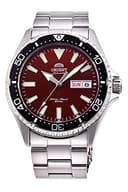
The best Submariner alternative for most buyers is the Orient Kamasu. It is the closest thing on this page to the Submariner’s actual recipe rather than its silhouette: an in-houseautomatic caliber from a company that builds its own movements, a sapphire crystal, a 200 m case with a screw-down crown, a 120-click unidirectional bezel — the same bezel mechanism the Submariner uses — and 41.88 mm across against the Rolex’s 41 mm. Orient publishes all of it, including the 47 mm lug-to-lug. If you want to match the Submariner’s depth rating, the Steeldive SD1953 states 300 m with an anti-reflective sapphire crystal; if you want the ceramic bezel, the ADDIESDIVE NH35 Ceramic has one for under $180. The budget pick is the Invicta Pro Diver 8930 at about $93, which is roughly one part in 120 of a Submariner’s retail price and still a real self-winding Japanese movement. None of these is a Rolex, and this page does not pretend otherwise.

Most pages about Submariner alternatives are really about which watch looks most like one. This one is about what Rolex actually publishes, because that is the only list you can check an alternative against.

For the current Submariner Date, reference 126610LN, the published specification is: a 41 mm case in Oystersteel, water resistance to 300 meters (1,000 ft), a unidirectional rotatable bezel with a Cerachrom ceramic insert that rotates counterclockwise only, a sapphire crystal with the anti-reflective coating on its inner face, the self-winding Calibre 3235 with roughly 70 hours of power reserve, and COSC chronometer certification. An authorized retailer lists it at $11,350 in the United States.

Read that list again and you will notice something useful: four of the seven items are buyable for under $300. A sapphire crystal, a 200 m-plus case, a unidirectional click bezel and an automatic movement are all commodity specifications now. The three that are not — a movement the brand built itself, chronometer certification to COSC’s −4 to +6 seconds a day, and seventy hours of reserve — are exactly the three that cost the money, and nothing on this page has any of them.

The Submariner also earns its reputation on things that are not specifications at all: it has been in production since 1953, it was the first watch waterproof to 100 meters, its case finishing is the benchmark everything else is compared against, and it holds its value in a way no other watch on this page comes close to. We are not here to argue it is overpriced. We are here because the question “what gives me most of this for 2% of the money” has a real, checkable answer.

Six picks below, from about $93 to about $500. Specifications come from each maker’s own published data on the dates shown; prices come from a live daily check rather than a number typed into this page. We have not handled any of these watches, the Submariner included.

How this is funded: we earn a commission if you buy through our links, at no extra cost to you. As an Amazon Associate we earn from qualifying purchases. It never changes which watch or winder we recommend, and we’ll tell you plainly when to skip one. Full disclosure.

Quick picks

Ranked on movement, specs and buyer fit. Select a row to jump to the full write-up. We have not tested these — here is exactly what we do instead.

#ProductBest forPriceMovementCase sizeWater resistanceCrystal
1
Orient Kamasu Diver (RA-AA0003R)

Orient Kamasu Diver (RA-AA0003R)

The value dive watch to beat. The Kamasu (Mako III) runs Orient's proven in-house F6922 — which hacks and hand-winds — behind a sapphire crystal, on a true 200m case. That sapphire is the main hardware upgrade over the older mineral-crystal Mako II, and it all lands for well under the Seiko it competes with.

Best overall alternative
$251.22 · View on Amazon

$263.495% off

Price as of November 10, 2026. #ad How we’re funded

Orient F6922 (automatic + hand-winding)41.88 mm200 mSapphire
2
Steeldive SD1953 300m Diver

Steeldive SD1953 300m Diver

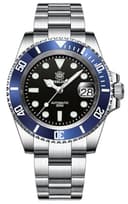
The enthusiast's NH35 diver. Steeldive builds the closest thing to a proper tool-watch case at this price — a stated 300m rating, an anti-reflective sapphire crystal and lume that people buy the watch for.

Closest on depth rating
$230.00 · View on Amazon

Price as of November 10, 2026. #ad How we’re funded

Seiko NH35 automaticNot published300 mSapphire (anti-reflective)
3
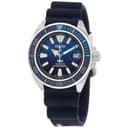
Seiko Prospex SRPJ93 PADI (Great Blue)

Seiko Prospex SRPJ93 PADI (Great Blue)

The clearest case of lume being a specification rather than a garnish. Seiko's own page for this reference states LumiBrite on the hands, the indexes AND the bezel alongside a 200m diver's rating, and Prospex is the line where Seiko lays the material on thickly enough for it to still matter at 3am. You are paying for the dive case, the sapphire and the luminous material; the 4R35 inside is the same movement family that powers watches costing half as much.

Best diver's-rated option
$500.00 · View on Amazon

$625.0020% off

Price as of November 10, 2026. #ad How we’re funded

Seiko 4R35 (automatic + hand-winding)43.8 mm200 mSapphire with anti-reflective inner coating
4
ADDIESDIVE NH35 Ceramic Bezel Diver

ADDIESDIVE NH35 Ceramic Bezel Diver

The step-up ADDIESDIVE: the same NH35 and sapphire, with a ceramic bezel insert instead of aluminum. Ceramic does not scratch or fade, which on a dive bezel is the single most visible durability difference there is.

Closest on the bezel
$179.54 · View on Amazon

$199.4910% off

Price as of November 10, 2026. #ad How we’re funded

Seiko NH35 automaticNot published200 mSapphire
5
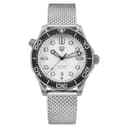
Watchdives WD007T Grade 2 Titanium Diver (42mm)

Watchdives WD007T Grade 2 Titanium Diver (42mm)

The only watch on this page whose listing states the GRADE of titanium rather than just the word - Grade 2, the commercially pure specification, on a 42mm case with a domed sapphire crystal, a 120-click bezel, a helium escape valve and a stated 200m. If you want the deepest paper trail in titanium at this money, this is it; if you have a 6.5-inch wrist, 42mm plus a mesh bracelet is a lot of watch.

Most published specification
$209.99 · View on Amazon

Price as of November 10, 2026. #ad How we’re funded

SL3001 (automatic)42 mm200 mDomed sapphire
6
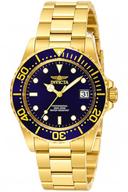
Invicta Pro Diver 8930

Invicta Pro Diver 8930

The cheapest way into a Japanese automatic movement with a diver's silhouette, and the one Pro Diver whose listing tells you what is inside it: Invicta states an NH35A, 24 jewels, in a 40mm case 14mm thick with a 200m rating. The catch is the look — this is the gold-tone execution with a blue dial, so it reads as jewellery in a way the steel 8926OB does not.

Best on a budget
$93.47 · View on Amazon

Price as of November 10, 2026. #ad How we’re funded

Seiko NH35A automatic (24 jewels), per the listing40 mm200 mMineral

Specs read from each maker’s published data and retail listing on August 11, September 15, October 12, October 26 and November 2, 2026. Prices checked live — as of November 10, 2026. “Not published” means the maker does not state that figure; we don’t fill the gap with a guess.

The picks in full

#1Best overall alternative

Orient Kamasu Diver (RA-AA0003R)

The value dive watch to beat. The Kamasu (Mako III) runs Orient's proven in-house F6922 — which hacks and hand-winds — behind a sapphire crystal, on a true 200m case. That sapphire is the main hardware upgrade over the older mineral-crystal Mako II, and it all lands for well under the Seiko it competes with.

Strengths

  • Sapphire crystal at a price where mineral is the norm
  • True 200m rating with a screw-down crown and solid bracelet
  • In-house F6922 movement that both hacks and hand-winds

Trade-offs

  • The in-house movement isn't chronometer-accurate
  • Roughly 42mm with a broad case — wears large on a small wrist
MovementOrient F6922 (automatic + hand-winding)
Stated accuracyNot published
Power reserve40 hours
Case size41.88 mm
Water resistance200 m
CrystalSapphire
Hacks / hand-windsYes / Yes

Why this one. The Kamasu's real upgrade over the Mako II is the sapphire crystal — both share the same F6922 movement, so both already hack and hand-wind. (The Orient diver that does neither is the original Mako I, on the older 46943 caliber.)

Specs read from the product listing and the maker’s published data, on September 15, 2026. “Not published” means the maker does not state that figure.

#2Closest on depth rating

Steeldive SD1953 300m Diver

The enthusiast's NH35 diver. Steeldive builds the closest thing to a proper tool-watch case at this price — a stated 300m rating, an anti-reflective sapphire crystal and lume that people buy the watch for.

Strengths

  • Stated 300m rating with a screw-down crown
  • Anti-reflective sapphire and unusually strong lume
  • The homage the enthusiast forums actually recommend

Trade-offs

  • Thick and heavy — this is a full-size dive watch
  • Availability comes and goes between sellers
MovementSeiko NH35 automatic
Stated accuracyNot published
Power reserveNot published
Case sizeNot published
Water resistance300 m
CrystalSapphire (anti-reflective)
Hacks / hand-windsYes / Yes

Why this one. Steeldive's reputation rests on case construction rather than on the movement, which is the same NH35 half this list uses.

Specs read from the product listing and the maker’s published data, on August 11, 2026. “Not published” means the maker does not state that figure.

#3Best diver's-rated option

Seiko Prospex SRPJ93 PADI (Great Blue)

The clearest case of lume being a specification rather than a garnish. Seiko's own page for this reference states LumiBrite on the hands, the indexes AND the bezel alongside a 200m diver's rating, and Prospex is the line where Seiko lays the material on thickly enough for it to still matter at 3am. You are paying for the dive case, the sapphire and the luminous material; the 4R35 inside is the same movement family that powers watches costing half as much.

Strengths

  • Seiko states LumiBrite on the hands, the indexes and the bezel for this exact reference
  • 200m diver's rating with the 4R35 automatic, hacking and hand-winding
  • Sapphire crystal with an anti-reflective inner coating, over a ceramic bezel display

Trade-offs

  • 43.8mm across and 12.8mm thick - a genuinely large watch
  • Silicone strap rather than a bracelet, so it reads sporty with everything
  • Date only, no day - the 4R35 is the 4R36 without the day wheel
MovementSeiko 4R35 (automatic + hand-winding)
Stated accuracyNot published
Power reserve41 hours
Case size43.8 mm
Water resistance200 m
CrystalSapphire with anti-reflective inner coating
Hacks / hand-windsYes / Yes

Why this one. Seiko's published LumiBrite figure is why a Prospex is the reference pick: charged at more than 500 lux for about 10 minutes, Seiko states the material emits light for about 3 to 5 hours in the dark. Nobody else in this price band publishes a figure at all. The SRPF03 that held this slot is no longer purchasable under any ASIN; the SRPJ93 is a strict documentation upgrade on the point the slot is about - the SRPF03 sheet said LumiBrite on hands and indexes, this one adds the bezel, and the Hardlex crystal becomes sapphire.

Specs read from the product listing and the maker’s published data, on October 26, 2026. “Not published” means the maker does not state that figure.

#4Closest on the bezel

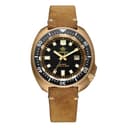
ADDIESDIVE NH35 Ceramic Bezel Diver

The step-up ADDIESDIVE: the same NH35 and sapphire, with a ceramic bezel insert instead of aluminum. Ceramic does not scratch or fade, which on a dive bezel is the single most visible durability difference there is.

Strengths

  • Ceramic bezel insert — no fading, very hard to scratch
  • NH35 with sapphire and a stated 200m rating
  • Bronze-finished buckle detail lifts it above the plain versions

Trade-offs

  • Ceramic chips rather than scratching if you knock it hard
  • Still an unknown brand with no service network
MovementSeiko NH35 automatic
Stated accuracyNot published
Power reserveNot published
Case sizeNot published
Water resistance200 m
CrystalSapphire
Hacks / hand-windsYes / Yes

Why this one. Aluminum bezel inserts fade and scratch; ceramic does not, but it can chip. Neither behavior is a fault — they are different failure modes.

Specs read from the product listing and the maker’s published data, on August 11, 2026. “Not published” means the maker does not state that figure.

#5Most published specification

Watchdives WD007T Grade 2 Titanium Diver (42mm)

The only watch on this page whose listing states the GRADE of titanium rather than just the word - Grade 2, the commercially pure specification, on a 42mm case with a domed sapphire crystal, a 120-click bezel, a helium escape valve and a stated 200m. If you want the deepest paper trail in titanium at this money, this is it; if you have a 6.5-inch wrist, 42mm plus a mesh bracelet is a lot of watch.

Strengths

  • States Grade 2 titanium for the case - a specification, not a marketing word
  • Domed sapphire crystal, a 120-click bezel and a helium escape valve all published
  • Names its movement: an SL3001 automatic

Trade-offs

  • 42mm with a mesh bracelet is the largest and heaviest-wearing option on this page
  • A helium escape valve is saturation-diving equipment nobody buying this watch will use
  • No reserve, accuracy or thickness figure published
MovementSL3001 (automatic)
Stated accuracyNot published
Power reserveNot published
Case size42 mm
Water resistance200 m
CrystalDomed sapphire
Hacks / hand-windsNot published / Not published

Why this one. Grade 2 is commercially pure titanium rather than the Ti-6Al-4V alloy (Grade 5) used for harder-wearing cases. Pure grades are softer and mark more easily, so stating Grade 2 is honest rather than flattering - which is exactly why it is worth crediting.

Specs read from the product listing and the maker’s published data, on November 2, 2026. “Not published” means the maker does not state that figure.

#6Best on a budget

Invicta Pro Diver 8930

The cheapest way into a Japanese automatic movement with a diver's silhouette, and the one Pro Diver whose listing tells you what is inside it: Invicta states an NH35A, 24 jewels, in a 40mm case 14mm thick with a 200m rating. The catch is the look — this is the gold-tone execution with a blue dial, so it reads as jewellery in a way the steel 8926OB does not.

Strengths

  • The listing names the caliber — NH35A, 24 jewels — rather than Invicta's in-house "IM-A-005" label
  • Published 40mm x 14mm case, exhibition caseback, screw-down crown and a 200m rating
  • Sits well under the price of the better-known 8926OB

Trade-offs

  • Gold-tone plating over steel, which wears through at the edges over years
  • Mineral crystal, and still no published accuracy figure or power reserve
  • Invicta's dial branding is not to everyone's taste
MovementSeiko NH35A automatic (24 jewels), per the listing
Stated accuracyNot published
Power reserveNot published
Case size40 mm
Water resistance200 m
CrystalMineral
Hacks / hand-windsNot published / Not published

Why this one. Invicta's Pro Diver family is the reason a 'best automatic under $100' list can exist at all. Almost nothing else in that band has a real self-winding movement. The plain-steel 17044 that used to sit here is no longer listed; the 8930 is the cheapest live Pro Diver automatic and the one that publishes the most, which is why the caliber, case and crystal lines below are filled where the 17044's were null.

Specs read from the product listing and the maker’s published data, on October 12, 2026. “Not published” means the maker does not state that figure.

How we picked

1. A self-winding automatic, a stated 200 m or more, and a timing bezel

That is the entry condition, and it is deliberately about function rather than looks. A watch gets onto this page because the maker or the listing states a self-winding movement, a water-resistance figure of at least 200 m, and a rotating bezel for timing a dive — not because a photograph reminds somebody of a Rolex. Every pick also had a live purchasable listing with a price on the date printed under the comparison table.

Two picks publish the bezel properly. Orient states a 120-click unidirectional bezel for the Kamasu, and Watchdives states a 120-click bezel for the WD007T. The other four state a rotating dive bezel without publishing the click count or confirming it is unidirectional, which matters more than it sounds: the entire point of a one-way bezel is that an accidental knock can only ever shorten your remaining air, never lengthen it.

2. Then the crystal, because this is where the cheap end has caught up

Five of six state sapphire, two of those with an anti-reflective coating. On the Mohs hardness scale, corundum — what synthetic sapphire is grown from — sits at 9 against 5.5 for ordinary glass and 7 for quartz, which is what most everyday grit and sand is made of. That single comparison is why sapphire has become the default on serious dive watches at every price, and it is the one line on the Submariner’s spec sheet a $180 watch matches outright. Our sapphire-under-$200 page lists every automatic in our registry that manages it inside that cap.

3. Then what the depth rating actually certifies

Here is the distinction that decides this category, and almost nobody states it:a stated depth rating is not an ISO 6425 diver’s certification. A watch marked “DIVER’S 200 m” under ISO 6425 has had every individual piece tested, not a sample, and must also carry a unidirectional elapsed-time bezel and be legible in the dark. A watch whose listing says “200 m water resistant” has made a far weaker claim.

On this page, only the Seiko Prospex SRPJ93 carries a diver’s rating from a maker with the test regime behind it. Everything else states a number. That does not make the others leaky — a Steeldive case with a screw-down crown is a well-built thing — but if you are buying a watch to dive with rather than to swim in, it is the only line on this page that should decide it. Our water-resistance explainer walks through the standards in full.

4. Then documentation, which separates the good micro-brands from the rest

Four of the six publish a case diameter. Only one — the Kamasu — publishes a lug-to-lug, which is the figure that actually decides fit. None publishes an accuracy band, and only the Kamasu and the Seiko publish a power reserve, both around 40 hours. The ranking above follows that paper trail closely, because at this end of the market the willingness to state a number is the most reliable signal there is about the rest of the watch.

Where each pick matches the Submariner, and where it does not

The one that matches the recipe: Orient Kamasu

The Submariner’s underlying claim is not the bezel or the depth rating — it is that Rolex makes the movement. Of every watch in our registry under $300, the Kamasu is the one where that is also true: Orient sits inside the same group as Seiko and builds its own calibers, and the F6922 inside this watch hacks, hand-winds and drives a day and a date. Orient publishes the whole sheet — sapphire, 41.88 mm, 12.8 mm thick, 47 mm lug-to-lug, 200 m, screw-down crown, 120-click unidirectional bezel, three-year warranty — which is more than most makers at five times the price manage.

Where it falls short: 200 m rather than 300, no ISO 6425 marking, no published accuracy figure, and a 47 mm lug span that wears broad. Our Kamasu review covers it in full and the Kamasu versus Mako II comparison explains what the cheaper Orient gives up.

The one that matches the number: Steeldive SD1953

Rolex states 300 meters. So does Steeldive, with an anti-reflective sapphire crystal and a screw-down crown, around a Seiko NH35. If matching the headline figure is what you are after, this is the pick, and Steeldive’s reputation rests specifically on case construction rather than on anything inside.

Where it falls short: it publishes no case diameter at all, it is thick and heavy by every account of it, and availability moves between sellers. Our Steeldive versus ADDIESDIVE comparison and the SD1970 review cover the brand properly.

The one with the real certification: Seiko Prospex SRPJ93

The most expensive pick here at roughly $500, and the only one from a maker with a global service network and a genuine diver’s rating. Seiko publishes a 200 m diver’s rating, the 4R35 automatic with hacking and hand-winding, about 41 hours of reserve, a sapphire crystal with an anti-reflective inner coating — the same construction Rolex describes — a ceramic bezel display, and LumiBrite on the hands, the indexes and the bezel for this exact reference. Nobody else in the price band publishes a lume figure at all.

Where it falls short of the Submariner, and of cheaper picks here: it is 43.8 mm and 12.8 mm thick, which is larger than a Submariner, it comes on a silicone strap rather than a bracelet, and at $500 it costs more than twice the Kamasu for a bought-in-house caliber of similar specification. Our Prospex roundup ranks the line and the lume page explains why this reference keeps turning up.

The one that matches the bezel: ADDIESDIVE NH35 Ceramic

Cerachrom is Rolex’s own ceramic, and the reason it exists is that an aluminum bezel insert fades in sunlight and scratches in a pocket, while ceramic does neither. For under $180 this ADDIESDIVE has a ceramic insert, a sapphire crystal, a stated 200 m rating and a named Seiko NH35. On the single most visible wear surface of a dive watch, it matches the Rolex in material if not in finish.

Where it falls short: ceramic chips rather than scratching if you knock it hard — a different failure mode, not a lesser one — no diameter is published, and ADDIESDIVE has no service operation of any kind. Our sub-$200 diver roundup has the rest of that band.

The one with the deepest paper trail: Watchdives WD007T

The only watch here whose listing states the gradeof its titanium — Grade 2, the commercially pure specification — alongside a 42 mm case, a domed sapphire crystal, a 120-click bezel, a helium escape valve, a stated 200 m and a named SL3001 automatic. If you want the longest list of checkable facts on this page, it is this one, and titanium’s density of about 4.5 g/cm³ against 7.5 to 8.0 for steel makes it by far the lightest thing here on the wrist.

Where it falls short: Grade 2 titanium is softer than hardened steel and marks more easily, 42 mm on a mesh bracelet is the largest-wearing option on the page, a helium escape valve is saturation-diving equipment nobody buying this watch will ever use, and no reserve, accuracy or thickness figure is published. Our titanium roundup covers the material trade honestly.

The one that costs almost nothing: Invicta Pro Diver 8930

Under $100, and the listing still names a Seiko NH35A with 24 jewels, a 40 mm case 14 mm thick, an exhibition case back, a screw-down crown and a 200 m rating. As a way of finding out whether you actually want a mechanical dive watch before spending real money, nothing beats it.

Where it falls short: the crystal is mineral rather than sapphire, this reference is the gold-tone execution and plating wears through at the edges over years, and Invicta publishes no accuracy or reserve figure. Our Invicta roundup goes through which references publish what, and the Pro Diver review covers the better-known steel 8926OB.

What no alternative replaces, and what to stop looking for

Chronometer certification. COSC certification means a movement averaged −4 to +6 seconds a day across fifteen days in five positions and three temperatures, tested individually. Not one watch on this page publishes any accuracy figure, let alone a certified one. Expect eight or ten seconds a day from a good NH35, and read our accuracy guide before deciding that is a problem; for most people it is not.

Seventy hours of reserve. The Submariner’s calibre runs for about three days off the wrist. The NH35, the F6922 and the 4R35 all sit around 40 hours, which means a watch taken off on Friday evening has stopped by Sunday. That is the practical argument for a single winder or, more cheaply, for just resetting it.

Case finishing and resale. The gap between a $250 diver and a Submariner is mostly in places that do not appear on a specification sheet: the transition between brushed and polished surfaces, the bracelet’s tolerances, the clasp. And a Submariner can be sold; a micro-brand diver is worth what somebody will pay for a used micro-brand diver. If resale matters, the only names on this page with any at all are Seiko, Orient and Invicta.

And the thing to stop looking for: a watch that looks identical. Watches whose whole purpose is to copy a Submariner’s appearance are a separate category with its own trade-offs, and we cover it honestly on our homage page — including the line between an homage, which carries its own brand on the dial and is perfectly legal, and a replica, which carries somebody else’s name and is counterfeiting. The picks on this page were chosen on published specification, and the two things are not the same exercise.
Frequently asked questions

What is the best Rolex Submariner alternative?

The Orient Kamasu, at around $250. It is the closest match to what the Submariner actually is rather than what it looks like: an in-house automatic caliber from a company that builds its own movements, a sapphire crystal, a 200m case with a screw-down crown and a 120-click unidirectional bezel — the same bezel mechanism Rolex uses — at 41.88mm against the Submariner's 41mm. Orient publishes every one of those figures, including the 47mm lug-to-lug.

What does a Rolex Submariner actually cost?

An authorized retailer listed the Submariner Date 126610LN at $11,350 in the United States when we checked. That is the retail price; the secondary market routinely asks more, and availability at authorized dealers has historically been limited. Every watch on this page costs under 5% of that figure, and the cheapest is under 1%.

Which Submariner alternative matches its 300m depth rating?

The Steeldive SD1953, which states 300m with an anti-reflective sapphire crystal and a screw-down crown around a Seiko NH35. Note what that match does and does not mean: Steeldive states a figure, while Rolex's rating sits behind a test regime and the Submariner carries a diver's marking. Of our six picks only the Seiko Prospex SRPJ93 has a diver's rating from a maker with that regime behind it, and it is rated 200m.

Are Submariner homages and Submariner alternatives the same thing?

No, and conflating them is how people end up disappointed. An homage is built to look like the original; an alternative is built to do the same job. The watches on this page were selected on published specification — automatic movement, 200m or more, a timing bezel, sapphire where available — not on appearance. If the look is specifically what you want, our homage roundup is the right page, and it is explicit about which design each watch borrows.

Can any affordable watch match the Submariner's movement?

No, and nothing on this page claims to. Rolex's Calibre 3235 is COSC-certified to average -4 to +6 seconds a day and holds about 70 hours of reserve. The best calibers here — Orient's in-house F6922, Seiko's 4R35, the Seiko NH35 — publish no accuracy figure at all and run roughly 40 hours. In exchange, all three are cheap to service and any competent watchmaker can work on them.

Is a ceramic bezel worth looking for on a cheap diver?

Yes, because it is the one upgrade you will see. An aluminum bezel insert fades in sunlight and picks up scratches from ordinary handling; ceramic does neither, which is why Rolex developed Cerachrom. The honest caveat is that ceramic chips rather than scratching if you knock it hard against a door frame — a different failure mode rather than a worse one. The ADDIESDIVE NH35 Ceramic has one for under $180.

What is the cheapest decent Submariner alternative?

The Invicta Pro Diver 8930 at about $93. Its listing names a Seiko NH35A with 24 jewels and publishes a 40mm case 14mm thick, an exhibition case back, a screw-down crown and a 200m rating — genuinely a lot of specification for the money. Buy it knowing the crystal is mineral and that this reference is gold-tone plated, which wears at the edges over years.

Does a 200m rating mean I can scuba dive with these?

Only the Seiko is sold as a diver's watch. ISO 6425 requires every individual watch to be pressure-tested rather than a sample, plus a unidirectional elapsed-time bezel and dark legibility, and a listing that merely states '200m water resistant' has made a much weaker claim. For swimming, snorkeling and showering, any 200m pick here is fine. For actual diving, buy the watch whose maker stands behind a diver's rating.

Will a cheap diver hold its value like a Submariner?

No. The Submariner's resale behavior is close to unique among wristwatches and is a large part of why people buy it. Of the picks here, Seiko and Orient retain a reasonable share of their price secondhand because the names carry; micro-brand divers sell for very little regardless of how good the specification is. If you expect to recover money later, that gap is a real cost and it appears on no spec sheet.

Should I save up for the Submariner instead?

If the Submariner is specifically what you want, a cheaper watch that resembles it tends to remind you daily that it is not one. Where an alternative genuinely wins is when what you wanted was the job rather than the object: a tough automatic you can swim in, read in the dark and time something with. That costs about $250 and always will.

Sources

  • Rolex Submariner - Wikipedia — The published specification every affordable alternative gets measured against. The article states the Submariner is "Waterproof to a maximum depth of 300 metres (1000 ft)" with "a unidirectional rotatable bezel with Cerachrom ceramic insert" that "only rotates counterclockwise"; a case "made from solid block of 904L stainless steel since the 1980s"; a 41mm diameter for the current Submariner and Submariner Date; an anti-reflective coating on "the inner side of the sapphire crystal"; "Rolex Calibres 3230 and 3235, respectively" with the current 126610LN having "expanded the line's power reserve to about 70 hours"; and that "Each movement is a Swiss chronometer officially certified by the COSC". On the history: production began in 1953, the watch was shown publicly at the 1954 Basel fair, and "It was the first watch to be waterproof up to 100 metres (330 ft)" - the article itself notes Blancpain's Fifty Fathoms arrived in 1953 certified to 94.5m (accessed November 10, 2026)
  • Bucherer US (authorized Rolex retailer) - Submariner Date Oyster, 41mm, Oystersteel — An authorized retailer's own listing for reference M126610LN-0001, read for the retail price rather than for specification: $11,350 US, with the case stated as 41mm Oystersteel, 300 metres / 1,000 feet water resistance, a self-winding Calibre 3235 (Manufacture Rolex) and approximately 70 hours of power reserve (accessed November 10, 2026)
  • COSC — Contrôle Officiel Suisse des Chronomètres: certified chronometer — The Swiss chronometer standard: a certified mechanical chronometer must average -4/+6 seconds per day, tested per ISO 3159 over ~15 days in 5 positions and 3 temperatures (accessed July 21, 2026)
  • ISO 6425:2018 — Divers' watches — The standard a watch must meet to be legally marked 'Diver's [depth]m': minimum 100m, a unidirectional/lockable elapsed-time bezel, dark legibility, and testing of every piece (accessed July 21, 2026)
  • Orient Watch USA — Kamasu RA-AA0003R39B specification — Orient's published sheet for the Kamasu: caliber F6922 automatic, hand-winding, hacking; approximately 40 hours reserve; sapphire crystal; 41.88mm diameter, 47mm lug-to-lug, 12.8mm thick, 22mm lugs; 200m; screw-down crown; 120-click unidirectional bezel; three-year warranty (accessed September 15, 2026)
  • Seiko - Prospex SRPJ93 product specification — Seiko's own listing for the SRPJ93 PADI Special Edition: caliber 4R35, automatic with manual winding, approximately 41 hours of power reserve, 23 jewels, 43.8mm diameter, 12.8mm thick, sapphire crystal with a magnifier and an anti-reflective coating on the inner surface, a unidirectional rotating bezel with a ceramic display, a screw-down crown, '200m / 660ft diver's' water resistance, a silicone band, and 'LumiBrite on hands, index(es) and bezel'. No accuracy figure is published for this reference (accessed October 26, 2026)
  • Mohs scale of mineral hardness — Wikipedia — The hardness ranking behind every watch-crystal argument: corundum (sapphire) 9, quartz 7, glass 5.5, plastic 2 to 2.5 — which is why sand and grit, largely quartz, scratch mineral glass and acrylic but not sapphire (accessed August 19, 2026)
  • Titanium - Wikipedia — Titanium's density is 4.502 g/cm3 at 20 degrees C - the figure behind every 'titanium watch case' weight claim. Re-read on November 2, 2026 for the titanium-case roundup, which also cites: a Mohs hardness of 6.0; 'titanium is not as hard as some grades of heat-treated steel'; 'titanium is also considered one of the most biocompatible metals'; commercially pure (99.2%) grades have an ultimate tensile strength of about 434 MPa; and the oxide layer that 'gives titanium excellent resistance to corrosion' (accessed November 2, 2026)

Keep reading