How we ranked value
1. A published TPD figure, or nothing
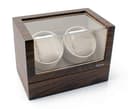
The first filter, and the one that does most of the sorting. Two of these six publish a real range: the Versa Double at 650–1,850 TPD and the Mcbazel Double at 970–2,430. The other four publish mode counts — “four winding settings”, “multiple rotation modes”, “shared rotation modes” — with no number behind them. That is not a reason never to buy one; it is a reason to set it to its lowest program and check the watch over a week rather than assuming. Our guide to watch winder TPD settings explains how to find what a given caliber actually asks for, and our adjustable-TPD roundup lists every winder in the registry that publishes a range.
2. Then direction
The Versa publishes clockwise, counter-clockwise and bi-directional, set per position. The Mcbazel states that each cycle runs both ways. The remaining four publish no direction information at all. Direction matters because some movements wind efficiently in one direction only — and there is a trap in the vocabulary worth knowing about: WOLF and Barrington use “bi-directional” to mean opposite arithmetic, one doubling the stated turns and the other splitting them. Our guide to which direction a winder should turn has both makers’ own wording.
3. Then positions, which is where the cheap end wins
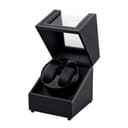
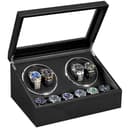
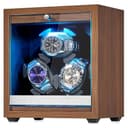
This is the second finding worth the page. Below $70 you can buy four winding positions for less than one competent single costs — the ANWBROAD quad at about $70, or three positions at about $50. ANWBROAD states that the three positions on its triple share one motor program, which is the honest catch: if your three watches want different turns per day, it is the wrong winder. If they are three ordinary Japanese automatics that just need to keep running, it is the right one. Our multi-watch roundup and triple-winder page go further into the format.
4. Then power, because placement is a feature
A winder that takes batteries can sit in a safe, a wardrobe or a drawer with no cable running to it, which is where most people with a watch worth winding actually want to keep it. The Efaithtek is the cheapest pick here that publishes mains-or-battery operation; the SONGMICS and the Mcbazel run on USB-C, which is a genuine convenience if you already have chargers everywhere. Budget for rechargeables if you go the battery route — a higher turns-per-day setting drains cells faster, and our running-cost guide puts figures on it. See also our battery-powered roundup.
Where the money stops working
The honest shape of this category, laid out in price order using only what the makers themselves publish:
Under $35: a quiet motor, a mode list, and — in exactly one case — a published TPD range. The Mcbazel Double is that case, and its range starts at 970 TPD, which is already above what many movements ask for. That matters less than people fear: a healthy automatic cannot be overwound, because a slipping bridle on the mainspring barrel releases tension once the spring is full. What a high fixed TPD actually costs you is unnecessary running hours on the winding mechanism, which is the argument our guide to whether winders damage watches works through.
$35 to $70: positions. Three or four of them, sharing a program. Nobody at this price publishes a number. Our sub-$50 roundup found exactly the same pattern across a different set of picks.
$70 to $130: the sweet spot. Twelve-program singles around $85 – $90, and the Versa Double at about $130 with a published ladder, three directions and independent per-watch control. This is where a dollar buys the most checkable capability of anywhere in the category.
Above $130: diminishing returns on anything you can verify. A 100-TPD-wider top end, AA battery capability, a nicer case, a documented holder, a brand that holds value. Those are real reasons to spend more and our brand roundup and WOLF alternatives page cover them properly — but none of them is a bigger number on a spec sheet.
Before you buy any of them
The best-value answer for a lot of collections is still no winder at all. If you own one automatic you wear most days, it winds itself on your wrist. If you own three and wear each in rotation, a watch box and thirty seconds of setting is free — and letting an automatic stop does it no harm, which is what our guide to letting an automatic watch stop is about. A winder earns its money on a day-date or an annual-calendar watch that is genuinely annoying to reset, or where you want a watch ready to wear without thinking. Read is a watch winder worth it and do automatic watches need a winder before spending anything, including $26.