How we picked
1. Both directions, or it drops down the list
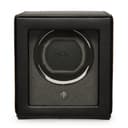
A bidirectional rotor will take turns either way, but a winder stuck on clockwise gives you no way to correct course if a caliber turns out to prefer the other direction — and you cannot know which it prefers without a caliber sheet Omega does not publish for this purpose. Every pick here except the WOLF Cub lets you select clockwise, counter-clockwise or alternating. The Cub is bi-directional by design rather than by setting, which WOLF states outright: 900 turns a day, doubling when it runs bi-directional. More on which direction a winder should turn.
2. A published number beats a numbered mode
Three picks print an actual range: Versa 650–1,850 TPD, Rothwell 650–1,950, WOLF a flat 900. Barrington, Versa’s single and MOZSLY publish settings counts instead — a full TPD range and twelve modes respectively — which is one step less useful but still far ahead of a dial marked 1 to 5. We ranked the Barrington first anyway, because control over both variables is the point of this page and because it is the winder enthusiasts have pointed Omega and Rolex owners at for years.
3. Quiet, because of where an Omega actually lives
A winder for a watch like this ends up on a dresser or in a safe in a bedroom, not in an office. Five of six picks state a quiet motor; WOLF publishes no noise claim for the Cub at all, which is worth knowing before you spend $300 on it. Our quiet watch winder roundup goes further into what the decibel claims on these listings are and are not worth.
4. The thing nobody publishes
Not one winder on this page states a maximum case size or a maximum watch weight. That is the most frustrating gap for an Omega owner, because a large Planet Ocean on a steel bracelet is a heavy object to hang off a cuff, and the cuff is the part that fails. WOLF at least sells its patented lock-in cuff as the feature you are paying for. Everyone else shows you a photograph. Buy from a seller with a returns policy and check the fit in the first week.
One Omega, or an Omega and the rest of the collection?
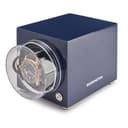
One watch you rotate. Take the Barrington, or the Versa Single Elite if $475 is more than you want to spend on a box that turns. Both give you direction and TPD control; the Barrington adds battery operation and modules that stack if the collection grows.
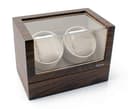
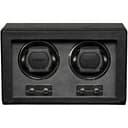
Two watches on different settings. Take the Versa Double Elite or the Rothwell. Independent per-position control is the feature to insist on: a shared setting forces two different movements onto one compromise. The Rothwell runs two separate motors rather than driving both positions off one, and takes AA batteries — which is what lets it sit in a safe with no socket. The full double winder roundup covers the rest of that field.
Three or more. Our triple winder page and multi-watch winder page cover four, six and eight positions, and the under-$500 band is where the cabinets that combine winding positions with storage live.
Does an Omega actually need a winder?
Only if leaving it stopped is a nuisance you care about. A winder keeps a watch running so the time and the date are right when you pick it up; it does not make the movement healthier, and it is not required maintenance. The case where it earns its keep is a watch with a calendar you do not enjoy resetting. If the watch sits for weeks at a time, storage suits it better than a spinning position — that is what our winder vs watch box comparison is about, and why winders with storage exist.
Overwinding is not the risk people fear. A self-winding movement has a slipping bridle on the mainspring barrel, so a full mainspring simply slips rather than breaking — the real cost of an unnecessarily high TPD is running hours on the winding mechanism you did not need to spend. That is the whole argument for starting at the bottom of the range rather than the top of it.