Dial & Lume

Single vs Double Watch Winder

Two positions cost far less than two winders — but only if you will ever fill the second one. How to tell before you spend, and the specification that decides whether a double is worth having at all.

By Stephen V.Last updated How we pick

The economics look obvious. A double watch winder costs perhaps forty per cent more than a single, not twice as much, so buying the double is clearly the sensible hedge against owning a second automatic one day.

It is a reasonable argument and it is wrong about as often as it is right, for one reason people rarely consider before buying: most collections do not contain two watches that both need winding at the same time. A winder is for a watch you wear regularly enough to want it running and not so regularly that it stays running by itself. Very few people have two of those.

Below: the four ways the two formats genuinely differ, the specification that decides whether a double is worth its price at all, and six picks split across both. We have not handled any of them. Rotation figures come from each maker’s own published specification where one exists, cited at the bottom; prices come from a live daily check.

How this is funded: we earn a commission if you buy through our links, at no extra cost to you. As an Amazon Associate we earn from qualifying purchases. It never changes which watch or winder we recommend, and we’ll tell you plainly when to skip one. Full disclosure.

Quick picks

Ranked on movement, specs and buyer fit. Select a row to jump to the full write-up. We have not tested these — here is exactly what we do instead.

#ProductBest forPrice
1
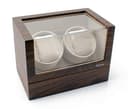
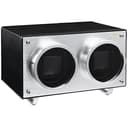
Versa Double Watch Winder Elite

Versa Double Watch Winder Elite

The double winder to buy for most collections. Versa publishes what it does: four turns-per-day settings from 650 to 1,850, all three directions, and each of the two positions set independently. That combination — real numbers, per-watch control, an ultra-quiet Japanese motor — is exactly what a second winding position is for, and it costs roughly what one premium single does.

Best double overall
$129.99 · View on Amazon

Price as of September 4, 2026. #ad How we’re funded

2
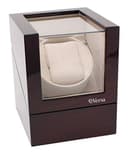
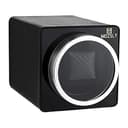
Versa Single Watch Winder Elite

Versa Single Watch Winder Elite

The value sweet spot. A quiet Japanese motor and twelve rotation programs — enough TPD and direction combinations to suit almost any automatic — at roughly a fifth of a premium single's price. The one to buy when you want real control without the badge premium.

Best single overall
$89.99 · View on Amazon

Price as of September 4, 2026. #ad How we’re funded

3
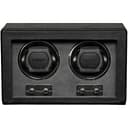
Rothwell Double Watch Winder

Rothwell Double Watch Winder

The widest settings range on this list, in the nicest case. Rothwell publishes five TPD speeds up to 1,950 and three directions, gives each watch its own setting, and runs two separate quiet Japanese motors instead of driving both positions off one. It also takes AA batteries, which is the difference between a winder that has to sit by an outlet and one that can go in a safe.

Best double for control
$204.95 · View on Amazon

Price as of September 4, 2026. #ad How we’re funded

4
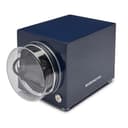
Barrington Single Watch Winder

Barrington Single Watch Winder

The enthusiast-forum favorite. A silent Japanese motor, the full range of turns-per-day settings, and both directions — so you can dial in exactly what a Rolex, Omega or Seiko movement asks for. It also stacks with matching modules if your collection grows.

Best modular single
$475.00 · View on Amazon

Price as of September 4, 2026. #ad How we’re funded

5
MOZSLY Double Watch Winder

MOZSLY Double Watch Winder

The pick once you rotate two automatics. Independent twelve-mode control per position means a Rolex and a Seiko can get different turns and directions in the same box, and the motor stays quiet enough for a bedroom.

Best value double
$149.99 · View on Amazon

Price as of September 4, 2026. #ad How we’re funded

6
MOZSLY Single Watch Winder

MOZSLY Single Watch Winder

A quiet single winder with a full twelve rotation modes for under a hundred dollars. It does the same core job as winders costing far more — hold the watch, turn it the right number of times in the right direction — and gets out of the way.

Best value single
$83.99 · View on Amazon

Price as of September 4, 2026. #ad How we’re funded

The picks in full

#1Best double overall

Versa Double Watch Winder Elite

The double winder to buy for most collections. Versa publishes what it does: four turns-per-day settings from 650 to 1,850, all three directions, and each of the two positions set independently. That combination — real numbers, per-watch control, an ultra-quiet Japanese motor — is exactly what a second winding position is for, and it costs roughly what one premium single does.

Strengths

  • Four published TPD steps (650/950/1250/1850) rather than unnamed 'modes'
  • Clockwise, counter-clockwise and bi-directional, set per position
  • Ultra-quiet Japanese motor, so it can live on a dresser

Trade-offs

  • Costs about four times what a budget double does
  • Mains power only — there's no battery option if you want it in a safe
Watches held2
Rotation settings4 TPD settings x 3 directions, set per position
DirectionCW, CCW, both
PowerAC adapter
Quiet motorYes
Includes storageNo

Why this one. The reason to pay this much for a double is the published TPD ladder. A winder that lists 'mode 1-5' leaves you guessing whether your movement is getting 650 turns or 2,400; Versa states the number, so you can match it to what the caliber actually asks for.

Specs read from the product listing and the maker’s published data, on July 23, 2026. “Not published” means the maker does not state that figure.

#2Best single overall

Versa Single Watch Winder Elite

The value sweet spot. A quiet Japanese motor and twelve rotation programs — enough TPD and direction combinations to suit almost any automatic — at roughly a fifth of a premium single's price. The one to buy when you want real control without the badge premium.

Strengths

  • Twelve rotation programs cover the TPD/direction range most watches need
  • Quiet Japanese motor
  • AC or battery power for placement flexibility

Trade-offs

  • Cabinet finish is fine, not luxurious
  • No app or memory beyond the on-unit settings
Watches held1
Rotation settings12 rotation programs
DirectionCW, CCW, both
PowerAC adapter + battery
Quiet motorYes
Includes storageNo

Why this one. Twelve programs is the number that matters here: it's enough to cover the common TPD bands (roughly 650-1950) and both directions, which is the whole job of a winder.

Specs read from the product listing and the maker’s published data, on July 21, 2026. “Not published” means the maker does not state that figure.

#3Best double for control

Rothwell Double Watch Winder

The widest settings range on this list, in the nicest case. Rothwell publishes five TPD speeds up to 1,950 and three directions, gives each watch its own setting, and runs two separate quiet Japanese motors instead of driving both positions off one. It also takes AA batteries, which is the difference between a winder that has to sit by an outlet and one that can go in a safe.

Strengths

  • Five published TPD speeds (650/750/850/1000/1950) with per-watch settings
  • Two separate quiet Japanese motors rather than one shared drive
  • Runs on AA batteries or mains — Rothwell states roughly 3-4 weeks per set

Trade-offs

  • The most expensive pick here by a wide margin
  • Large at roughly 11.75 x 6.25 x 7.25 inches — it needs real dresser space
Watches held2
Rotation settings5 TPD speeds x 3 directions, set per watch
DirectionCW, CCW, both
PowerAC adapter or AA batteries
Quiet motorYes
Includes storageNo

Why this one. The 1,950 TPD top step matters for the small number of movements that genuinely want a high turn count; most automatics sit far below it. Battery operation is the quieter selling point — it's what lets the winder live somewhere without a socket.

Specs read from the product listing and the maker’s published data, on July 23, 2026. “Not published” means the maker does not state that figure.

#4Best modular single

Barrington Single Watch Winder

The enthusiast-forum favorite. A silent Japanese motor, the full range of turns-per-day settings, and both directions — so you can dial in exactly what a Rolex, Omega or Seiko movement asks for. It also stacks with matching modules if your collection grows.

Strengths

  • Silent Japanese motor with adjustable TPD and CW / CCW / both directions
  • Modular — add units later instead of rebuying
  • Long track record and readily available replacement parts

Trade-offs

  • Premium price for a single position
  • Understated looks won't wow anyone who wanted a showpiece
Watches held1
Rotation settingsAdjustable TPD + direction
DirectionCW, CCW, both
PowerAC adapter + battery
Quiet motorYes
Includes storageNo

Why this one. Barrington's selling point is control: a full TPD range plus direction choice lets you match the winder to the movement instead of hoping a pre-set is close enough.

Specs read from the product listing and the maker’s published data, on September 3, 2026. “Not published” means the maker does not state that figure.

#5Best value double

MOZSLY Double Watch Winder

The pick once you rotate two automatics. Independent twelve-mode control per position means a Rolex and a Seiko can get different turns and directions in the same box, and the motor stays quiet enough for a bedroom.

Strengths

  • Independent TPD/direction control for each of the two positions
  • Quiet motor
  • Costs far less than two premium singles

Trade-offs

  • Takes up real desk space
  • Leatherette build, not a heirloom piece
Watches held2
Rotation settings12 modes, independent per position
DirectionCW, CCW, both
PowerAC adapter
Quiet motorYes
Includes storageNo

Why this one. Independent control is the feature to insist on with any multi-winder — a shared setting forces two different movements onto one compromise TPD.

Specs read from the product listing and the maker’s published data, on July 21, 2026. “Not published” means the maker does not state that figure.

#6Best value single

MOZSLY Single Watch Winder

A quiet single winder with a full twelve rotation modes for under a hundred dollars. It does the same core job as winders costing far more — hold the watch, turn it the right number of times in the right direction — and gets out of the way.

Strengths

  • Twelve TPD/direction modes at a budget price
  • Quiet motor suitable for a bedroom or office
  • Simple controls, no fuss

Trade-offs

  • Build is plastic-and-leatherette, not heirloom-grade
  • Single position only — no room to grow
Watches held1
Rotation settings12 rotation modes
DirectionCW, CCW, both
PowerAC adapter + battery
Quiet motorYes
Includes storageNo

Why this one. The honest truth about winders: past a competent quiet motor and adjustable TPD, you're paying for materials and brand. This covers the function for under $100.

Specs read from the product listing and the maker’s published data, on July 21, 2026. “Not published” means the maker does not state that figure.

The specification that decides it: per-position settings

Before any other comparison, this. A double winder is either two independent winders in one case, or one motor driving two cups from a single setting. Those are completely different products sold under the same name.

Per-position control means each cup has its own turns-per-day figure and its own direction, so a movement needing 650 turns clockwise and one needing 1,000 bidirectional can share a box. Versa publishes four TPD settings (650, 950, 1,250 and 1,850) with three directions, set per position, for the Elite Double. Rothwell publishes five speeds and three modes, also per watch.

Shared control means both watches get whatever one dial says. That is fine if both are ordinary Japanese automatics with generous requirements, and it is the wrong purchase if either watch has a specific published figure. Our adjustable-TPD roundup filters the market on exactly this.

The practical rule: if you are buying a double, buy one with per-position settings, or buy a single instead. A shared-setting double is two compromises in one box.

The four real differences

1. Cost per position

The double wins, clearly, and it is the strongest argument for it. Two singles cost more than one double at every tier of this market, and the gap widens as you go upmarket. If you are confident you will fill both positions, this settles it.

2. Footprint and where it lives

A double is meaningfully wider than a single and considerably wider than a single looks in photographs. If the winder is going on a dresser, in a drawer or inside a safe, measure the space before you order — this is the most common post-purchase surprise in the category.

3. Noise, doubled

Two motors make more sound than one, and a double runs both whenever both positions are occupied. No winder maker publishes a decibel figure at any price, so this page prints no numbers and we have not measured them. What can be said honestly is that noise is the most common reason a winder ends up in a cupboard rather than a bedroom, and that doubling the motors does not help. See our quiet winder roundup.

4. Modularity, which is the underrated option

Barrington’s singles stack: buy one now, add a matching unit later, and you end up with two independently-set positions rather than a compromise. That is genuinely the best of both approaches, and it costs more than a double up front and less than being wrong.

How to tell which you need

Answer these three, honestly.

  1. How many automatics do you own that you wear less than about twice a week? That is the real winder count. A watch worn most days stays wound on its own and does not need one at all.
  2. Do any of them have a complication that is annoying to reset? A date is mildly annoying. An annual calendar, a moonphase or a day-date-plus-GMT is genuinely annoying, and those are the watches a winder actually earns its keep on. Our guide on whether you need a winder makes that case in full.
  3. Is the second position aspirational? If the honest answer is “I might buy another watch,” buy the single. Winders are cheap enough that buying a second one in two years is a smaller loss than owning an empty cup for two years, and by then you will know more about what you want.

The answer for most people

One automatic, or one you rotate slowly: buy a single. Spend the difference on rotation control rather than on capacity you are not using.

Two automatics you genuinely alternate: buy a double with per-position settings. This is the case the format was designed for and it works very well.

Two automatics but only one you care about keeping running: buy a single, and let the other one stop. A stopped mechanical watch is not being harmed — our guide to storing automatic watches explains what actually happens to a watch left unwound, which is very little.

Three or more: you have moved past this comparison. Our multi-watch winder roundup covers the triples and quads, and winders with storage covers the format that winds two and stores the rest, which is what most collections actually need.

Frequently asked questions

Should I buy a single or double watch winder?

Buy a single unless you own two automatics you genuinely alternate and both need winding. Most collections contain only one watch that is worn often enough to want running but not often enough to stay wound by itself. If the second position is aspirational, buy the single and buy again later — winders are cheap enough that this loses less than an empty cup.

Is a double watch winder better value than two singles?

On cost per position, yes, at every tier of the market — a double costs far less than two singles. That only helps if both positions get used. It also assumes the double has per-position settings; a double that drives both cups from one dial is two compromises rather than two winders.

Can you set each watch separately on a double winder?

Only on models that state per-position control. Versa publishes four TPD settings and three directions set per position for the Elite Double, and Rothwell publishes five speeds and three modes per watch. Cheaper doubles typically share one motor and one setting between both cups.

Are double watch winders louder than singles?

Two motors make more sound than one, and a double runs both whenever both cups are occupied. No maker in this category publishes a decibel figure at any price, so nobody can give you a number — including us. Noise is the most common reason a winder ends up in a cupboard, so it is worth weighing.

Can you use only one side of a double watch winder?

Yes. An empty cup does no harm and, on a model with per-position control, the unused position can usually be switched off entirely so only one motor runs. That makes a double a reasonable purchase if you are confident about the second watch — just not a free one.

What about modular winders that stack?

They are the most flexible answer and are underrated. Barrington's singles are designed to sit alongside matching units, so you buy one now and add another later, ending with two independently-set positions rather than a shared-setting compromise. It costs more up front than a double and less than buying the wrong thing.

Sources

  • Versa Watch Winders — Elite Double Watch Winder specificationVersa's own spec for the Elite Double: four turns-per-day settings (650/950/1250/1850), clockwise, counter-clockwise and bi-directional operation, and 'set each winder independently' (accessed July 23, 2026)
  • Rothwell — Double Watch Winder (Black/Grey) specificationRothwell's own spec for its double winder: five TPD speeds (650/750/850/1000/1950), three rotation modes, two quiet Japanese motors, AC or AA-battery power, and per-watch settings (accessed July 23, 2026)
  • Barrington Watch Winders — How to set optimal winding parametersA winder maker's guidance on turns per day (TPD) and rotation direction, and why the wrong direction winds nothing — there is no ISO standard for TPD, so maker guidance is the authority (accessed July 21, 2026)
  • Automatic watch — WikipediaReference on self-winding watches: most automatics can also be wound by hand at the crown, and a slipping bridle on the mainspring barrel makes overwinding by a rotor or a winder mechanically impossible (accessed August 11, 2026)

Keep reading