The disclosure gap, line by line
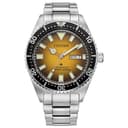
- Caliber.Citizen: 8204, named on the Fugu’s sheet, with a published manual you can download. Invicta’s own pages: “IM-A-005”, which identifies nothing — though the 35725 listing names an NH35A.
- Accuracy. Citizen: -20 to +40 seconds a day for the 8204, with the honest caveat that this is static accuracy at normal temperature and varies with wind, position and environment. Invicta: nothing published.
- Power reserve. Citizen: about 42 hours when fully wound. Invicta: nothing published.
- Crystal. Citizen Fugu: anti-reflective sapphire. Invicta 8926OB and 35725: mineral.
- Water resistance.200m across the board. Citizen describes the Fugu case as ISO compliant with a screw-down crown; the bracelet Promaster listing shows “AUTOMATIC DIVER’S 200m” printed on the dial. Invicta publishes 200m for the 8926OB and 200m for the 47mm 35725 with no standard named.
- Hacking and hand-winding. Citizen publishes both for the 8204 (the second-hand stop is an 8204 feature specifically). Invicta publishes neither, so we claim neither.
Why the ISO wording matters more than the depth figure: the regulated diver’smarking under ISO 6425 is a tested certification — minimum 100m, a unidirectional elapsed-time bezel, legibility in the dark, and testing of everypiece rather than a sample. A bare “200m” on a dial is a pressure claim, not a certification. That distinction is the single most useful thing to understand in this category, and our water resistance guide unpacks it properly.
What the Invicta actually gets right
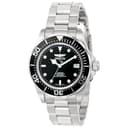
It would be easy to read the above as a dismissal, and it is not. At roughly $90 the 8926OB gives you a 40mm steel case, a 200m rating, a screw-down crown, a coin-edge rotating bezel, a steel bracelet and a mechanical movement that, by the evidence of twenty years of these watches in circulation, generally runs. There is nothing else at that money with that spec list, and that is precisely why the watch has the reputation it does.
It is also the right answer in two specific situations. First, as a first automaticwhere the goal is to find out whether you like mechanical watches at all before committing real money — our entry-level roundup treats it that way. Second, as a knockabout: a watch you can wear to do something genuinely abrasive without the flinch reflex, because replacing it costs less than servicing anything else here.
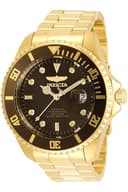
And one place where the cheap watch does not lose: the 47mm Pro Diver 35725 matches the Citizens at 200m, and its listing is the only Invicta document here that names a caliber — an NH35A with 24 jewels — and publishes a case thickness. It is also 47mm, which is a wrist question rather than a spec question — see the large-wrist roundup before you order one.
Which Citizen Promaster, though
“Promaster” is a range, not a watch, and the disclosure varies wildly inside it — which is the trap on this side of the comparison.
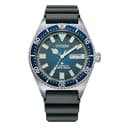
- Fugu NY0154-51L— the documented one. Caliber named, sapphire, ISO-compliant wording, 44mm. It is the Citizen argument in its strongest form, and it is the one reference here you cannot currently buy: Citizen still publishes the sheet, but as of October 2026 no live Amazon listing for it survives, which is why it is no longer among the picks above.
- The 41mm bracelet Promaster Dive Automatic— a diver’s-marked dial and a steel bracelet at a lower price, but Citizen does not name the caliber on that listing and publishes no crystal, thickness or reserve for it. Several rows in its spec table read “Not published” as a result.
- The polyurethane-strap day-date Promaster— the cheapest route into a Citizen mechanical diver, and the least documented. Citizen publishes nothing about the caliber on that listing either.
So the honest version of the Citizen recommendation is narrower than “buy a Promaster”: buy the best-documented reference you can actually get, which today is the 41mm bracelet model. Our best Citizen automatic watches roundup was built on exactly that rule.
The option neither brand wants you to consider
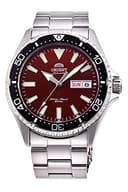
At around $330 the Orient Kamasu gives you what each of these watches is missing. Orient publishes the in-house F6922 by name, about 40 hours, hacking and hand-winding, a sapphire crystal, 200m with a screw-down crown, a 120-click unidirectional bezel and the full case geometry. It is better documented than the Invicta and better documented than any Citizen automatic diver you can currently buy, which makes it the default recommendation on our dive-automatic roundup and the reason it sits at number four above rather than being left off.
The other way out is to spend Seiko money instead. Prospex is the one mainstream dive line where the maker publishes a sheet for every reference it sells, which is the comparison we run in Seiko Prospex vs Citizen Promaster — same Citizens as this page, a far better-documented opponent.
Who should buy which
- Under $120, or a watch to abuse— Invicta 8926OB. Accept the undocumented movement as the price of entry.
- A mechanical diver from a major brand— the 41mm bracelet Citizen Promaster Dive Automatic. A diver’s-marked 200m dial and a steel bracelet, with the caveat that Citizen names no caliber on that listing. The better-documented Fugu is no longer sold.
- Best specification per dollar— Orient Kamasu. It beats both on what the maker is willing to publish.
- A 7.75-inch wrist or larger— the 47mm Invicta 35725, which publishes 200m and an NH35A caliber, with the usual caveat about what 47mm does to a cuff.
Whichever way you go, the watches here run roughly 40 hours and stop if they sit unworn for two days. That is normal, and it is a storage question rather than a fault — how many hours a day you need to wear an automatic covers what that actually requires of you.