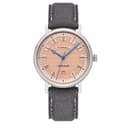
The movement: a named caliber against a jewel count
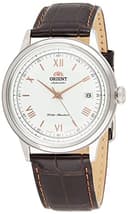
“21 jewels” is a real specification and it is also almost useless to a buyer. It tells you how many bearing surfaces the movement has; it tells you nothing about the rate, the reserve, whether the seconds hand stops when you pull the crown, or who made it. Orient, by contrast, names the caliber, and a named caliber is a thing you can look up, service and compare. Our guide to who makes automatic watch movements explains why that matters more than any single figure on a spec sheet.
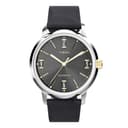
Two features Orient publishes for the F6222 and Timex does not claim for the Marlin are worth naming. It hacks— the seconds hand stops when you pull the crown, so you can set the watch to the second. And it hand-winds, so you can start it without shaking it. The Marlin is stated to hand-wind as well; hacking is not published for it, so we do not claim it either. If you want to understand what those two words buy you, we have a short page on hacking.
Neither maker publishes a daily accuracy figure for these references. That is normal at this price and it is not a scandal — what it means is that you should set expectations from the movement class rather than a promise, and automatic watch accuracy explains what is realistic.
The crystal: the most misunderstood line on both sheets
The Bambino has domed mineral glass. The Marlin has domed acrylic. On the Mohs hardness scale, glass sits at about 5.5, plastic at 2 to 2.5, and the quartz that makes up most everyday grit at 7. So grit marks both of them. Neither is sapphire, which at 9 is the only one of the three that shrugs off a sandy sleeve.
Here is the part the spec-sheet reading gets backwards. A scratched acrylic crystal is a ten-minute fix with a cloth and a mild polishing compound. A scratched mineral crystal is a replacement job. Acrylic also absorbs a knock that would chip glass. So the softer crystal is, in practice, the lower-maintenance one — which is exactly the argument our sapphire vs mineral vs acrylic comparison works through in full. If you want hard glass at this money, the TOPHILL above is the sapphire answer, and the sapphire roundup is the wider field.
Water resistance: 30m against 50m
This is the specification that quietly settles the decision for a lot of people. The published depth markings mean specific things: 30m is splash resistance only— rain, hand-washing, nothing more. 50mcovers showering and shallow swimming. Neither is a swimming watch in the way a 200m diver is, and neither carries the regulated ISO 6425 diver’s marking, but there is a real difference in how carefully you have to live with them. Our water resistance guide sets out what each marking actually permits.
A 30m dress watch is a watch you take off to wash the car. If that sounds like a daily irritation rather than a reasonable precaution, the Marlin is your watch.
Size, and the Bambino naming trap
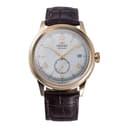
The Marlin Automatic is 40mm. The Bambino is — depending on which Bambino — 38.4mm, 40.5mm or 41.5mm. That is not a typo. Orient sells several references under the Bambino name at genuinely different sizes, and the one we rank first here is the 38.4mm small-seconds reference, which Orient USA lists as “Bambino Version 2 Small Seconds 38mm” while the retail listing for the same RA-AP0106S30B calls it “Version 7”. If you buy a Bambino by line name alone you may get a watch 3mm larger than you intended. Check the reference number.
On the geometry Orient does publish for that 38.4mm reference — 44mm lug-to-lug, 12mm thick, 20mm lugs — it is a genuinely small dress watch, and lug-to-lug is the number that decides fit, not diameter. Our watch size guide explains how to measure for that, and the small-wrist roundup is where the 36mm Hestur above belongs.
Who should buy which
- A first proper mechanical watch you intend to keep— Bambino. A named in-house caliber, a published reserve, hacking, and a dial that has aged well for a decade of production.
- A mid-century look, worn without ceremony— Marlin. 50m, a crystal you can polish, and a case shape nobody else is making at this price.
- A 6.25-inch wrist or smaller— the 38.4mm Bambino or the 36mm Hestur. 40mm with a flat dress bezel wears larger than 40mm sounds.
- You want this to survive sandy pockets and gym bags — neither; buy sapphire. The TOPHILL pick above is the cheapest honest route to it.
If the real question behind this one is “which dress automatic should I buy at all”, our dress-automatic roundup ranks the whole field, and Seiko Presage vs Orient Bambino is the other comparison most Bambino shoppers end up reading.