Dial & Lume

Best 36mm Automatic Watches

Six automatics whose makers publish a 36 or 37mm case - and the second measurement that decides whether a small watch actually fits, which exactly one of them states.

By Stephen V.Last updated How we pick

The short answer

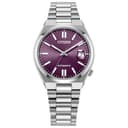
For most buyers the Citizen Tsuyosa 37mm is the small automatic to buy. It is the narrowest case we can find live from a household Japanese brand, and Citizen publishes the whole mechanical package for the exact reference — caliber 8210, an anti-reflective sapphire crystal, a 42-hour reserve, a hack feature and WR50 — on an integrated steel bracelet. If you want to know how it will wear rather than how wide it is, the Seiko 5 Sports SRPJ89 is the only pick here whose maker publishes a lug-to-lug figure at all: 36.4 mm across, 12.5 mm thick, 44.4 mm case length. For the most specification per dollar, the Pagani Design DD36 pairs AR sapphire with a stated 10 bar — the highest published water resistance on the page — and it is also the budget pick at about $135. One warning for the whole category: three of these six makers publish no water-resistance figure whatsoever, and five of the six publish no lug-to-lug, which is the number that actually decides fit at this diameter. Every pick below had a live, in-stock price on our check as of November 25, 2026.

Thirty-six millimeters used to be a man’s watch, then it was a woman’s watch, and now it is simply the size a lot of people’s wrists are. Rolex launched the Datejust at 36 mm in 1945 and still sells that size today; it took the Explorer up to 39 mm in 2010, then re-introduced the 36 mm Explorer in 2021 and has offered both 36 and 40 mm since 2023. The industry moved and then moved back.

The affordable end has not caught up, which is why this page is shorter than our 40mm roundup. Small cases are still treated as a fashion category rather than a specification exercise, and the evidence is in what the makers will not write down. Across the six watches below:

Exactly one publishes a lug-to-lug measurement. Seiko states a 44.4 mm case length for the SRPJ89. Nobody else states one, and at this diameter that is the figure that matters most — a 36 mm watch with long lugs overhangs a slim wrist, and a 36 mm watch with short lugs disappears onto it. Two watches with the same width can fit completely differently.

Only three publish a water-resistance figure. The Pagani DD36 states 10 bar, Seiko states 10 bar for the SRPJ89 and Citizen states WR50 for the Tsuyosa. The Hestur, the Baltany and the ADDIESDIVE publish nothing usable — and in the Hestur’s case the listing states something so implausible that we record no figure at all rather than repeat it. More on that below.

Only two come from a brand with a service network. Seiko and Citizen. The other four are micro-brands or Amazon-first labels, which at $135 to $260 is a reasonable trade and at $260 is worth thinking about.

Six picks from about $135 to about $410. We have not handled any of them. Specifications come from each maker’s own page or listing on the dates shown, and prices come from a live daily check rather than a number typed into this page.

How this is funded: we earn a commission if you buy through our links, at no extra cost to you. As an Amazon Associate we earn from qualifying purchases. It never changes which watch or winder we recommend, and we’ll tell you plainly when to skip one. Full disclosure.

Quick picks

Ranked on movement, specs and buyer fit. Select a row to jump to the full write-up. We have not tested these — here is exactly what we do instead.

#ProductBest forPriceCase sizeMovementCrystalWater resistance
1
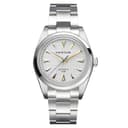
Citizen Tsuyosa 37mm (NJ0200-50M)

Citizen Tsuyosa 37mm (NJ0200-50M)

The same Tsuyosa, three millimeters narrower. Citizen publishes the identical caliber 8210, sapphire crystal, 50m rating, 42-hour reserve and hack feature for the 37mm NJ0200 as for the 40mm NJ0150 - the only line that changes on its spec sheet is the case width. If integrated-bracelet watches tend to look large on you, this is the Tsuyosa to buy.

Best overall
$346.50 · View on Amazon

$495.0030% off

Price as of November 25, 2026. #ad How we’re funded

37 mmCitizen 8210 (automatic + hand-winding)Sapphire50 m
2
Seiko 5 Sports Field SRPJ89 (36mm)

Seiko 5 Sports Field SRPJ89 (36mm)

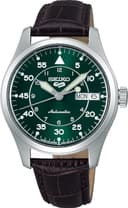
The smallest Seiko we list, and the number that matters is the 44.4mm lug-to-lug rather than the 36.4mm dial. Seiko's 36mm 5 Sports field line puts the same in-house 4R36 as the bigger 5 Sports into a case that genuinely fits a slim wrist, with the same 10 bar rating and the same published 41-hour reserve - on cow leather rather than a bracelet.

Best documented fit
$410.00 · View on Amazon

Price as of November 25, 2026. #ad How we’re funded

36.4 mmSeiko 4R36 (automatic + hand-winding)Curved Hardlex100 m
3
Hestur Miyota 9015 Vintage 36mm

Hestur Miyota 9015 Vintage 36mm

A 36mm vintage-styled automatic on a Miyota 9015, with a domed sapphire crystal and a solid steel bracelet — a rare combination of a small case, a named movement and real materials.

Best movement
$259.00 · View on Amazon

Price as of November 25, 2026. #ad How we’re funded

36 mmMiyota 9015 automaticDomed sapphireNot published
4
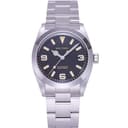
Baltany S4056 Adventure 36mm

Baltany S4056 Adventure 36mm

The best-considered small automatic here. Baltany designs at 36mm deliberately rather than shrinking a men's watch, and the 3-6-9 dial is the layout that stays legible when a case gets this compact.

Best designed at 36mm
$233.03 · View on Amazon

$274.9015% off

Price as of November 25, 2026. #ad How we’re funded

36 mmAutomaticNot publishedNot published
5
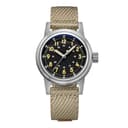
ADDIESDIVE 36mm Automatic Field

ADDIESDIVE 36mm Automatic Field

A genuinely small automatic at a genuinely small price, on a nylon strap that makes it easy to size down further. The clean dial is the right call at this diameter — there is no room for clutter.

Best first small watch
$145.99 · View on Amazon

Price as of November 25, 2026. #ad How we’re funded

36 mmAutomaticNot publishedNot published
6
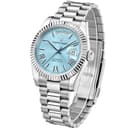
Pagani Design DD36 36mm

Pagani Design DD36 36mm

A 36mm dress-sports automatic with an anti-reflective sapphire crystal and a stated 10 bar rating — a combination that is difficult to find at any price in a small case, let alone this one.

Best on a budget
$134.99 · View on Amazon

Price as of November 25, 2026. #ad How we’re funded

36 mmST16 automaticSapphire (anti-reflective)100 m

Specs read from each maker’s published data and retail listing on August 11, September 22 and October 20, 2026. Prices checked live — as of November 25, 2026. “Not published” means the maker does not state that figure; we don’t fill the gap with a guess.

The picks in full

#1Best overall

Citizen Tsuyosa 37mm (NJ0200-50M)

The same Tsuyosa, three millimeters narrower. Citizen publishes the identical caliber 8210, sapphire crystal, 50m rating, 42-hour reserve and hack feature for the 37mm NJ0200 as for the 40mm NJ0150 - the only line that changes on its spec sheet is the case width. If integrated-bracelet watches tend to look large on you, this is the Tsuyosa to buy.

Strengths

  • Same 8210 caliber, sapphire crystal and 42-hour reserve Citizen lists for the 40mm Tsuyosa
  • 37mm case width - the smallest Citizen automatic we could find live on Amazon
  • Hack feature listed on Citizen's own page for this reference

Trade-offs

  • 50m rating - fine for rain and a shower, not for regular swimming
  • Integrated bracelet, so no strap changes, and Citizen publishes no thickness or lug-to-lug to size it from
  • Fewer dial colors live than the 40mm: three other 37mm listings showed as unavailable on our September 22, 2026 check
MovementCitizen 8210 (automatic + hand-winding)
Stated accuracyNot published
Power reserve42 hours
Case size37 mm
Water resistance50 m
CrystalSapphire
Hacks / hand-windsYes / Yes

Why this one. Citizen's own spec pages for the 37mm NJ0200-50M and the 40mm NJ0150-56E differ in exactly one line: case width. Caliber, crystal, water resistance, power reserve and the hack feature are identical, so choose between them on your wrist rather than on the movement.

Specs read from the product listing and the maker’s published data, on September 22, 2026. “Not published” means the maker does not state that figure.

#2Best documented fit

Seiko 5 Sports Field SRPJ89 (36mm)

The smallest Seiko we list, and the number that matters is the 44.4mm lug-to-lug rather than the 36.4mm dial. Seiko's 36mm 5 Sports field line puts the same in-house 4R36 as the bigger 5 Sports into a case that genuinely fits a slim wrist, with the same 10 bar rating and the same published 41-hour reserve - on cow leather rather than a bracelet.

Strengths

  • 36.4mm across and 44.4mm lug-to-lug - the smallest case on our field roundup
  • Seiko's own 4R36 with a stop-seconds function and manual winding, and a published 41-hour reserve
  • Day-date display and 10 bar, on Seiko's own published sheet for this exact reference

Trade-offs

  • Curved Hardlex rather than sapphire, which is Seiko's usual omission at this price
  • 12.5mm thick on a 36.4mm case, so it wears chunkier than the diameter suggests
  • Leather band on a field watch means a strap change before you swim in it
MovementSeiko 4R36 (automatic + hand-winding)
Stated accuracyNot published
Power reserve41 hours
Case size36.4 mm
Water resistance100 m
CrystalCurved Hardlex
Hacks / hand-windsYes / Yes

Why this one. This slot has now been round the houses: the SRPJ89 was retired on 2026-10-03 when its listing died and the bracelet SRPJ81 took over; the SRPJ81 listing has now died in turn and the SRPJ89 is live again. Every figure above is Seiko's own, read from its global page for the SRPJ89 itself rather than inferred from the line - 4R36, approximately 41 hours, 36.4mm by 12.5mm with a 44.4mm case length, curved Hardlex, 10 bar, cow leather, day/date.

Specs read from the product listing and the maker’s published data, on October 20, 2026. “Not published” means the maker does not state that figure.

#3Best movement

Hestur Miyota 9015 Vintage 36mm

A 36mm vintage-styled automatic on a Miyota 9015, with a domed sapphire crystal and a solid steel bracelet — a rare combination of a small case, a named movement and real materials.

Strengths

  • 36mm case with a named Miyota 9015 inside
  • Domed sapphire crystal and BGW-9 luminous material
  • Solid stainless bracelet rather than hollow links

Trade-offs

  • The listing's water-resistance wording is unclear, so we have not recorded a figure
  • Small brand — resale and support are both unknowns
MovementMiyota 9015 automatic
Stated accuracyNot published
Power reserveNot published
Case size36 mm
Water resistanceNot published
CrystalDomed sapphire
Hacks / hand-windsYes / Yes

Why this one. BGW-9 is a Super-LumiNova grade that glows blue and is among the brighter compounds in common use. It is a genuine material specification rather than a marketing word.

Specs read from the product listing and the maker’s published data, on August 11, 2026. “Not published” means the maker does not state that figure.

#4Best designed at 36mm

Baltany S4056 Adventure 36mm

The best-considered small automatic here. Baltany designs at 36mm deliberately rather than shrinking a men's watch, and the 3-6-9 dial is the layout that stays legible when a case gets this compact.

Strengths

  • Designed at 36mm rather than scaled down from 40mm+
  • 3-6-9 dial layout stays readable at a small diameter
  • Also offered at 39mm if you land between sizes

Trade-offs

  • Priced against Seiko and Orient, with none of their service network
  • Micro-brand availability can be intermittent
MovementAutomatic
Stated accuracyNot published
Power reserveNot published
Case size36 mm
Water resistanceNot published
CrystalNot published
Hacks / hand-windsNot published / Not published

Why this one. Case diameter alone does not decide fit. Lug-to-lug distance is what determines whether a watch overhangs a wrist, and small-diameter watches usually win there too.

Specs read from the product listing and the maker’s published data, on August 11, 2026. “Not published” means the maker does not state that figure.

#5Best first small watch

ADDIESDIVE 36mm Automatic Field

A genuinely small automatic at a genuinely small price, on a nylon strap that makes it easy to size down further. The clean dial is the right call at this diameter — there is no room for clutter.

Strengths

  • 36mm case at a budget price, which is rare
  • Uncluttered dial that stays legible small
  • Nylon strap suits slim wrists better than a bracelet

Trade-offs

  • Movement not named on the listing
  • Unisex sizing means the strap may still be long
MovementAutomatic
Stated accuracyNot published
Power reserveNot published
Case size36 mm
Water resistanceNot published
CrystalNot published
Hacks / hand-windsNot published / Not published

Why this one. The cheapest way to test whether you actually prefer a small watch, before spending Orient or Seiko money on the idea.

Specs read from the product listing and the maker’s published data, on August 11, 2026. “Not published” means the maker does not state that figure.

#6Best on a budget

Pagani Design DD36 36mm

A 36mm dress-sports automatic with an anti-reflective sapphire crystal and a stated 10 bar rating — a combination that is difficult to find at any price in a small case, let alone this one.

Strengths

  • 36mm with AR sapphire and a stated 10 bar rating
  • Jubilee-style bracelet suits a smaller wrist well
  • One of very few small automatics with published specs

Trade-offs

  • Directly imitates a famous Swiss design at 36mm
  • ST16 movement is less widely serviced than an NH35
MovementST16 automatic
Stated accuracyNot published
Power reserveNot published
Case size36 mm
Water resistance100 m
CrystalSapphire (anti-reflective)
Hacks / hand-windsNot published / Not published

Why this one. Small watches with sapphire crystals are rare because the segment is treated as fashion. This one treats it as a specification exercise.

Specs read from the product listing and the maker’s published data, on August 11, 2026. “Not published” means the maker does not state that figure.

How we picked

1. The maker or the listing has to publish 36 or 37 mm for the exact reference

Not “compact,” not “small,” not a diameter we measured off a photograph. A published number for the reference you are buying, which is why this list is six watches long and not twenty. Five of the picks are published at 36 mm or 36.4 mm; the Citizen is published at 37 mm and earns its place because it is the narrowest case either Seiko or Citizen currently sells as a live automatic on Amazon, and because Citizen publishes more about it than anyone else here publishes about anything.

2. A self-winding mechanical movement

Every pick states a self-winding mechanical movement on its own source — a rotor winding a mainspring, no battery. Four of the six name the caliber: Citizen’s 8210, Seiko’s own 4R36, a Miyota 9015 in the Hestur and an ST16 in the Pagani. The Baltany and the ADDIESDIVE state only “automatic,” which means there is no accuracy band, reserve figure or parts catalog to look up. If you want to understand what a named caliber actually buys you, who makes automatic watch movements is the primer.

3. Then disclosure, ranked hardest-first

With six watches that all meet the diameter rule, the order is decided by what each maker commits to in writing: lug-to-lug, thickness, crystal material, water resistance, caliber, reserve. That is why a $410 Seiko on a leather strap ranks above a $259 Hestur on a solid steel bracelet, and why the cheapest watch on the page ranks above two that cost more. It is also why one pick’s own water-resistance claim counted against it.

4. A live, in-stock listing on the date shown

Every pick returned a live purchasable offer with a price and an “In Stock” availability on the date printed under the comparison table. Small-case automatics go in and out of stock faster than mainstream sizes, so if a pick disappears, its card falls back to a current-price link rather than showing a stale number.

Why lug-to-lug beats diameter, and why that matters more at 36 mm

Case diameter measures the watch across the bezel. Lug-to-lug measures it from the tip of the top lug to the tip of the bottom one — the full length that has to sit between the two edges of your wrist. Diameter is the number on the box. Lug span is the number that decides whether the watch overhangs.

The reason this bites harder on small watches is proportion. A 36 mm case with long, straight lugs can measure 46 mm or more end to end, which is the same span as a 40 mm case with short, curved ones — so a buyer who went small specifically to stop a watch hanging off the wrist can end up with exactly the same problem in a smaller, less legible dial. Seiko’s published 44.4 mm for the 36.4 mm SRPJ89 is genuinely short, and the fact that it is the only such figure on this page is the single most useful thing on it. Our watch size guide works through how to measure your own wrist and what span to aim for.

A practical workaround when nobody publishes the number: measure the top-to-bottom dimension in the maker’s own straight-on product photograph against the stated diameter. It is rough, but it is better than the alternative, which is finding out after the watch arrives. And it is worth saying that a small diameter does genuinely help withthickness-related fit too — Seiko publishes 12.5 mm for the SRPJ89, which on a 36 mm case reads chunkier than the same figure would on a 42 mm one.

The legibility trade nobody mentions

Going small costs you dial. There is less room for hour markers, less room for a date window, and less contrast between the hands and everything behind them — which is why the dial layout matters more at 36 mm than at 42 mm.

Two picks handle this deliberately. The Baltany S4056 uses a 3-6-9 layout: three large applied numerals and nothing else competing with the hands, which is the classic answer to a compact field dial and the reason that layout exists at all. The ADDIESDIVE 36mm goes the other way and simply removes clutter — an uncluttered dial that stays readable small, on a nylon strap that sizes down further than a bracelet will. Neither is an accident, and both read better at this size than a busy dial shrunk down from a 42 mm design, which is what you get from most of the category.

The watch on this page that gives up the most legibility is the one with the date magnified into a small gap and the most going on around it — and that is a taste call rather than a defect. If you want the reverse trade, a bigger dial with the same specification logic, 38mm automatics is the next size up and the smallest size where Orient’s own-movement dress watches come into range.

The honesty note: one listing claims 150 bar

The Hestur’s own Amazon title states “150bar.” One bar is roughly ten meters, so that reads as 1,500 meters — a saturation-diving figure, on a 36 mm vintage-styled dress watch with a domed crystal and no screw-down crown stated anywhere.

That is not a plausible number, and it is the reason our registry records no water-resistance figure for this watch rather than copying the one on the box. We are naming it rather than quietly omitting it because it tells you something useful about how to read the rest of the listing — and because everything else the Hestur states is specific, checkable and unusually good for the money: a Miyota 9015 by name, a 36 mm case, a domed sapphire crystal, BGW-9 luminous material and a 316L solid stainless bracelet. One bad figure does not condemn a watch. It does mean you treat this one as a dry-wrist watch regardless of what the title says. Water resistance explained covers what the ratings mean and why “waterproof” with no number is not a rating at all.

Which one, for which buyer

If you want one small automatic and no homework: the Citizen Tsuyosa 37mm, at about $347. Citizen publishes caliber 8210, a 37 mm case width, an anti-reflective sapphire crystal, WR50, a 42-hour reserve and a hack feature — the same sheet it lists for the 40 mm version, differing in exactly one line. Honest cons: 50 m is rain and hand-washing, not swimming; the bracelet is integrated, so you cannot change it and Citizen publishes no thickness or lug-to-lug to size the watch from; and fewer dial colors are live in 37 mm than in 40.

If you want to know how it will wear before it arrives: the Seiko 5 Sports SRPJ89, at about $410. Seiko publishes everything: caliber 4R36 with manual winding and a stop-seconds function, roughly 41 hours of reserve, a day-date display, 10 bar, and the three measurements that decide fit — 36.4 mm wide, 12.5 mm thick, 44.4 mm long. Honest cons: curved Hardlex rather than sapphire, which is Seiko’s usual omission at this price; 12.5 mm is thick on a 36 mm case; it is on cow leather, so a strap change comes before any water; and it is the most expensive watch here by a margin.

If the movement is what you are buying: the Hestur Miyota 9015, at about $259 — a named high-beat Citizen Group caliber with published figures behind it, under a domed sapphire crystal, on a 316L solid bracelet. Honest cons: the 150 bar claim above, which is why no water-resistance figure is recorded; and a small brand with no resale or support history. See NH35 vs Miyota 9015 for what the higher beat rate does and does not buy you.

If you want a watch designed at this size rather than shrunk to it: the Baltany S4056 Adventure, at about $233. Baltany builds at 36 mm deliberately and the 3-6-9 dial is the layout that survives the diameter. It is also offered at 39 mm if you land between sizes. Honest cons: it is priced against Seiko and Orient with none of their service network, it names no caliber, and micro-brand availability comes and goes.

If you are not sure small suits you yet: the ADDIESDIVE 36mm, at about $146 — a genuinely small automatic at a genuinely small price, with a clean dial and a nylon strap that sizes down further than any bracelet. Honest cons: the movement is not named on the listing, no water-resistance figure is published, and unisex sizing means the strap may still run long. Buy it to find out whether you prefer a small watch before spending Seiko money on the idea.

If you want the most published specification for the least money: the Pagani Design DD36, at about $135. It is the only watch on this page that pairs a sapphire crystal with a water-resistance figure in the same sheet — AR sapphire and a stated 10 bar, the highest rating here — in a true 36 mm case on a Jubilee-style bracelet. Honest cons: it directly imitates a famous Swiss design, the ST16 movement is less widely serviced than a Seiko NH35, and there is no service network behind it. If that borrowed design is the appeal, our homage roundup argues both sides; if it is what puts you off, the Baltany is the original-design alternative at a similar size.

Two neighboring lists are worth a look before you decide. If 36 mm appeals because of a specific Rolex, both of ours sit at this diameter: Datejust alternatives for the date-window version on a bracelet, and Explorer alternatives for the three-hand tool watch without one. And if what you are really solving for is a slim wrist rather than a small number, automatics for small wrists filters on lug span and thickness rather than diameter alone, which is the better way to shop this problem.
Frequently asked questions

What is the best 36mm automatic watch?

The Citizen Tsuyosa 37mm, at about $347, for most buyers - it is the narrowest live automatic from a household Japanese brand and Citizen publishes the whole package: caliber 8210, an anti-reflective sapphire crystal, WR50, a 42-hour reserve and a hack feature. If you want the fit documented rather than the brand, the Seiko 5 Sports SRPJ89 is the only pick whose maker publishes a lug-to-lug figure: 36.4mm wide, 12.5mm thick, 44.4mm long.

Is a 36mm watch too small for a man?

No, and the market has quietly agreed. Rolex launched the Datejust at 36mm in 1945 and still sells that size; it took the Explorer to 39mm in 2010, re-introduced the 36mm version in 2021, and has offered both 36mm and 40mm since 2023. What decides whether a watch suits you is your wrist width and the watch's lug-to-lug span, not the decade's fashion.

What does lug-to-lug mean and why does it matter more than case size?

Lug-to-lug is the distance from the tip of the top lug to the tip of the bottom one - the full length that has to sit between the edges of your wrist. Diameter is measured across the bezel and is the number printed on the box. A 36mm case with long lugs can span 46mm or more, the same as a 40mm case with short curved ones, so two watches of identical diameter can fit completely differently.

Why do so few 36mm automatics publish their specs?

Because small cases are still sold as a fashion category rather than a specification one. Across the six picks here, exactly one maker publishes a lug-to-lug figure, only three publish any water-resistance rating, and two name no caliber at all. The two that publish most - Seiko and Citizen - are also the only two with a service network behind them, which is not a coincidence.

Can you get a 36mm automatic with a sapphire crystal?

Yes, and the cheapest one is the best documented. The Pagani Design DD36 at about $135 states an anti-reflective sapphire crystal and 10 bar - the only pick here that publishes both a sapphire crystal and a water-resistance figure in the same sheet. The Hestur at about $259 states a domed sapphire, and Citizen publishes an anti-reflective sapphire for the 37mm Tsuyosa. The Seiko, notably, is curved Hardlex mineral.

Is a 36mm watch good for a small wrist?

Usually, but the diameter is only half the answer. A small-diameter watch with long straight lugs will still overhang a 6-inch wrist, and a 12.5mm-thick case reads chunkier at 36mm than the same thickness does at 42mm. Shop the lug span and the thickness, then the diameter. Our small-wrist roundup filters on exactly those measurements instead.

Are 36mm watches unisex?

In practice yes, and several of these are sold that way. The ADDIESDIVE is explicitly unisex sized, which has one practical consequence worth knowing: the strap may be cut long even though the case is small, so plan on an extra hole or a strap swap. Case diameter is what makes a watch wearable by anyone; the band is a separate problem and a cheap one to fix.

How accurate are these small automatics?

Not one of the six publishes a daily accuracy figure for its reference. Seiko publishes +45 to -35 seconds a day for the 4R36 caliber, but not for the SRPJ89 specifically, and Citizen publishes no rate for the Tsuyosa at all. Expect a budget automatic to run tens of seconds a day off and to vary with how you store it overnight; a certified Swiss chronometer averages -4 to +6 seconds a day, and nothing at this price is close.

Can I swim with a 36mm automatic?

With one of them, carefully. Seiko publishes 10 bar for the SRPJ89 and the Pagani DD36 states 10 bar, both of which cover swimming; Citizen publishes WR50 for the Tsuyosa, which is rain and hand-washing rather than laps. The Hestur, Baltany and ADDIESDIVE publish no usable figure, so treat all three as dry-wrist watches. The Hestur's listing does claim 150 bar, which is not a credible number and is why we record none.

Sources

  • Citizen - Tsuyosa 37mm NJ0200-50M product specification — Citizen's own listing for the 37mm Tsuyosa from the NJ020 series: caliber 8210 automatic, a 37mm case width, an anti-reflective sapphire crystal, WR50, a 42-hour power reserve and a hack feature - the same caliber, crystal, rating and reserve Citizen lists for the 40mm NJ0150. Re-read on November 24, 2026 for the calendar and band wording: the page, titled 'TSUYOSA 37mm Blue Dial Stainless Steel Bracelet NJ0200-50M', describes the watch 'with a 3 o'clock date window' on 'a seamlessly integrated, matching bracelet', and lists 'Band Type: Stainless Steel Bracelet', '3 Hand with Date' under Movement Functions and 'Case Width: 37mm' (accessed September 22, 2026)
  • Seiko - 5 Sports SRPJ89 product specification — Seiko's own global page for the SRPJ89, the brown-leather reference from the 36mm 5 Sports field line: caliber 4R36, 'Automatic with manual winding', a stop second hand function, approximately 41 hours of power reserve, a 36.4mm case 12.5mm thick with a 44.4mm case length, curved Hardlex crystal, 10 bar water resistance, a cow leather band with 18mm between the lugs, and a day/date display. Seiko's US site publishes no page for this reference; the global page does (accessed October 20, 2026)
  • Seiko — Caliber 4R35 / 4R36 instruction & specification — Seiko's official spec for the 4R35/4R36: automatic + hand-winding, 24 jewels, 21,600 vph, ~41h reserve, accuracy +45 to -35 sec/day worn on wrist (accessed July 21, 2026)
  • MIYOTA — Caliber 9015 Premium Automatic specification — Miyota's own spec for the 9015: -10 to +30 sec/day, 24 jewels, 28,800 vibrations per hour, approximately 42 hours of running time, 3.90mm high, with a stop-second device and automatic plus hand winding (accessed August 19, 2026)
  • Rolex Datejust - Wikipedia — The watch this page proposes alternatives to, and the only source for its published history we could actually read (rolex.com returned HTTP 403 to automated requests on this date). The article states that the Rolex Oyster Perpetual Datejust "is a self-winding chronometer manufactured by Rolex" and that, "Launched in 1945, the Datejust was the first self-winding chronometer wristwatch to indicate the date in a window on the dial". On the original: Rolex "introduced the original Datejust (reference 4467) in 1945 to celebrate the company's 40th anniversary", available "only in 18 karat yellow gold", featuring "the company's waterproof Oyster case (first introduced in 1926), a fluted bezel, and the new Jubilee bracelet (so named for the occasion)". The date mechanism moved "from a gradual date change shortly before midnight in the earliest versions to an instantaneous change beginning in 1955". On format, which is the entry rule for this page: "The Datejust is offered with two Rolex bracelets: the Jubilee and the Oyster" and "The original Datejust was launched with a case size of 36mm". On the current range: "Today, it is available in a variety of sizes from 28mm to 41mm, in stainless steel, two-tone gold, and solid gold versions", and as of 2019 the lineup is "28mm, 31mm, 34mm, 36mm, 41mm". The Datejust 41 of 2016 brought "the new Caliber 3235 movement", which "provides a 70-hour power reserve". One cultural note the article records: in the American Psycho film, "Bateman (played by Christian Bale) wears a two-tone Seiko 5 that resembles a Rolex Datejust, as Rolex did not want to be associated with the character" (accessed November 24, 2026)
  • Rolex Explorer - Wikipedia — The watch this page proposes alternatives to. The article states the Explorer is "a line of sports watches manufactured by Rolex, introduced in 1953", that it "is self-winding, water-resistant and was originally designed as a tool watch to aid mountaineers", and that it followed Rolex's sponsorship of the 1953 Everest expedition by Hillary and Tenzing, the first model being "the reference 6350 which featured the moniker 'Explorer' on the dial". On size, which is the whole argument of this page: "For the first time, in 2010, Rolex increased the diameter of the Explorer case to 39mm. This model was produced until 2021, at which point Rolex re-introduced the 36mm model", and "Since 2023, Rolex has offered the watch in both 36mm and 40mm variations." The Explorer II, introduced in 1971, "featured a fixed 24-hour bezel, and independent 24-hour hand" (accessed November 22, 2026)
  • COSC — Contrôle Officiel Suisse des Chronomètres: certified chronometer — The Swiss chronometer standard: a certified mechanical chronometer must average -4/+6 seconds per day, tested per ISO 3159 over ~15 days in 5 positions and 3 temperatures (accessed July 21, 2026)
  • ISO 22810:2010 — Water-resistant watches — Defines the requirements, test methods and permitted markings for ordinary water-resistant watches (daily use / swimming, not scuba diving) (accessed July 21, 2026)

Keep reading